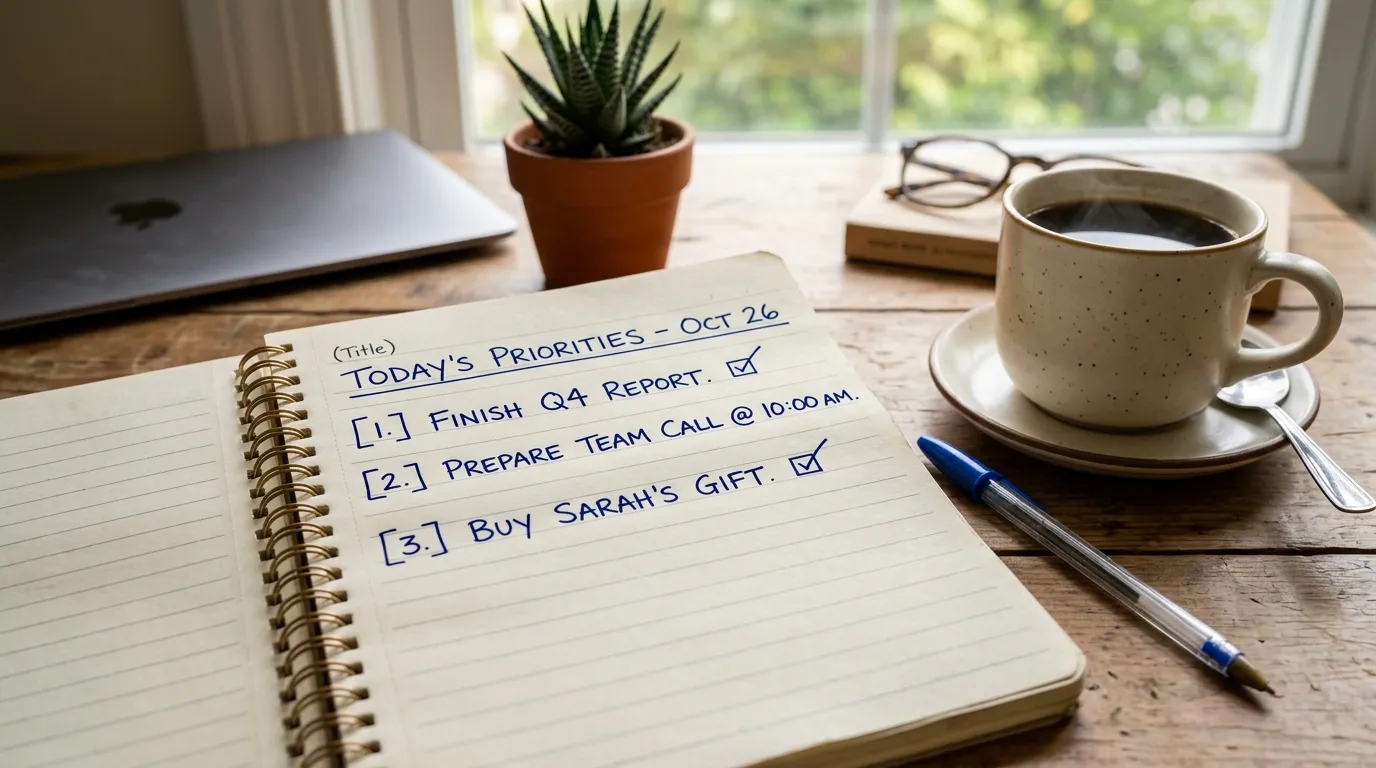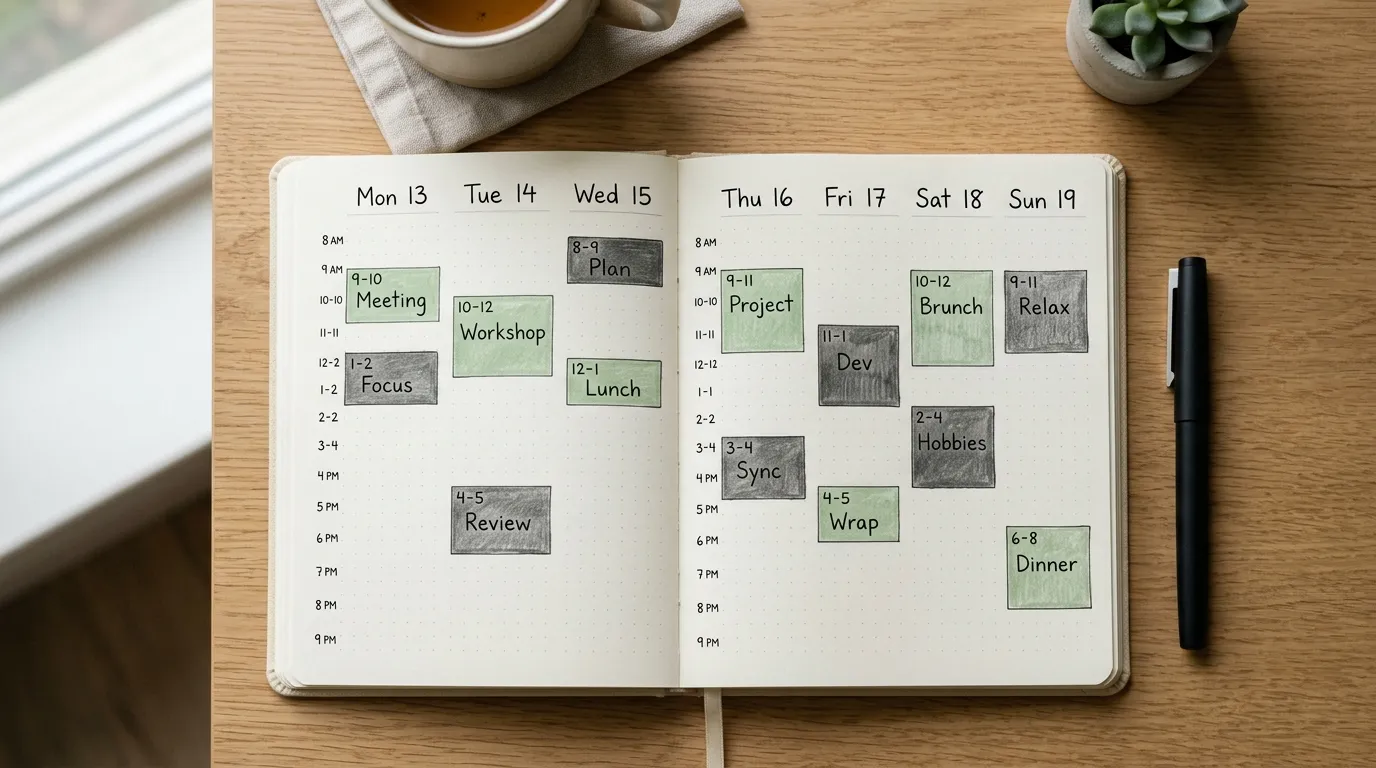

Friday afternoon is when unfinished loops start whispering. You still have enough energy to close a few, and Monday has not yet filled every square on the calendar. A weekly review is not a life audit. It is a short, repeatable reset so next week starts with clear outcomes instead of leftover guilt.
Busy people skip reviews because they imagine a two-hour ritual with color-coded boards. That version fails. The version that sticks is a Friday checklist you can finish in thirty to forty-five minutes, same day, same place, every week. You clear captures, check the calendar against real priorities, decide what happens to open loops, and set three weekly outcomes you will actually protect.
This guide walks through a practical Friday weekly review for All U Want readers who already juggle work, home, and a noisy phone. You will get a step-by-step checklist, the reasons each step matters, common mistakes that turn reviews into busywork, a four-week starter plan, and answers to the questions that usually stop people after week one.
Why a Friday weekly review beats Monday scrambling
Monday reviews sound logical until Monday arrives. Meetings land early, Slack lights up, and the “quick planning block” becomes coffee and inbox triage. By Tuesday you are reacting. Friday reviews happen while the week is still vivid. You remember what stalled, what drained you, and which commitments felt fake when you said yes.
A weekly review also shrinks decision debt. Open loops hide in notes apps, browser tabs, sticky notes, and half-remembered promises. Each loop costs attention even when you are not working on it. Closing, scheduling, or deleting those loops once a week is cheaper than carrying them all week.
Finally, a review connects daily priorities to weekly outcomes. If you already use a Big Three style day plan, the weekly review is where those daily bets get their direction. Pair this checklist with the best daily priorities method so Friday sets the week and each morning chooses the next three moves.
What “done” looks like after a good review
You leave the review with four concrete results: an empty or near-empty capture inbox, a calendar that reflects your real priorities for next week, a list of open loops each with a next action or a deliberate kill, and three weekly outcomes written in plain language. If you also use time blocks, those outcomes get placed on the calendar so they are not wishes. See time blocking for beginners when you are ready to protect deep work on the schedule itself.
The Friday weekly review checklist
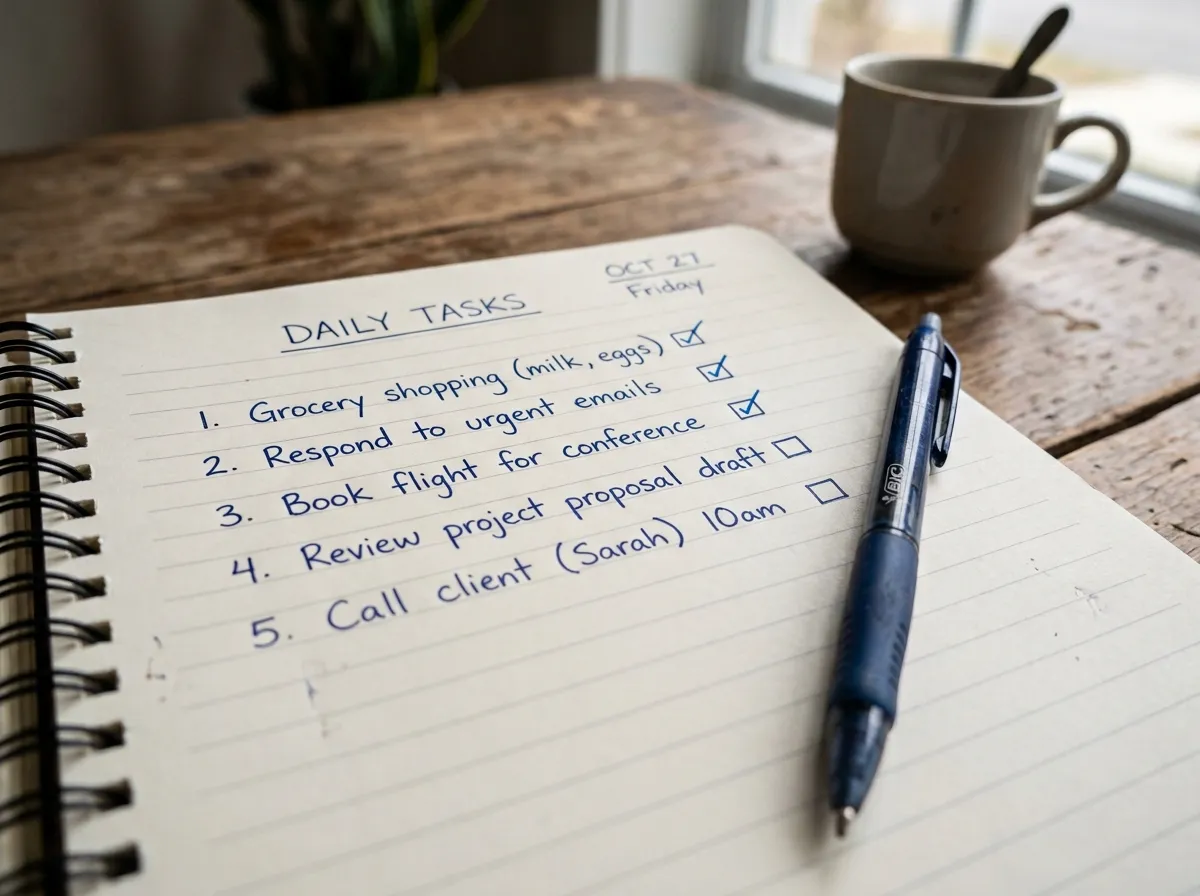
Run the steps in order. Skipping ahead to “set goals” while your inbox is still a junk drawer creates pretty goals that ignore reality. Protect a quiet corner, silence notifications, and keep one notebook or one digital doc open as the working surface for the review.
1. Clear the capture pile
Everything that entered your brain or devices this week needs one temporary home. Dump sticky notes, voice memos, flagged emails that are actually tasks, meeting scraps, and “I should remember” thoughts into a single capture list. Do not organize yet. Sorting too early is a form of procrastination that feels productive.
Practical rule: if an item takes under two minutes and truly ends when done, finish it during capture. Reply to that confirmation email. Put the book back on the shelf. Cancel the leftover calendar hold. Everything else stays on the list for later steps.
If you use multiple capture tools, pick one inbox for the review. Phone notes, desktop notes, and paper can all feed that inbox. The weekly review is the moment they reunite. People who keep five permanent inboxes spend the review hunting instead of deciding.
2. Check calendar against priorities
Open next week’s calendar before you romanticize what you “should” accomplish. Mark meetings that are required, optional, or cancelable. Notice days that are already meeting-heavy. Those days cannot also hold three deep-work outcomes unless you move something.
Ask one blunt question for every large block: does this support a weekly outcome that matters, or is it leftover obligation? Decline, shorten, or request an agenda when a meeting has no clear purpose. Protect at least one deep-work block on two different days if your work depends on concentrated thinking. If the calendar has zero white space, the review’s job is to create some, not to pretend you will squeeze creativity into the cracks.
Also scan last week’s calendar for patterns. Recurring meetings that never produce decisions deserve a redesign. Travel days that wipe you out deserve lighter outcome targets the following day. The calendar is evidence. Use it.
3. Close or schedule open loops
Work through the capture list and every lingering project that has no next action. Every item gets one of four fates: do it now if tiny, schedule a next action with a date, park it on a someday list with no fake deadline, or delete it. “Maybe later” without a home is how loops survive forever.
Write next actions as verbs you can start without more planning. “Think about website” is not an action. “Draft three homepage headline options for thirty minutes on Tuesday” is. If a project needs a plan, the next action is “outline the project in ten bullets,” not “finish the project.”
Be ruthless with soft commitments. If you half-promised a favor and now regret it, decide. Renegotiate early or accept the work and schedule it. Ambiguous yes answers are open loops wearing a smile.
4. Set three weekly outcomes
Choose three results that would make next week a clear win even if many smaller tasks stay unfinished. Outcomes are finished states, not activities. “Ship the client draft” beats “work on client stuff.” “Book dentist and renew insurance” can count as one life-admin outcome if that category has been slipping.
Limit yourself to three so trade-offs stay honest. A fourth “bonus” outcome is fine only after the first three are scheduled. Write the outcomes where you will see them Monday morning. Then place the hardest one into the earliest deep block that still has room.
If your role is interrupt-driven, still pick three outcomes, but make them smaller and more resilient. “Resolve the top five support tickets blocking renewals” can be a valid weekly win when pure deep work is rare.
5. Align tools and shut down the week
Update any task list so it matches the decisions you just made. Archive completed projects. Close browser tabs that were acting as reminders once their content lives on the list. Do a two-minute desk reset if your physical space affects Monday mood.
End with a shutdown sentence: “Review complete. Next focus is outcome one on Monday.” Saying it out loud sounds silly and still works. Your brain likes clear off-ramps.
A fuller walkthrough of each review block
The checklist above is the spine. The sections below add enough detail that you can run the review without inventing process mid-stream.
Capture without sorting theater
Set a timer for ten minutes. Move fast. If you find yourself rewriting notes to be prettier, stop. Capture is a transfer, not a rewrite. People who rewrite everything during capture never reach calendar and outcomes before energy drops.
Include emotional loops. Anxiety about a conversation is still an open loop. Put “decide whether to raise the issue with Sam by Wednesday” on the list. Naming it reduces background noise.
Calendar as priority mirror
Print or screenshot the week if visual density helps. Color is optional; honesty is not. If deep work is missing, move or decline something before you add new ambitions. Adding ambitions to a packed calendar is how reviews become fiction.
Check personal calendar too. Kid events, appointments, and travel change capacity. A “light” work week that includes a half-day school event is not light. Adjust outcomes to the real week you will live.
Open loops and the next-action standard
For each project older than two weeks with no progress, ask whether it still deserves a slot. Kill zombie projects kindly. Archive the notes so you can revive them later without guilt. Keeping dead projects “active” trains you to ignore your own lists.
For active projects, ensure there is exactly one next action visible. Multiple next actions are fine inside a project note, but the weekly surface should show the single move you will take next. Ambiguity is the enemy of Friday clarity.
Weekly outcomes that survive contact with Monday
Test each outcome with this sentence: “If I finish only this, would I feel the week moved?” If the answer is no, the outcome is too small or too vague. Also test the opposite: “Can I finish this with the calendar I actually have?” If not, shrink scope.
Share outcomes with a teammate or partner when accountability helps. Public outcomes should still be yours to control. Do not set a weekly outcome that depends entirely on someone else’s delayed reply unless the outcome is “send the follow-up and escalate.”
Common weekly review mistakes
Most failed reviews share the same patterns. Fix these early and the habit survives busy seasons.
- Making the review too long. A ninety-minute masterpiece happens twice, then never again. Cap the session. Unfinished items roll to a short Sunday top-up or next Friday.
- Confusing reflection with journaling forever. A few lines about what worked is useful. A memoir is optional and often a delay tactic.
- Setting ten weekly goals. Ten goals are a wish list. Three outcomes force ranking.
- Ignoring the calendar. Goals that fight the calendar lose. Always.
- Keeping capture inboxes scattered. The review cannot clear what it cannot see.
- Using the review to redesign your entire productivity system. System redesign is a separate project. During the review, run the checklist you already trust.
- Skipping weeks without a restart rule. Missed Friday? Do a twenty-minute mini review on Sunday night. Do not wait for a “perfect” Friday to resume.
- Treating email zero as the whole review. Inbox zero can help, but empty email is not the same as chosen priorities.
Another subtle mistake is reviewing only work. Life admin loops steal weekday focus just as hard. Include them so they stop ambushing your deep blocks.
Starter plan: four Fridays to make it automatic
Use this plan if you are installing the habit from scratch. Keep tools boring on purpose.
Week 1: Learn the route
Book a forty-five-minute Friday block titled “Weekly review.” Run capture, calendar, open loops, and three outcomes. Do not optimize templates. Write outcomes on a sticky note if that is fastest. Goal: finish once.
Week 2: Tighten timing
Aim for thirty-five minutes. Pre-clear obvious trash from your notes app on Thursday night so Friday starts cleaner. Place outcome one on the calendar as a named block. Notice where you got stuck and cut that step’s scope next time.
Week 3: Connect daily priorities
On Monday through Wednesday, choose daily Big Three tasks that serve the weekly outcomes. If daily work drifts, the weekly outcomes were too vague or the calendar lied. Adjust Friday’s outcome language to be more concrete.
Week 4: Add a lightweight retrospective
Spend five minutes answering three prompts: what moved, what stalled, what will I stop doing next week. Keep answers short. Then run the normal checklist. After four Fridays, the sequence should feel familiar enough to survive a messy week.
Optional upgrade after month one: keep a running “waiting for” list for items owned by other people, and scan it during open-loop time. Still keep the whole review under forty-five minutes.
How to run the review when the week exploded
Some weeks are pure incident response. Do not cancel the review; shrink it. Ten-minute emergency version: (1) dump capture for three minutes, (2) pick one weekly outcome for the remaining days, (3) delete or defer everything else without guilt, (4) block ninety minutes for the single outcome if any space remains.
A shrunk review still beats a skipped one because it restores a sense of authorship. You are choosing the next move instead of drowning in residue.
Tools that help without becoming the project
Any calendar plus any list works. Paper works. A notes app with one “Review” note works. Fancy dashboards are optional. If a tool requires fifteen minutes of clicking to start the review, it is the wrong tool for Friday.
Useful defaults: one capture note, one active projects list, one someday list, and your calendar. Tags are optional. Folders beyond a simple active/archive split are optional. The review should reduce tool friction, not celebrate it.
If you already time block, the weekly review is when blocks get rebuilt from outcomes rather than copied blindly from last week. Copied blocks drift. Outcome-based blocks stay honest.
FAQ
How long should a weekly review take? Most busy people do well at thirty to forty-five minutes. Beginners can allow an hour for the first two Fridays, then cut. If you regularly need more than an hour, you are probably reorganizing systems instead of reviewing work.
What if I miss Friday? Run a twenty-minute version as soon as you can, ideally before Monday meetings. Missing one week is normal. Missing three in a row means the ritual needs a shorter format or an earlier time slot.
Do I need a special app? No. Calendar plus a single list beats a complex stack you abandon. Upgrade tools only after the habit is stable for a month.
Should I review with my team? Keep a personal review first. Add a short team review for shared projects if needed, but do not replace your private capture and priority decisions with a meeting.
How is this different from daily planning? Daily planning chooses today’s three moves. The weekly review chooses the outcomes those daily moves should serve and clears the debris that daily planning cannot see. Use both.
What if my job is entirely reactive? Still review. Choose outcomes like “stabilize the top incident class” or “document the repeat fix,” and protect small blocks between interrupts. Reactive jobs benefit even more from a weekly reset because the noise is louder.
Can I do the review Sunday night instead? Yes if Friday is impossible. Friday is preferred because energy and memory of the week are better, but consistency beats the perfect day.
What should I do with unfinished weekly outcomes? During the next review, either finish scheduling them, rewrite them smaller, or kill them. Do not silently carry the same three outcomes for a month. That pattern means they were never real priorities or never fit the calendar.
Related reading
Once the Friday checklist feels natural, tighten how each day picks its work and how the calendar holds it. Start with the best daily priorities method for a Big Three daily focus, and use time blocking for beginners to put those priorities on the clock so the weekly review has somewhere solid to land.