Long to-do lists feel productive and still fail. They grow without ranking, so the day rewards whatever shouts loudest. The Big Three method fixes that with a forced trade-off before the day starts: choose three outcomes that would make today successful if nothing else finished, then protect them like appointments.
This is the daily priorities method we recommend at All U Want when people are drowning in tasks that all look “important.” Big Three is small enough to remember without an app and strict enough to expose fake priorities. It works for knowledge work, mixed admin days, and busy parents who still need one meaningful work win.
You will learn how to choose the three, order them by consequence, protect the first with focus time, park the rest without guilt, avoid classic mistakes, and install the habit with a one-week starter plan. For deeper concentration once priorities are set, use how to focus better at work. For connecting daily bets to a weekly reset, use the weekly review checklist.
Why the Big Three beats a long list
A long list is a storage tool. A priority method is a decision tool. When you treat storage as decision-making, every item competes equally and the urgent trivia wins. Three slots create scarcity. Scarcity forces ranking. Ranking is the actual work of prioritization.
Big Three also shrinks planning time. You do not need a thirty-minute morning ceremony. You need five honest minutes: what must move today, what can wait, what is noise. That speed matters because planning systems that consume the best morning hour die in week two.
Psychologically, three wins fit human working memory. You can recall them without staring at a board. When interruptions hit, you still know what to return to. A twenty-item list cannot do that under stress.
What counts as a Big Three item
Each item should be an outcome you could mark done, not a vague area. “Marketing” is not a priority. “Draft the launch email and send to legal” is. “Be more organized” is not. “Clear the capture inbox and schedule next actions for Project A” is.
Mix types when life demands it. One deep work outcome, one communication outcome, and one life-admin outcome can be a valid trio. The method is about consequence, not purity of task genre.
Steps for the Big Three daily priorities method

Run this sequence every morning, or the night before if mornings are chaotic. Night-before selection often protects the first focus block from inbox derailment.
1. Choose three outcomes
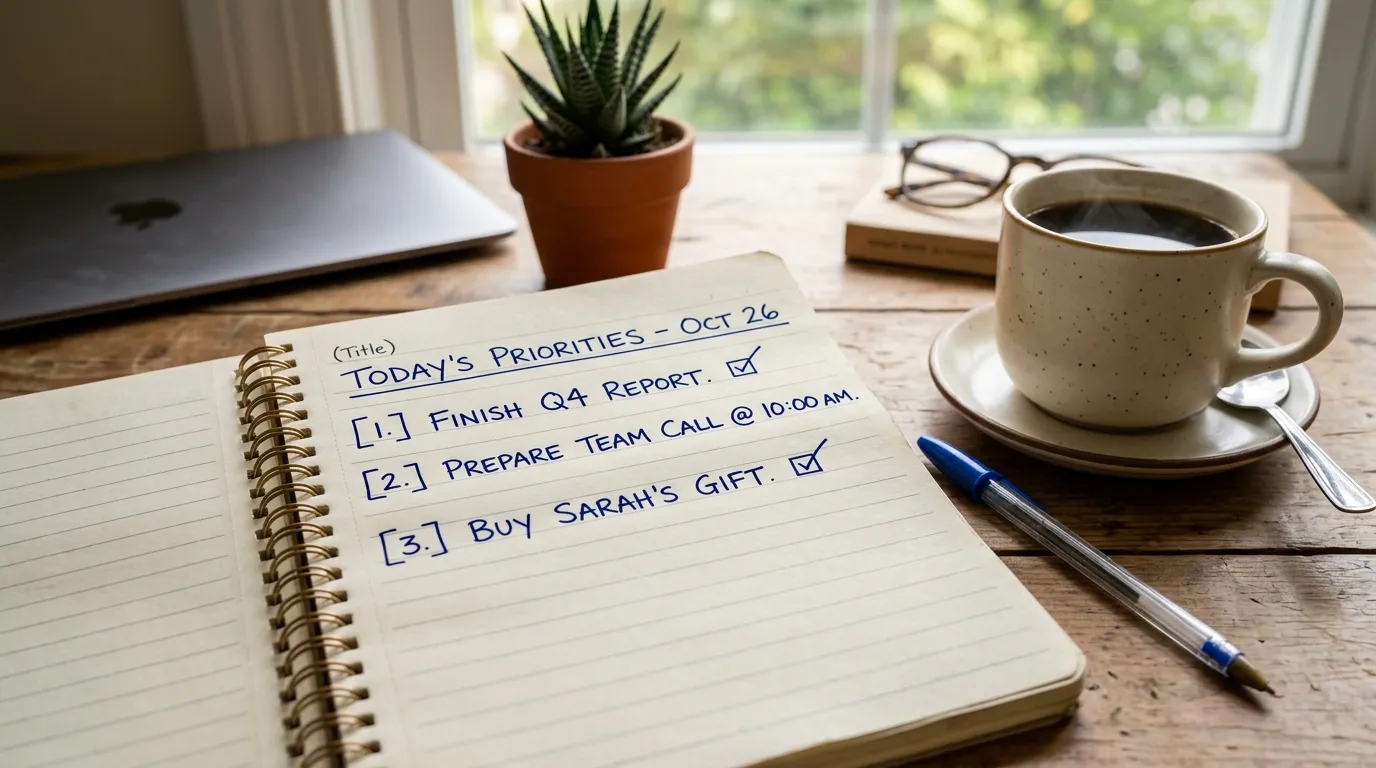
Scan calendar, deadlines, and your active project list. Ask: if I finish only three things, which three make today a success? Write them where you will see them all day: top of a notebook page, a sticky on the monitor, or a pinned note.
Candidate filters help. Prefer items that unlock other people, carry a deadline inside a week, or reduce a risk that grows with delay. Deprioritize items that only maintain comfort, like casual inbox grooming, unless inbox risk is truly today’s consequence.
If you have a weekly outcomes list from Friday, pull from there first. Daily priorities should serve weekly outcomes most days. If your Big Three never touch the weekly outcomes, either the week was fantasy or the days are drifting. Repair that link in the next weekly review.
2. Order by consequence
Rank the three so the highest-cost delay sits first. Cost can be money, trust, compounding rework, or personal health. Email is rarely the highest-cost delay even when it feels hot. A proposal due tomorrow usually beats a newsletter skim.
Write them as 1, 2, and 3. The order is the plan for attention, not a suggestion. When energy is limited, you still know which one earns the first good block.
If two items seem tied, ask which one becomes harder if delayed one day. Aging tasks that get more complex with time beat tasks that stay the same size.
3. Protect the first one
Schedule Big Three number one into your first real focus block. Not after “a quick check” of every channel. Quick checks expand. Put the hard outcome on the calendar with a start time and a short definition of done.
Prepare the runway the night before when possible: open the file, park the brief at the top, close unrelated tabs. Morning-you should only need to start, not assemble.
If your job requires an early stand-up, protect the first block after that meeting and keep the meeting from sprouting a forty-minute chat tour. Focus after obligatory sync still counts as protecting number one.
4. Park the rest
Keep everything else visible on a separate list labeled Parked or Later Today. Visibility reduces fear that parked items will vanish. Commitment stays reserved for the Big Three until they are done or deliberately swapped.
Rules for swapping: you may replace a Big Three item only when a true emergency arrives, and you should write what got bumped. Invisible bumping trains you to treat priorities as decorative.
If you finish early, pull one parked item. Do not inflate the morning list in anticipation of a perfect day. Inflation is how Big Three becomes Big Nine.
5. Close the day with a thirty-second score
Mark each of the three done, moved, or missed. One sentence on why misses happened is enough. Patterns will show up: meetings ate the morning, number one was oversized, or you never ranked honestly. Bring those patterns to the weekly review instead of reinventing the method daily.
How to choose when everything feels urgent
Urgent overload is normal in some roles. Use a quick triage before locking the three.
- Must move today or someone is blocked: strong Big Three candidate.
- Must move today or a hard deadline breaks: strong candidate.
- Feels urgent because it is noisy: park it and batch later.
- Important but not today: schedule a date, do not fake it into today’s three.
When stakeholders demand four “top priorities,” show the trade-off. “I can take a fourth if we bump X.” Make the cost visible. Big Three is also a communication tool, not only a private list.
If you truly cannot control the day, shrink the three into resilient outcomes: “Resolve the top incident,” “Send the status that unblocks finance,” “Draft the decision memo for fifteen minutes.” Tiny clear wins beat fictional deep-work fantasies.
Mistakes that weaken Big Three
- Choosing tasks that are actually projects. Split until today’s finish line is reachable.
- Filling slots with email and chat as default. Communication can earn a slot when consequence is real, not by habit.
- Writing vague verbs like “work on” without a done definition. You cannot finish fog.
- Skipping order. An unordered trio becomes whichever is easiest.
- Protecting the calendar for everything except number one. The first outcome needs the first decent block.
- Using Big Three plus a secret second list of twelve “also critical” items. Honest parking only.
- Changing the three every hour without recording why. That is reactive mode with nicer stationery.
- Ignoring weekly outcomes. Daily wins that never add up weekly mean the compass is broken.
Another mistake is treating a missed Big Three day as proof the method failed. Missed days are data. Shorten items, move planning to the night before, or cut meeting load. Adjust the inputs before abandoning the scarcity rule.
Starter plan: seven days of Big Three
Day 1: Install the surface
Create a standing place for today’s three lines. Choose parked list location. Tonight, write tomorrow’s Big Three before you sleep.
Day 2: Protect number one
Put a forty-five to ninety-minute block on the calendar for item one. Silence notifications. Finish or advance it before expanding into parked work.
Day 3: Consequence ranking practice
When selecting the three, force a one-line consequence under each. If you cannot name a consequence, it probably should be parked.
Day 4: Stakeholder trade-offs
Practice saying no or not now with a trade-off sentence at least once. Notice how scarcity clarifies conversations.
Day 5: Align with weekly outcomes
Check that at least two of today’s three serve a weekly outcome. If not, repair the link. Use your weekly review notes if you already keep them.
Day 6: Focus support
Pair number one with a focus tactic from how to focus better at work: single tab, phone away, clear done line. Priorities without focus still leak.
Day 7: Review the week of threes
Count how many number-ones finished. Note the top blocker. Decide one adjustment for next week: earlier planning, smaller items, or fewer morning meetings.
After the first week, keep the method boring. Same surface, same scarcity, same nightly or morning selection. Boredom is a feature of habits that last.
Big Three for different kinds of days
Deep-work days: two creative outcomes and one admin outcome often works. Put creative first.
Meeting-heavy days: one preparation outcome, one decision-capture outcome, one tiny progress outcome on a project that otherwise stalls. Do not pretend you have a four-hour writing block you do not have.
Recovery days: one essential work outcome, one health outcome, one home reset outcome. Capacity is part of priority, not an afterthought.
Freelance or multi-client days: cap client-facing outcomes at two and keep one internal business outcome so your own systems do not rot.
Combining Big Three with other systems
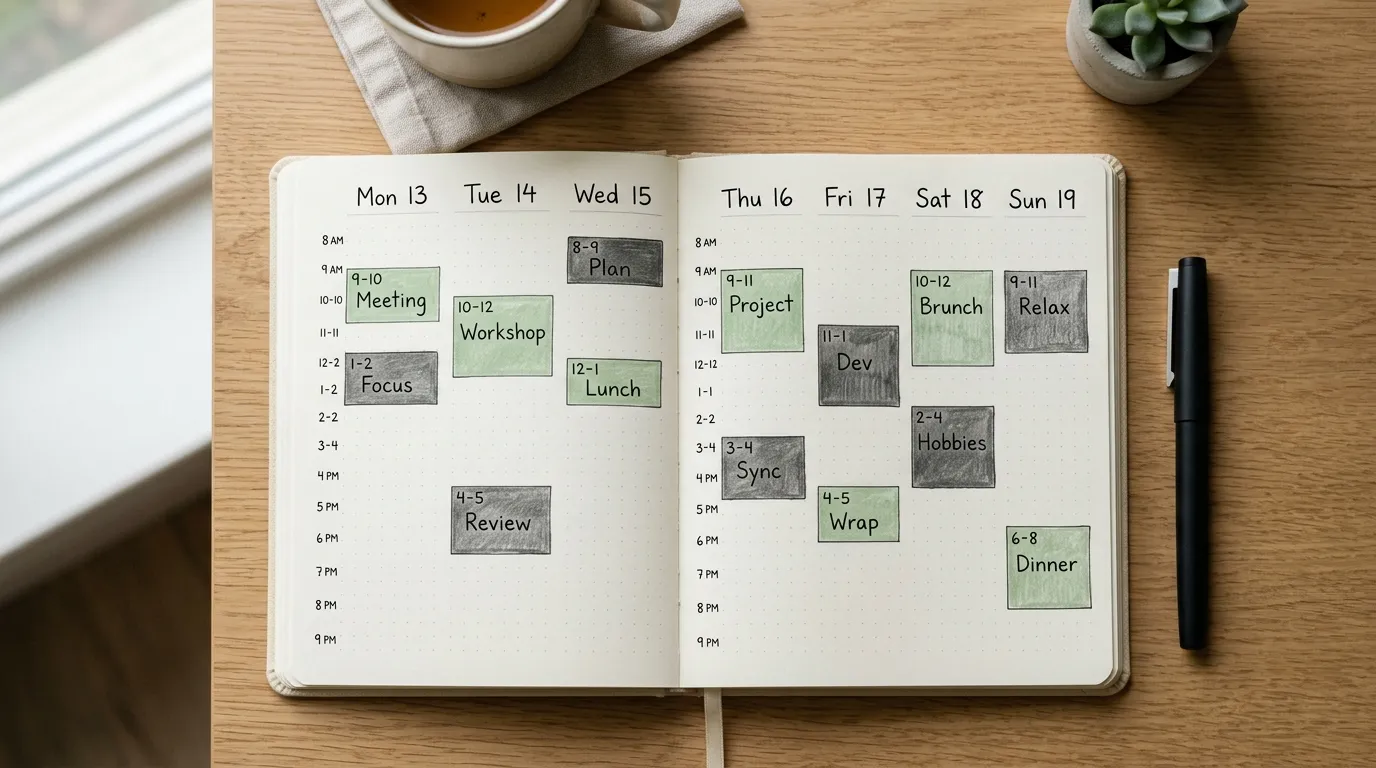
Time blocking holds the three on the clock. Task managers store the parked universe. Weekly review sets the menu the daily three draw from. Pomodoro-style intervals can power number one without changing how you select priorities.
Do not let tools redefine the method. If your app encourages twenty starred tasks, ignore the stars and keep three. The method lives in the scarcity rule, not in the software badge.
A worked morning example
Imagine a Tuesday with a draft due Thursday, a teammate waiting on feedback, and a calendar already half full. A weak list might read: check email, update tickets, think about draft, message Sam, pay a bill, tidy Notion. None of that ranks.
A Big Three version might read: (1) draft the two riskiest sections of the Thursday deliverable, (2) send Sam annotated feedback on the shared doc, (3) pay the bill and confirm receipt. Email becomes a parked batch after number one. Tickets wait unless one truly blocks a customer. The morning focus block opens on the draft file, not the inbox.
At lunch you score progress. Number one advanced through both sections. Number two is sent. Number three can happen in a ten-minute admin gap. That day succeeded even if the parked list stayed long, because the consequences were handled in order.
FAQ
Is three a magic number? It is a practical scarcity number for most people. Some roles use one MIT (most important task) on brutal days. Do not jump to five or more if three already feels hard.
What if I finish the Big Three by noon? Pull one parked item at a time. Enjoy the win. Do not punish success by secretly planning nine items tomorrow.
What if I never finish all three? Shrink them. Protect earlier blocks. Check whether meetings are mislabeled as optional. Finishing two out of three with number one done is often a strong day.
Should personal tasks count? Yes when they carry real consequence. Ignoring health or caregiving does not make you more professional; it makes your system dishonest.
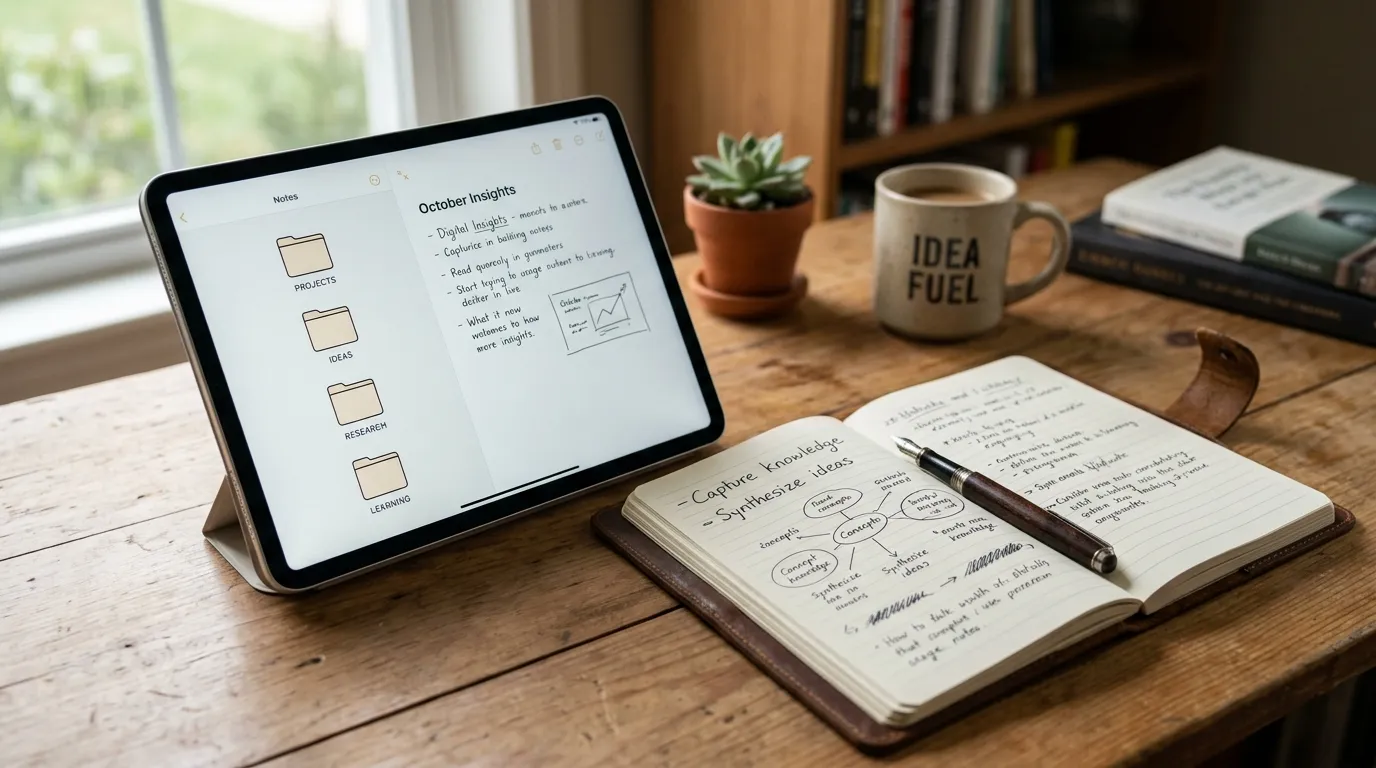
Do I need a special tool? No. Paper works. Any notes app works. Complexity is optional and often harmful at the start.
How does this relate to weekly planning? Weekly review chooses outcomes for the week. Big Three chooses today’s moves that serve those outcomes. Use both for direction plus execution.
Can teams share a Big Three? Teams can share three outcomes for a project while each person keeps a personal Big Three. Shared lists without personal scarcity still create fog.
What about recurring daily chores? Keep chores on a checklist outside the Big Three unless a chore has unusual consequence today. Routines should not consume priority slots every morning.
How long does morning planning take? Most people can set Big Three in under ten minutes once the weekly outcomes exist. If it takes thirty, your lists are too messy or your outcomes are still projects.
Related reading
Priorities only pay off when attention can stay put, so pair this method with how to focus better at work. Then connect each day’s Big Three back to a Friday reset with the weekly review checklist so your daily trade-offs keep serving a week you would actually call a win.