
Sinking funds save for expected costs so they do not become emergencies. An emergency fund is for true surprises. A sinking fund is for the “surprises” you can see coming if you are honest: holiday gifts, car registration, insurance premiums, back-to-school costs, annual software bills, pet checkups, and travel you already know you want. When those costs hit a checking account with no prep, they feel like crises. With sinking funds, they feel like withdrawals from a plan you already funded.
At All U Want, sinking funds are one of the highest-leverage money-basics habits. They reduce credit card reliance, smooth monthly cash flow, and make budgets truthful. This guide explains how to list the right costs, divide them by months, separate balances by goal, and spend from the funds without guilt—especially for holidays, car ownership, and annual bills.
Emergency fund vs sinking fund
People mix these up and then raid the wrong pile. An emergency fund covers job loss, urgent medical bills, essential emergency repairs, and similar shocks you cannot schedule. A sinking fund covers known or highly likely expenses with a date or season attached. Holiday spending is not an emergency. Neither is a yearly insurance premium you pay every August. Calling them emergencies makes your cash cushion look unreliable and trains you to panic on a calendar.
You can keep both in the same bank if needed, but label them clearly. Mentally—and preferably in the account interface—separate “Emergency cash” from “Car maintenance,” “Holidays,” and “Annual bills.” Labels protect intent. Unlabeled money is easy to reassign to dinner out.
If you are brand new to intentional cash, start with a small emergency starter and one or two sinking funds for your most painful annual hits. You do not need twelve funds on day one. You need the concept working.
1. List predictable yearly costs

Insurance, gifts, travel, school fees, car maintenance. Sit down with last year’s bank and card history, a calendar, and a blunt attitude. Which costs showed up and hurt? Which ones do you already know are coming this year? Write them as a list with rough annual totals. Typical candidates include auto insurance (if paid annually or semi-annually), renters or homeowners insurance, holiday gifts and travel, birthdays, back-to-school, medical or dental premiums not taken from paycheck, veterinary visits, professional licenses, memberships, phone upgrades you plan on a cycle, and home maintenance you can predict seasonally.
Include “annoying but real” costs people forget: Amazon Prime-style renewals, domain names, tax prep fees, club dues, sports seasons, and teacher gifts. Individually they look small. Together they wreck December and January. Sinking funds shine on clusters of medium costs.
Do not list fantasies. List realities. If you always spend on holidays, fund holidays. If you hope to spend nothing and then panic-buy in December, the fund should reflect your actual pattern—then you can shrink it deliberately next year. Honesty first, optimization second.
Group tiny items if needed. “Gifts” can cover holidays and birthdays. “Car” can cover registration, oil changes, tires on a reserve schedule, and minor repairs. Over-splitting creates bookkeeping fatigue. Under-splitting creates confusion about whether money is still available for a goal. Aim for funds that match decisions you actually make.
2. Divide by months
A $600 annual bill is $50 a month. That math is the entire magic trick. Take each annual total, divide by the months until the due date—or by twelve if it recurs yearly and you want a steady habit. Then automate that monthly amount into the labeled fund. When the bill arrives, the money is waiting.
Work a few examples. Holiday gifts budgeted at $600 for the year: $50 per month starting in January, or $75 per month if you start in May. Car registration and routine maintenance estimated at $480 per year: $40 per month. Semi-annual insurance of $900 twice a year: $150 per month into an insurance sinking fund. Travel you take every summer at roughly $1,200: $100 per month. These are illustrative numbers—use your totals—but the method is identical.
If a due date is soon and you are behind, compress the timeline. A $300 cost due in three months is $100 per month, not $25. Catch-up months feel heavier, which is why starting early matters. When you finish funding an early goal, redirect that monthly amount to the next underfunded sinking fund instead of letting lifestyle absorb it automatically.
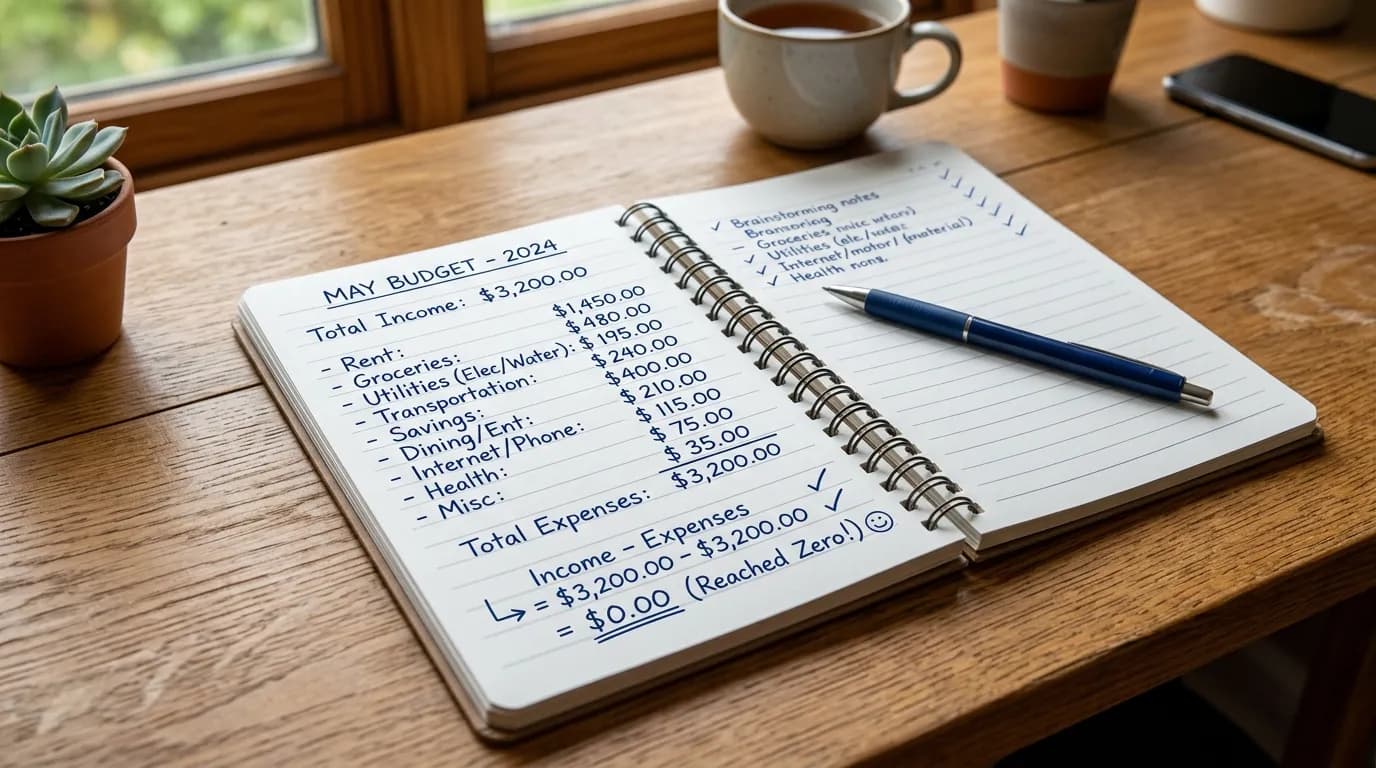
Sinking funds fit cleanly inside zero-based planning because every dollar gets a job—including future dollars for known costs. If you are assigning every dollar on purpose for the first time, read zero-based budgeting for first-timers and add sinking-fund lines as job titles for your money.
3. Separate by goal
Label balances so you do not raid holiday money for dining out. Separation can be literal sub-accounts, savings buckets in a modern bank app, or a simple spreadsheet that tracks virtual balances inside one savings account. Literal separation is psychologically stronger. Virtual separation is fine if you are disciplined about the ledger.
Name funds with verbs or occasions: “December gifts,” “August insurance,” “Car repairs,” “Summer trip.” Vague names like “Stuff” invite raids. When you open the app, you should see why the money exists without needing a debate.
Set spending rules in advance. Holiday money is for gifts and agreed holiday travel—not for a random Saturday shopping spree in October. Car money is for vehicle costs—not for upgrading your phone. If you want a general “wants” fund, create that separately. Clear boundaries keep sinking funds from becoming a second checking account with better branding.
Review balances monthly. Confirm contributions posted. Confirm no silent transfers out. If you track spending weekly, glance at whether any category spike should have come from a sinking fund instead of regular cash. Tracking and sinking funds reinforce each other; for a light tracking system, see how to track spending without spreadsheet hell.
4. Spend from the fund guilt-free
That is what it is for. When December arrives and the gift fund has $600 because you funded it all year, spending that $600 is success—not failure. People who feel guilty spending sinking funds often slip back into credit cards while “protecting” cash that was saved for this exact moment. Use the money. That is the point.
After you spend, restart the contribution cycle for next year. Empty is okay. Empty with no refill plan is how next December becomes an emergency again. If a cost came in under budget, keep the surplus in that fund or reassign it intentionally to another goal. Do not let surplus quietly migrate into undefined spending without a decision.
If a cost comes in over budget, pause and choose: trim the expense, pull from a different non-emergency fund you agree to reallocate, or use a small amount of cash reserves and rebuild. Avoid reflexively putting the overrun on a high-interest card unless that is truly the least-bad option—and then make a payoff plan immediately.
Holidays: the classic sinking fund
Holiday stress is often money stress with wrapping paper on it. Estimate gifts, wrapping, hosting, travel, and the “extra food” that appears every year. Use last year’s spending if you tracked it; if not, make a conservative estimate and refine next season. Divide by the months remaining. Automate. Optionally keep a simple gift list so the fund matches real people and real caps per person.
Decide your holiday philosophy before November. Are you capping gifts? Prioritizing experiences? Doing a family draw? The fund should match the plan. A fund without a plan becomes a larger shopping budget with a nicer name. A plan without a fund becomes debt.
Start holiday funding as early as you can. January feels early until you realize how painless $40 a month is compared with $480 in December. If you are reading this mid-year, start anyway with a compressed monthly amount. Partial funding still reduces card dependence.
Car costs: ownership is more than the payment
Car payments get attention. Maintenance, tires, brakes, registration, inspection fees, and deductibles get ignored—until they arrive. A car sinking fund turns ownership into a monthly operating cost instead of a crisis lottery. Estimate annual maintenance based on age and mileage. Older cars often need a larger fund. Newer cars may need less maintenance but still benefit from a deductible reserve and registration funding.
A practical approach: fund routine maintenance and registration on a monthly schedule, plus a repair reserve target such as $500–$1,000 depending on your vehicle and risk tolerance. When a repair hits, spend from the fund. Then refill. This is not the same as a full emergency fund, but it prevents routine car life from emptying emergency cash reserved for bigger shocks.
If you use rideshares heavily instead of owning a car, you may need a transport sinking fund for months with travel spikes, or for saving toward a future used car down payment. Same method, different label.
Annual bills: stop letting them ambush you
Annual and semi-annual bills are perfect sinking-fund candidates because the dates are knowable. Insurance premiums, property taxes (if not escrowed), HOA special assessments you can anticipate, professional dues, and school fees all qualify. Put due dates on a calendar. Assign monthly contribution amounts. When the bill posts, move money from the sinking fund to checking and pay it—or pay directly from the fund if your bank allows.
If several annual bills cluster in the same season, consider one “annual bills” fund with a checklist rather than five tiny accounts—as long as your tracker shows each bill is fully funded before its due date. Structure should reduce stress, not create account clutter.
How many sinking funds do you need?
Start with two: the annual cost that hurt most last year, and the next predictable cost on the calendar. After those run smoothly for a quarter, add another. Many households eventually land on four to seven funds. More than that can work if your bank’s buckets make it easy. If management feels heavy, merge.
Priority order for beginners: insurance or other must-pay annual bills, car or home maintenance reserves, holidays, then discretionary travel. Must-pay obligations first. Celebrations second. Trips third. That order keeps essentials from competing with wants inside the same unlabeled balance.
Automating contributions
Treat sinking-fund transfers like any other pay-yourself-first automation. Schedule them on payday. If you have multiple funds, either one split transfer into buckets or a single transfer into savings with a quick monthly allocation note. Consistency beats elegance. If cash is tight, fund the highest-priority sinking fund fully before adding optional ones.
When income is irregular, contribute a baseline in weak months and catch up in strong months. Keep the labels even when the amounts flex. The identity of the fund matters: this money is spoken for.
Common mistakes
Calling everything an emergency. Creating fifteen funds on day one. Funding gifts but not insurance. Raiding sinking funds for lifestyle without renaming the goal. Forgetting to restart contributions after spending. Estimating holiday costs with wishful thinking instead of last year’s reality. Keeping no written list of what each fund covers.
Another mistake is double-counting. If your monthly budget already includes a line for “car maintenance” spending and you also fund a car sinking fund without adjusting, you may feel broke unnecessarily. Pick one mechanism per cost. Either you expense small maintenance monthly, or you sink for it—or you do a hybrid with clear rules. Clarity prevents phantom shortages.
A one-hour setup plan
Minute 0–15: list last year’s painful non-monthly costs. Minute 15–30: estimate annual totals and due months. Minute 30–45: choose two or three funds and calculate monthly amounts. Minute 45–60: create labels or buckets and schedule the first transfers. Write spending rules in one sentence each. Done. You can refine amounts next month after you track real spending.
If you already use zero-based budgeting, add the sinking-fund lines in your next monthly assignment session. If you are still learning where money goes, track for two weeks, then create funds for the spikes that were actually predictable. Use spending tracking to discover candidates and zero-based budgeting to assign the monthly contributions on purpose.
What success feels like
Success is August insurance paying without a stomach drop. Success is December gifts bought with cash you saved since spring. Success is a brake job that is annoying but not financially destabilizing. Success is fewer “emergencies” that were never emergencies. Your emergency fund stays reserved for real shocks because predictable life is finally funded like predictable life.
You may also notice less conflict in shared households. Arguments often erupt when an expected cost was expected by one person and invisible to the other. Named sinking funds make expectations visible. Visible expectations are negotiable. Invisible ones become ambushes.
Quick tip
Start with your two most painful annual surprises. Fund those first. Expand only after the contributions feel normal. Two working funds beat ten abandoned ones.
FAQ
How long does this take? Most people can list costs and schedule transfers in under an hour, then refine amounts over a week or two as due dates approach.
Do I need special tools? No. Bank savings buckets, separate savings accounts, or a simple spreadsheet ledger all work. Simple defaults beat complicated setups you abandon.
Is a sinking fund the same as saving for fun? It can include fun goals like travel, but the core use is expected costs. Fun goals still benefit from the same monthly math.
What if I cannot fund everything? Rank by pain and due date. Fully fund must-pay bills first. Partially fund holidays rather than charging the whole season.
Should sinking funds be in a high-yield account? Yes if you can still access the money when needed. Yield is a bonus; separation and automation are the main features.
Can I use credit cards and pay from the fund? Yes—if you pay the card in full from the sinking fund when the charge posts. Do not carry high-interest balances for planned expenses.
How do I know the amounts are right? Compare funded totals to actual spend after each event. Adjust next cycle. Tracking makes the feedback obvious.
Related: Zero-Based Budgeting · How to Track Spending