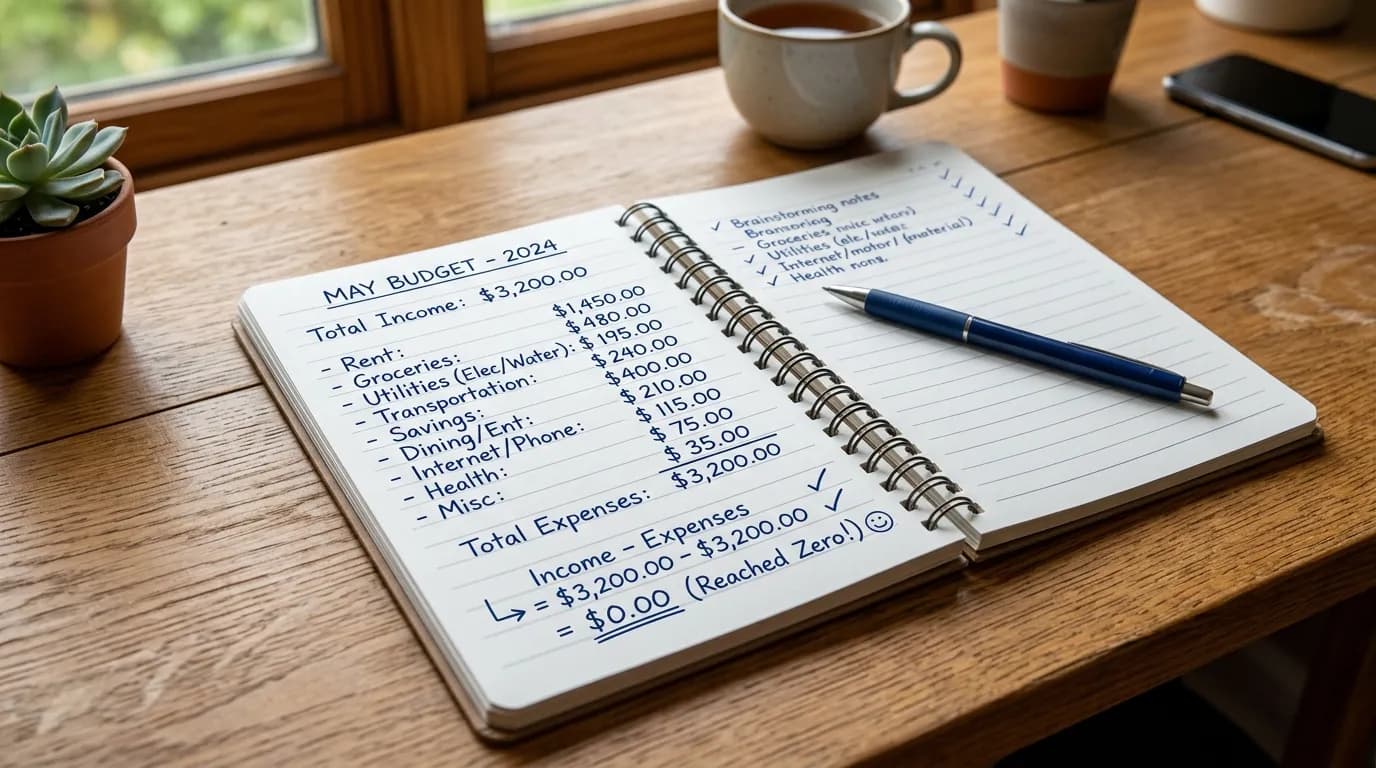

Tracking fails when the system is heavier than the habit. Keep categories few and reviews short. Most people who “fail at budgeting” did not fail at math. They failed at maintenance. A 40-tab spreadsheet, twelve micro-categories, and daily guilt check-ins feel productive for about a week. Then life gets busy, a few receipts go missing, and the whole tracker becomes a monument to unfinished intentions. At All U Want, we design money habits for people who want clarity—not a second job.
Spending tracking answers one practical question: where did the money go, and what should change next? You do not need forensic accounting. You need a light system that captures enough detail to spot leaks, paired with a weekly review short enough that you will actually do it. This guide shows how to set that up, keep it alive, and turn numbers into one useful change at a time.
Why simple tracking beats perfect tracking
Perfect tracking tries to categorize every coffee, tip, and shared Venmo with tax-return precision. Simple tracking groups spending into a handful of buckets and accepts that some items will be messy. Perfect systems create delay: you wait until you have time to “do it right,” which means you do nothing. Simple systems create momentum: you log roughly, review weekly, and adjust.
Awareness alone often cuts spending. When people see that “misc” or “food” is twice what they imagined, behavior shifts without a lecture. Tracking is not about shame. It is about replacing fog with a map. Fog makes every purchase feel equally justified. A map shows which category is quietly draining the month.
Tracking also supports every other money habit on this site. You cannot build a realistic monthly plan if you do not know your averages. You cannot run a useful money date if nobody has looked at transactions. Start light, stay consistent, then deepen only if you need more detail.
1. Use 6–8 categories only

Housing, food, transport, bills, fun, misc, savings. That list covers most household lives. Add one more if you must—debt payments, childcare, or medical—but resist the urge to invent twenty labels. The more categories you create, the more decisions each purchase requires, and decision fatigue is how trackers die.
Define each category in one sentence so you do not argue with yourself later. Housing: rent or mortgage, plus renters or homeowners insurance if you pay it separately. Food: groceries and household staples. Transport: fuel, transit passes, rideshares, basic car costs. Bills: utilities, phone, internet, insurance premiums. Fun: dining out, entertainment, hobbies. Misc: the awkward middle. Savings: transfers you actually keep. Debt: minimums and extra payments if you want them visible.
Merge categories that fight each other. If you constantly debate whether a Target run is “household” or “misc,” pick one rule and stick with it. Consistency matters more than philosophical purity. A slightly wrong category that you use every time is more useful than a perfect taxonomy you abandon.
Skip investment-grade detail at the start. You do not need separate lines for “coffee shops,” “fast casual,” and “fine dining” in month one. If food is the problem, you can split it later. Start with the wide lens, then zoom in on the category that surprises you.
2. Capture as you go
Note purchases daily in an app or notes file. Daily capture prevents the Sunday-night receipt archaeology that makes people quit. You do not need a beautiful dashboard. You need a reliable inbox for numbers.
Choose one capture method and stop shopping for tools. Options that work: a notes app with a running list, a simple spreadsheet with date/amount/category, your bank’s built-in tagging, or a lightweight budgeting app that imports transactions. The best tool is the one you will open. If you already live in your phone’s notes app, start there for two weeks before migrating anywhere fancier.
Build a tiny capture ritual. After the last purchase of the day, or during your evening shutdown, spend two minutes logging what you spent. Round to the nearest dollar if exact cents slow you down. Include cash. Cash is where tracking goes to die if you ignore it. A quick photo of a receipt can be enough if you categorize later during your weekly review.
For shared households, agree on one shared log or one person who consolidates. Dual systems with no merge create duplicate work and missing data. If both partners spend, both should capture—or link cards to one review process.
3. Review weekly, not constantly
Fifteen minutes beats obsessive checking. Constant balance-watching creates anxiety without insight. A weekly review creates insight without living inside your bank app. Pick a recurring slot—Sunday evening, Monday lunch, or the same night as your household money date—and protect it like any other appointment.
Use the same agenda every week so you do not reinvent the process. Open your tracker. Total each category for the week. Compare to your rough monthly targets or to last week. Circle one surprise. Decide one adjustment. Close the app. That is the whole meeting. If you want a structured household version of this habit, pair tracking with a weekly money date check-in.
Monthly reviews are useful, but they are too slow as your only checkpoint. By the time a month ends, the leak has already emptied. Weekly reviews catch drift early: a fun category that doubled, a bill that renewed unnoticed, a transport spike from rideshares. Small course corrections beat dramatic end-of-month austerity.
During the review, ignore noise. A one-time birthday gift is not a lifestyle crisis. A recurring subscription you forgot is. Train your eye for patterns, not one-off blips. Patterns are where change pays off.
4. Fix one leak at a time
Change the category that surprises you most. Tracking without action is journaling with receipts. After two or three weeks of data, you will usually see an obvious outlier. Maybe dining out is twice your mental estimate. Maybe “misc” is a junk drawer for impulse buys. Maybe transport is rideshares that could be a transit pass.
Pick one leak. Set one constraint for the next two weeks. Examples: cook at home four weeknights, delete one unused subscription, set a weekly fun cap, or move shopping to a single planned day. Do not overhaul five categories at once. Overhauls feel righteous and collapse under their own weight. One leak, one fix, then reassess.
Translate the fix into a number when you can. “Spend less on food” is vague. “Keep food at $120 this week” is testable. At the next review, check whether the constraint worked. If yes, keep it. If no, adjust the number or change the tactic. Tracking is a feedback loop, not a moral scoreboard.
When your weekly tracking feels steady, fold the numbers into a simple monthly plan. A fast way to do that is our walkthrough for a monthly budget in 30 minutes. Tracking tells you what is true. A budget tells you what you want to be true next month.
A starter system you can run this week
Day one: write your 6–8 categories on paper or in a note. Day one also: choose your capture tool. Days two through seven: log spending daily, even imperfectly. End of week one: fifteen-minute review. Total the categories. Notice one surprise. Do not fix everything yet—you are still gathering a baseline.
Week two: keep logging. At the review, compare week one and week two. If a category is consistently high, set a constraint for week three. Week three: run the constraint and review again. Week four: decide whether your categories need a tiny tweak, then lock the system for a month. By day thirty, you will know more about your money than most people learn in a year of vague worry.
Keep the first month deliberately boring. Boring systems survive. Fancy color-coded dashboards can come later if you still want them—and many people find they do not.
What to do with cash, shared costs, and weird purchases
Cash: withdraw with intention and track the withdrawal as the category you expect to spend, or track each cash purchase if you can. If that is too heavy, track ATM withdrawals as “cash/misc” and tighten how often you withdraw. Shared costs: if a friend pays for dinner and you Venmo them, log your Venmo as food or fun. If you pay and they reimburse you, log the net cost, not the full bill, once reimbursement arrives—or log full and note the reimbursement as income. Pick one method and stay consistent.
Weird purchases will happen: gifts, medical co-pays, car repairs, school fees. Use misc or create a temporary note, then decide during the weekly review whether it belongs in a sinking fund next year. Tracking reveals which “surprises” are actually annual costs wearing a costume.
Returns and refunds: subtract them from the original category when they post. Do not invent elaborate accounting. Directional accuracy is enough for household money management.
Bank apps, spreadsheets, and when to upgrade
Bank apps are convenient because transactions already live there. Their weakness is messy merchant names and weak category control. If you use a bank app, rename categories to match your 6–8 list and review weekly inside that app. Spreadsheets are flexible and transparent. Their weakness is manual entry. If you like control and will commit to weekly updates, a simple sheet with date, payee, amount, and category is plenty.
Dedicated budgeting apps help when you want automatic import and envelopes. Their weakness is subscription cost and setup complexity. Upgrade only after a manual system proves you will review weekly. Tools do not create discipline. They reduce friction for discipline you already practice.
Avoid tool-hopping. Switching apps every month resets your history and your habit. Give any method 30 days before judging it.
How tracking connects to a real budget
Tracking is descriptive. Budgeting is prescriptive. First you learn your averages, then you assign targets. Many beginners reverse this and invent budget numbers from optimism. Optimism is not data. After a month of tracking, set category targets close to reality, then improve one line. That is how budgets become believable.
If you need a rapid planning session once you have a few weeks of numbers, use the 30-minute monthly budget method linked above. If you prefer a household conversation rhythm, keep the money date weekly and bring the tracker totals as the agenda. Tracking without a review meeting often fades. A review meeting without numbers becomes vibes. Use both.
Common tracking mistakes
Too many categories. Obsessive daily balance checks without a weekly synthesis. Ignoring cash. Tracking for three days after a payday and then going dark. Using tracking as self-punishment instead of information. Quitting because one week was messy. Messy weeks are data too—they show where the system needs less friction.
Another mistake is waiting for a “clean month” to begin. There is no clean month. Start mid-week, mid-chaos, with whatever is in your account history. Imperfect data that exists beats perfect data that never starts.
Finally, do not confuse tracking with restriction. You can track a generous fun category on purpose. The point is intentionality. Some seasons call for tighter numbers. Some call for truthful spending with eyes open. Tracking serves both.
Signals that your system is working
You can name your top three spending categories without guessing. You notice a spike within a week, not two months later. You make one concrete adjustment per review instead of rewriting your entire financial personality. You feel less ambient money anxiety because uncertainty dropped. Those are success markers—even if your spending is still higher than your long-term goal.
After two months, you may find certain categories stable enough that you only deep-dive when they spike. That is fine. Tracking can become lighter over time as your defaults improve. The habit stays; the intensity can flex.
Quick tip
Ignore perfect categorization. Direction beats precision. If a purchase could fit two labels, pick one in three seconds and move on. The weekly total still tells the truth you need.
FAQ
How long does this take? Setup takes under an hour. Daily capture takes a couple of minutes. The weekly review should stay around fifteen minutes. Most people can start in under an hour and refine over a week.
Do I need special tools? No. A notes app or basic spreadsheet works. Simple defaults beat complicated setups you abandon.
Should I track every cent? Track enough to see patterns. Rounding to the nearest dollar is fine for household management.
What if I hate logging purchases? Use automatic bank import if available, and limit manual work to a weekly categorization sweep. Reduce categories until the friction drops.
How is this different from a budget? Tracking shows what happened. A budget decides what should happen next. You need both eventually; start with tracking if your numbers are foggy.
Can couples track together? Yes. Use one shared review and clear ownership of who logs what. A weekly money date keeps the system human.
What if one category is always a mess? That category is your first leak to fix—or your first candidate for a sinking fund if it is actually an annual cost.
Related: Monthly Budget in 30 Minutes · Money Date