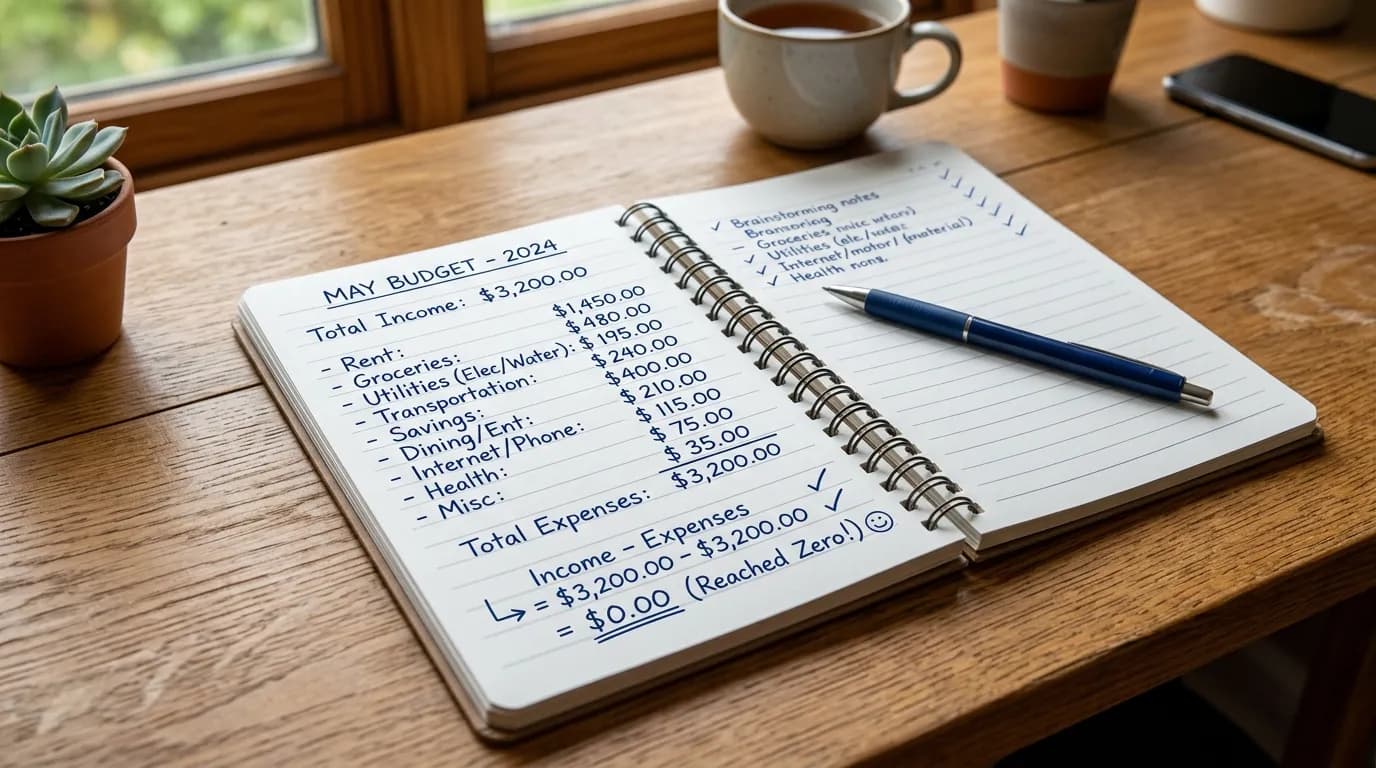

Paying yourself first means savings leave your checking account before lifestyle spending expands to fill it. Most people try the opposite approach: spend all month, then hope something is left on the last day. Hope is not a savings plan. When money sits in the same account you use for groceries, coffee, and impulse buys, it feels available—and available money usually gets spent. Automation flips the order. Your future self gets paid on payday, and your present self learns to live on what remains.
At All U Want, we treat pay-yourself-first as a money habit, not a personality trait. You do not need perfect willpower. You need a transfer that runs whether you feel motivated or not. This guide walks through how to choose an amount, set up automation, protect the habit when cash feels tight, and raise the percentage as life improves—without feeling like you are living on scraps.
What “pay yourself first” actually means
The phrase is older than most budgeting apps, but the idea is simple. Treat savings like a non-negotiable bill. Rent, utilities, and minimum debt payments leave your account whether you feel like paying them. Savings should work the same way. You decide a percentage or fixed dollar amount, schedule the move, and then budget with the leftover balance.
This is different from “trying to save more.” Trying depends on mood, leftovers, and end-of-month guilt. Paying yourself first depends on timing. Money moves on payday, ideally within hours of your paycheck landing. Once it is in a separate savings account—or at least a labeled sub-account—you are less likely to treat it as discretionary cash.
Paying yourself first also does not mean ignoring bills or debt. If you have high-interest credit card balances, part of your “first” dollars may go to an emergency starter fund and part toward debt payoff. The principle is still the same: intentional money moves happen before lifestyle spending decides for you.
1. Pick a percentage you can keep
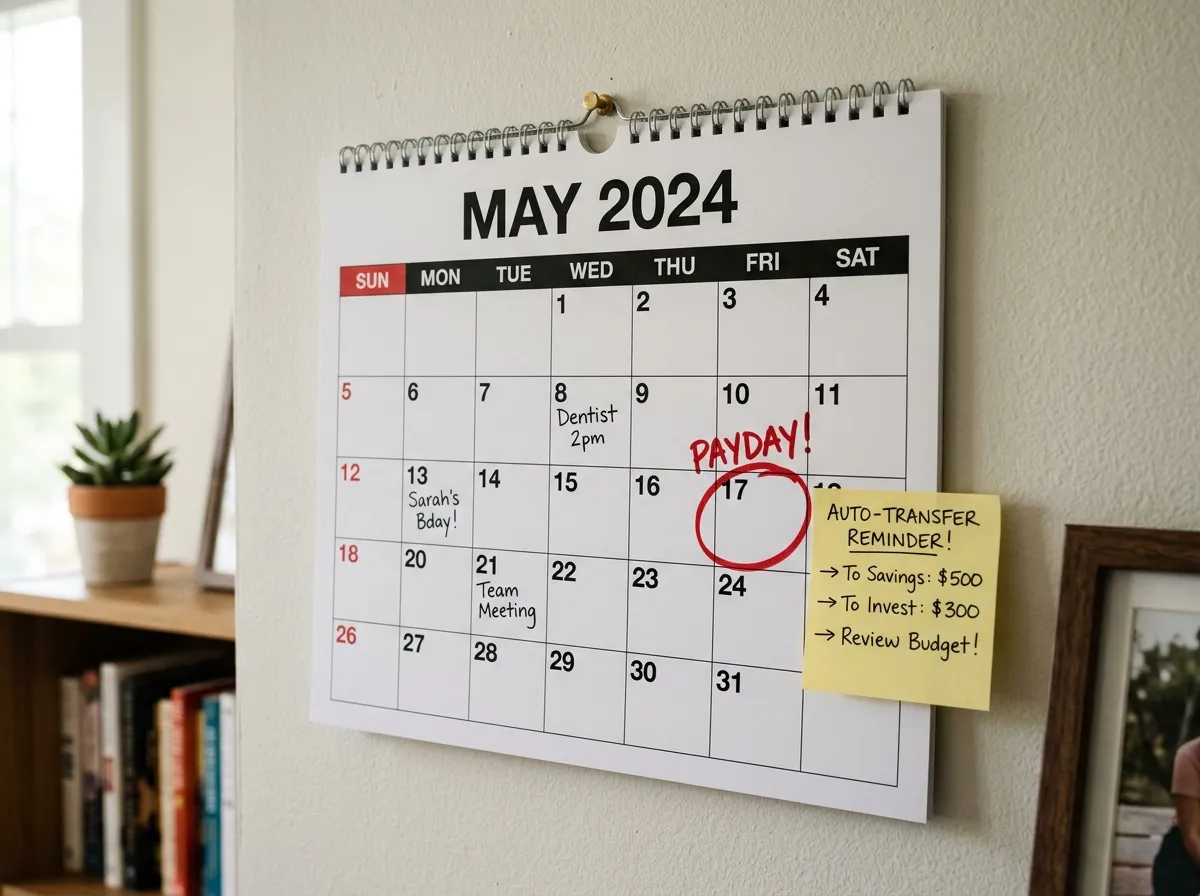
Start with 5–10% if 20% feels impossible. The classic advice says save 20% of take-home pay. That is a useful long-term target, not a day-one requirement. If your rent is high, your income is irregular, or you are rebuilding after a rough season, forcing 20% can make the whole system collapse in week two. A percentage you keep beats a heroic percentage you abandon.
Use take-home pay, not gross. Gross is what looks good on a job offer. Take-home is what lands in your account after taxes, benefits, and deductions. If you are paid $4,000 net twice a month, 5% is $200 per paycheck. Ten percent is $400. Those numbers are concrete enough to schedule as transfers.
If percentages feel abstract, pick a fixed dollar amount that would sting a little but not break the month. Fifty dollars per paycheck is enough to prove the habit. One hundred dollars is better if your budget can absorb it. The goal of month one is not financial independence. The goal is a working pipeline from paycheck to savings.
Write your number down before you open your bank app. People often shrink the amount when they stare at the balance. Decide offline, then execute. If you are using a framework like 50/30/20, the savings slice is already named for you—automate that slice first, then allocate the rest. For a clear walkthrough of that framework, see our guide to budgeting for beginners with 50/30/20.
2. Automate the transfer
Same day as payday, every payday. Timing matters more than people admit. If you wait three days “to see how the month feels,” you have already started negotiating with yourself. Automate for the morning your direct deposit arrives, or the evening of the same day. Many banks let you set recurring transfers by day of week or by specific dates. Match those dates to your pay calendar.
Send the money somewhere slightly inconvenient. A high-yield savings account at a different bank is ideal because it adds friction to withdrawals. A labeled savings bucket inside your current bank is fine if switching institutions feels like too much work right now. The label matters: “Emergency,” “Future rent,” or “Pay me first” is clearer than a vague “Savings” balance you raid for takeout.
Set the transfer to recurring, not one-time. One-time transfers require you to remember and re-decide every payday. Recurring transfers remove the decision. If your pay dates shift because of weekends or holidays, check whether your bank supports “next business day” logic or whether you need two scheduled dates each month. Spend ten minutes making the schedule boring and reliable.
If you have multiple goals, automate to one savings account first, then split later. Too many micro-transfers on day one create maintenance work you will skip. One transfer builds the habit. Once it is stable for a month or two, you can split into emergency fund, vacation, and annual bills.
3. Spend what remains guilt-free
The system does the discipline. This is the part people skip—and then the habit feels like punishment. After the transfer fires, the money left in checking is your operating budget. Groceries, fun, subscriptions, and weekend plans come from that pool. You do not need to apologize for spending it, because your savings already happened.
Guilt-free spending only works if the leftover amount is realistic. If you automate 25% and then constantly overdraft, you did not fail as a person; you set a transfer that was too aggressive for your current costs. Lower the percentage, stabilize for 60 days, then raise again. Sustainability is a feature, not a compromise.
Use a simple weekly check on the checking balance rather than constant monitoring. Open the app once or twice a week, compare spending to what is left until next payday, and adjust small purchases—not your savings transfer—if you are running hot. Obsessive balance-checking often leads people to pause savings too early. The transfer is the protected move; discretionary spending is the flexible one.
If you share finances with a partner, agree on the automation together. Surprises create conflict. A shared “pay ourselves first” transfer, plus a clear leftover budget, reduces arguments about whether someone “should have known” money was spoken for.
4. Raise it after raises
Increase savings when income grows before lifestyle does. Raises, bonuses, tax refunds, and side-income spikes are the easiest moments to grow the habit—because you have not yet adapted to a higher lifestyle. If you get a $200-per-paycheck raise and immediately expand dining out by $200, your savings rate stays flat. If you route $100 of that raise to savings and enjoy $100 in lifestyle, you progress without feeling deprived.
A practical rule: save at least half of every raise. You can adjust that rule to your debt and emergency-fund status, but the direction should be clear. Lifestyle can grow. It should not consume 100% of new income.
Review your percentage quarterly. Life changes: rent increases, childcare starts, a car payment ends. A quarterly review is enough for most people. Ask three questions: Did the transfer clear every payday? Did checking stay solvent? Can we raise by 1% without chaos? One percent sounds small. Over a year of small raises, it compounds into a real savings rate.
When your emergency fund is thin, put raises toward cash reserves first. When the starter fund is solid, you can split new savings between cash and other goals. For a step-by-step path from zero to a usable cash cushion, read how to build an emergency fund from scratch.
How much is “enough” to automate?
Enough is the amount that moves you forward without breaking essentials. For someone with no emergency cash, the first target is often a small starter fund—$500 or one month of bare essentials—funded by automated transfers. For someone with a starter fund and high-interest debt, automation might split between a small savings contribution and accelerated debt payments. For someone with stable cash and manageable debt, automation can grow toward 15–20% of take-home across savings and investing.
Do not wait for a perfect number. Waiting is how months disappear. Start with a floor amount, then climb. If your income is irregular—freelance, tips, commissions—automate a conservative base on your lowest reliable month, then add a manual top-up after strong months. Consistency on the floor beats occasional heroics on the ceiling.
Where the money should go first
Order matters when cash is limited. A common All U Want sequence looks like this: cover essential bills and minimum debt payments, automate a small emergency starter transfer, then direct extra dollars toward high-interest debt or larger savings goals. Paying yourself first does not mean ignoring interest that is eating you alive. It means you stop treating savings as optional leftovers while still protecting a thin cash buffer so the next surprise does not go on a card.
Keep short-term savings in cash, not in investments you might need to sell in a panic. Emergency money and near-term goals belong in accessible accounts. Longer-term retirement contributions can also be automated—especially if your workplace offers a match—but that is a parallel pipeline, not a substitute for liquid cash you can reach within a day or two.
Make automation survive real life
Automation fails when people treat it as fragile. Build in a few guardrails. Keep a small buffer in checking so the savings transfer does not bounce if a bill posts early. If your bank allows it, schedule the savings transfer for the day after payday rather than the exact minute of deposit, so payroll clears first. Name the savings account something that reminds you why it exists.
When an unexpected expense hits mid-month, resist the reflex to cancel the next savings transfer. First cut wants for a week or two. Pause a subscription. Delay a nonessential purchase. If the expense is a true emergency and you have a fund, use the fund—then restart automation to refill. Canceling the transfer trains your brain that savings are optional under pressure, which is exactly when you need them most.
If cash feels chronically tight, the issue may be expenses, not the savings habit. Track one month of spending with a simple category list, then fix the biggest leak. Automation cannot outrun a budget that is structurally too large for your income. Pair pay-yourself-first with a realistic plan for housing, food, and transport.
Common mistakes that kill the habit
Automating too much too soon is the top mistake. People set 20%, bounce a transfer, feel embarrassed, and quit. Start smaller. Another mistake is leaving savings in the same checking account with no label. Invisible goals get spent. A third mistake is raiding savings for non-emergencies because “I can put it back next month.” Next month rarely cooperates. Define what counts as an emergency before you need the definition.
A fourth mistake is celebrating a raise with a full lifestyle upgrade before adjusting automation. The fifth is relying on willpower apps and complicated dashboards instead of one recurring transfer. Complexity feels productive. Recurring transfers are productive. Keep tools light until the habit is boring.
Finally, do not confuse investing tips on social media with your day-one system. Paying yourself first is about moving money on schedule. Asset allocation comes after you have a pipeline and a cash cushion appropriate for your life.
A simple setup you can finish today
Open your banking app. Note your next two pay dates. Choose a percentage or dollar amount you can keep for 60 days. Create or label a savings destination. Schedule a recurring transfer for payday. Write one sentence: “Savings moves first; I spend what remains.” That sentence is your policy. Policies beat moods.
Optional but useful: set a calendar reminder for 90 days out labeled “Raise savings 1% if stable.” Future you will thank present you for the nudge. If you want the emergency-fund side of this system spelled out with starter goals and refill rules, pair this article with building an emergency fund from scratch. If you want the broader budget map that sits around the transfer, use 50/30/20 explained simply.
What progress looks like after one month
After four or five paydays, you should see a rising savings balance and a checking account that still covers bills. That is success—even if the savings total is only a few hundred dollars. Progress is the pipeline working, not a viral net-worth screenshot. After three months, review whether you can raise the transfer. After six months, you should feel less panic when a moderate surprise appears, because cash exists on purpose.
Notice the emotional shift as well. Many people report that automated savings reduces money dread. The dread often came from uncertainty: “Did I save anything this month?” Automation answers that question before the month begins. Certainty is calming. Calm people make better spending decisions with the money that remains.
Pay yourself first with irregular income
Freelancers and commission earners can still use this method. Calculate a baseline month—the lowest income you can reasonably expect in a normal slow period. Automate savings from that baseline. In stronger months, add a second transfer manually within 48 hours of receiving the larger deposit. Some people use a percentage of every invoice payment the day it clears. The key is speed: move money while the deposit still feels like “extra,” before lifestyle expands to claim it.
Keep a larger checking buffer if income timing is lumpy. Irregular earners often need two to four weeks of expenses in checking so automated transfers and bill runs do not collide. That buffer is not a failure of pay-yourself-first. It is infrastructure that keeps automation from bouncing.
When to pause—and when not to
Pause automation only for true structural changes: job loss, a medical crisis that empties cash, or a temporary income collapse. Even then, try reducing the amount before stopping entirely. A $25 transfer keeps the identity of “person who saves” alive. Identities matter. People who think of themselves as savers restart faster than people who quit and restart from zero.
Do not pause for vacations you did not plan for, wedding gifts you forgot, or a month of restaurant spending that got away from you. Those are sinking-fund and tracking problems, not reasons to dismantle your savings pipeline. Fix the leak; protect the transfer.
Quick tip
If cash feels tight mid-month, cut wants before pausing savings. Pause the streaming upgrade, the extra delivery orders, or the “just because” shopping cart. Keep the transfer. The transfer is the habit. Wants are the dial you can turn without undoing months of progress.
FAQ
How long does this take to set up? Most people can choose an amount and schedule a recurring transfer in under an hour. Refining the percentage usually takes a week or two of living with the new leftover balance.
Do I need special tools? No. Your existing bank’s recurring transfer feature is enough. Fancy budgeting apps are optional. Simple defaults beat complicated setups you abandon.
What if I live paycheck to paycheck? Start tiny—even $20 per paycheck—and audit one spending category for cuts. The point is to create a pipeline, then widen it. Pair this with a basic budget so essentials are covered first.
Should I save or pay debt first? Build a small emergency starter while paying minimums, then attack high-interest debt aggressively. Keeping a thin cash cushion prevents new card debt when life happens.
Is 5% too low to bother? No. Five percent of take-home, automated for a year, is real money—and it trains the habit that makes 10% and 15% possible later.
What if my partner disagrees? Share the math: show the transfer amount, the leftover budget, and the goal the savings serves. Agree on a trial period of 60 days, then review together.
Can I automate into multiple accounts? Yes, after the base habit works. Start with one transfer. Split later into emergency, sinking funds, and longer-term goals once you trust the system.
Related: Emergency Fund From Scratch · 50/30/20 Explained