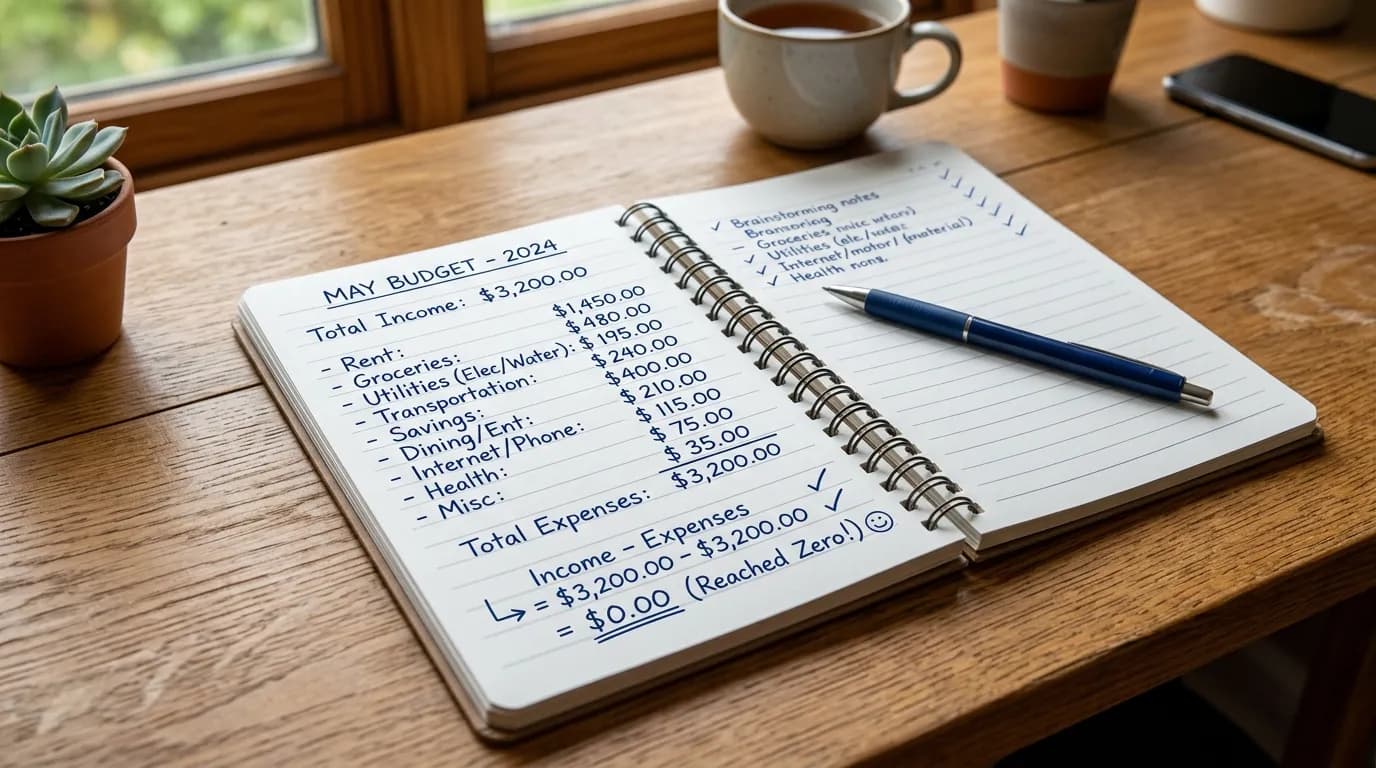

An emergency fund is cash set aside for real surprises: a sudden job gap, an urgent medical bill, a necessary car repair that keeps you employed, or a critical housing fix. It is not a vacation fund, a shopping fund, or a “I had a hard week” fund—though naming those other goals separately keeps the emergency money safer. This All U Want guide walks through building a starter emergency fund from scratch with small, automatic transfers. It is educational money basics with illustrative numbers, not personalized financial advice.
Starting from zero can feel embarrassing if social media shows people with six-figure cushions. Ignore that noise. A first $500, then one month of essentials, then a larger runway, is a normal staircase. The skill is beginning, separating the money, and protecting the definition of “emergency” so the fund still exists when you need it.
Two habits accelerate the staircase: paying yourself first and treating early paychecks with intention. If you want automation mechanics, read pay yourself first. If you are new to income routines, the first paycheck checklist helps you set defaults before lifestyle expands. Below, we focus on the emergency fund itself—goals, accounts, automation, and refill rules.
Why a starter fund matters before the “full” fund
Classic advice often mentions three to six months of expenses. That target can be motivating and overwhelming at once. From scratch, a starter goal reduces panic and credit dependence when a tire blows or a shift disappears. Illustration: if a $400 repair would otherwise land on a high-interest card, a $500–$1,000 cash cushion can be cheaper and calmer even before you reach multi-month savings.
A starter fund also teaches the behavior you will need for larger balances: separate account, automatic transfers, clear usage rules, and a refill plan. Those behaviors matter as much as the dollar total. People who jump straight toward a huge number without systems often raid the fund for non-emergencies and feel like they “failed at saving.” A starter goal is practice with lower stakes.
Think in phases. Phase one: tiny buffer that breaks the zero balance problem. Phase two: roughly one month of essential costs. Phase three: expand toward several months when debt pressure and income stability allow. Your timeline depends on income, obligations, and interest rates on any debts. Education means seeing phases; it does not mean one universal schedule for every household.
1. Set a starter goal you can believe

Choose a first number that feels reachable within a few months, not a fantasy that requires perfect behavior forever. Common educational illustrations include $500, $1,000, or one month of essentials such as rent, utilities, groceries, and transport. Pick based on your costs and cash flow. If $1,000 feels far, $300 then $600 then $1,000 still counts as building from scratch.
Calculate a rough “essentials month” so phase two is concrete. Illustration: rent $1,100 + utilities $150 + groceries $300 + transit $100 + minimum debt payments $140 + basic phone $45 ≈ $1,835. That $1,835 becomes a meaningful phase-two target after a smaller starter. You do not need perfect precision; you need a number that represents survival basics, not your full lifestyle budget.
Write the goal where you will see it: account nickname (“Starter EF $1000”), a note on your phone, or a line in your monthly budget. Visible goals get funded more often than vague intentions. Pair the goal with a weekly or payday contribution illustration—say $25, $40, or $75—so the calendar does the math. At $50 per payday on a twice-monthly schedule, you move about $100 per month; reaching $1,000 takes around ten months if nothing interrupts, or less if you add windfalls.
Windfalls deserve a pre-decision: tax refund slices, gift money, or a small side job bonus can jump the starter fund without waiting for slow automation alone. Illustration: if you receive $600 unexpectedly, sending $300 to the emergency fund and using $300 for needed items or debt still advances the goal while feeling human.
2. Open a separate account on purpose
Keeping emergency money in the same checking account you swipe daily is how “I’ll replace it Friday” becomes “it’s gone.” A separate savings account—ideally at a bank or credit union where you will not see it beside your debit balance all day—creates friction against casual spending. Nickname it clearly. Out of sight is not about secrecy from yourself; it is about reducing accidental spending.
Whether you choose a traditional savings account or another cash-accessible option, prioritize quick access for true emergencies and low risk of loss. This article does not rank products or promise yields. For beginners, the behavioral win of separation often matters more than chasing a slightly higher rate while the balance is still small. You can revisit account choice when the balance grows.
If your bank allows multiple savings “pockets” or sub-accounts, use one pocket labeled emergency and keep other goals elsewhere—holiday, car, deposits. Mixing goals in one unlabeled balance invites mental accounting tricks: “I’ll borrow from emergency for concert tickets and refill later.” Separate labels reduce that story.
Illustration: Alex opens a savings account with $25, nicknames it “Emergency only,” and turns off the debit card access if the institution allows, keeping transfer access from checking. That setup is slightly inconvenient—and that inconvenience is a feature for non-emergencies.
3. Automate on payday so the fund grows without heroics
Automation beats motivation. Set a transfer for the day income arrives, even if the amount looks small. Small and consistent outperforms large and imaginary. If cash flow is tight the first week after payday because rent hits early, automate a smaller transfer on payday and a second small transfer after the second deposit. Same monthly total, better timing.
Illustration: Jordan takes home pay twice a month. Jordan automates $40 on the 1st and $40 on the 15th toward the emergency account—about $80 monthly. In nine months, transfers alone can approach roughly $720 before any extras. Adding a $50 “round-up” rule when grocery spending comes under budget can nudge the balance further. The point is rhythm, not a single dramatic deposit.
If you get paid weekly, automate weekly. If income is irregular, automate a tiny baseline from the floor income and manually move surplus according to a written rule. Example rule: “Whenever a deposit exceeds my floor by $150 or more, send $50 to emergency savings before I spend the rest.” Rules reduce debates with yourself.
Paying yourself first supports this exact habit: move money to savings before lifestyle expands to fill the checking account. Linking your emergency transfer to payday is the emergency-fund version of that principle. Raise the automated amount after raises, after cutting a subscription, or after a debt minimum drops—before lifestyle absorbs the free space.
4. Grow toward 3–6 months later, with eyes open
After a starter fund exists, decide how aggressively to expand. Some people pause aggressive growth while tackling high-interest debt, keeping the starter intact so new emergencies do not create new debt. Others split extra dollars between debt payments and emergency savings. There is no single correct split for every person; there is a need to choose consciously and revisit when interest costs, job stability, or dependents change.
A larger fund is usually based on essential monthly costs times a number of months you find calming given your situation. Illustration only: essentials $2,000 × 3 = $6,000; × 6 = $12,000. Dual-income households with stable jobs may feel comfortable toward the lower end; single-income households, freelancers, or people in volatile industries may prefer a larger runway. These are discussion points, not prescriptions.
Increase contributions gradually. Jumping from $40 per payday to $300 per payday can starve the rest of the plan and cause raids. Illustration of a gentle step-up: $40 → $55 → $75 per payday across three quarters as income or expense room improves. Track the balance monthly so progress stays visible; visibility sustains behavior.
While growing, keep the starter mentality: the fund is for defined emergencies. As the number gets larger, the temptation to redefine “emergency” as “opportunity” grows too. Written rules help.
What counts as an emergency (and what usually does not)
True emergencies are typically necessary, unexpected, and urgent. Necessary means life, health, housing stability, or ability to earn income is on the line. Unexpected means you could not reasonably calendar it as a normal sinking-fund item. Urgent means waiting would make things materially worse.
Examples that often qualify in educational discussions: sudden job loss covering essential bills for a short bridge, emergency dental work, replacing a broken furnace in winter, a critical car repair required to keep your job when no alternative exists. Examples that usually belong elsewhere: sales, vacations, routine birthday gifts, optional electronics upgrades, deposits for fun events. Those deserve sinking funds or discretionary budget lines, not the emergency account.
Gray areas exist—an opportunity to fix a problem early before it becomes an emergency, or a family crisis that is emotionally real and financially messy. Use your written definition, talk it through with a trusted person if you share finances, and remember that refilling is part of the system. If everything becomes an emergency, nothing is.
How to use the fund without undoing your progress
When a real emergency hits, transfer what you need, pay the bill, and record what happened in one sentence: date, reason, amount. Then set a refill plan. Illustration: you use $650 for an urgent repair; automate an extra $50 per payday on top of your normal transfer until $650 is restored, or pause extra debt payments temporarily to refill faster if that tradeoff makes sense for your interest rates and stress levels.
Avoid the spiral of “I already used it, so why bother.” A partially refilled fund is still valuable. Restart automation the very next payday. Shame delays refill; process accelerates it.
If you discover you used the fund for a non-emergency, treat it as data. Strengthen separation, lower the checking balance you allow to sit idle, or create a small “life happens” buffer category in your regular budget so the emergency account is not the only flexible cash you have.
Building from scratch on a tight income
Tight income does not block a starter fund; it changes the size and speed. Look for micro-transfers and one-time boosts. Illustrations: $10 weekly automation is about $40 a month; packing lunch twice a week might free $15–$25 in many situations; canceling one unused subscription could free $8–$15 monthly; selling one unused item might add $50–$100 once. Combine boring automations with occasional boosts.
Cut wants before you pause the tiny emergency transfer whenever possible. A $20 automated savings habit is a confidence engine. Killing it every time something feels tight teaches your brain that savings are optional theater. If you must pause, set a restart date and a smaller amount rather than an open-ended stop.
Roommates, family contributions, or shared expenses can free space for savings, but keep emergency money in an account you control unless you have a clear shared agreement. Clarity prevents conflict later.
A ninety-day starter plan you can adapt
Days 1–7: open or nickname the separate account; set a starter target; automate a small payday transfer; write a three-line definition of emergency. Days 8–30: protect the automation; add any small windfall slice; avoid expanding lifestyle because the account exists. Days 31–60: raise the transfer slightly if cash flow allowed the first month to feel okay; list your essentials-month number for phase two. Days 61–90: check balance, celebrate progress in concrete dollars, decide whether to keep pushing the starter target or begin phase-two language (“one month of essentials”).
Illustration of outcomes: $30 per payday × six paydays in roughly ninety days ≈ $180, plus a $100 windfall slice ≈ $280 progress. Not dramatic—and dramatically better than $0 with a vague wish. Next quarter repeats with a higher transfer if possible.
How emergency funds interact with your broader money system
An emergency fund works best beside a simple budget, not instead of one. If every month ends in surprise overspending, the fund becomes a revolving patch. Use a light monthly plan so regular expenses have homes. Sinking funds handle expected irregular costs. Debt payments follow rules you choose. The emergency account stays specialized.
For beginners, the emotional benefit is sleep. Knowing a car repair will not automatically become a high-interest balance changes how stressful ordinary life feels. That calm is part of the return on the fund, even though it does not show up as interest on a statement.
Quick tip
Use the fund only for true emergencies, then refill on purpose. Write the refill plan the same day you spend—amount used, extra transfer size, estimated refill date. Future-you should not have to reconstruct the story from memory while stressed.
Mindset without myth
You do not need to be “good with money” before you start. You need a separate account, a small automatic transfer, and a clear definition. Perfection is not required. Progress is uneven for almost everyone. Job changes, medical seasons, and family needs can slow the balance; the system still works when you restart.
This is not a command to ignore professional advice if your situation includes complex debt, legal issues, or financial abuse. An emergency fund is one tool. Use it as a practical cushion while you build wider skills and seek tailored help when needed.
FAQ
How much should I save first? Pick a starter target you can reach—illustrative options include $500, $1,000, or one month of essentials—then expand later.
Should I save or pay debt first? Many people keep a small emergency cushion while addressing high-interest debt so new emergencies do not create new balances. Your mix depends on rates, stability, and risk tolerance.
Where should I keep the money? In a separate, accessible account you will not casually spend from. Product choice can evolve as the balance grows.
What if I have $0 to automate? Start with the smallest transfer your bank allows, even $5–$10, and add windfalls. Raise it when any expense drops.
Is a credit card an emergency fund? Credit can be a backup tool for some people, but it is not the same as cash. Interest and sudden limit changes make cash reserves uniquely useful.
How do I stop raiding the fund? Separate accounts, written definitions, sinking funds for expected costs, and a tiny everyday buffer elsewhere.
Is this financial advice? No. It is educational guidance to help you practice building a cash cushion. Adjust to your life and consult qualified professionals for complex decisions.
Related: Pay Yourself First · First Paycheck Checklist