
Most morning routines fail before breakfast is over. They fail because they were designed for a fantasy morning: eight hours of perfect sleep, no child awake early, no urgent email, no winter darkness, no version of you that hits snooze twice. A sticky morning routine is shorter, duller, and tied to something you already do. It survives messy weekdays. That is the standard that matters.
This guide shows how to build a morning routine that actually sticks without turning your life into a performance. You will learn how to pick one anchor habit, keep the whole sequence under a realistic time budget, prepare the night before, track lightly, recover from misses, and run a seven-day starter plan. The voice here is practical on purpose. Inspiration is cheap. Repeatable mornings are not.
All U Want frames mornings as part of a life system for focus and productivity. The goal is not to become a different person by 6:00. The goal is to start the day with a few cues that make the rest of your systems easier to keep.
Why sticky mornings matter
Mornings set the first vote for the day. If the first hour is pure scramble, you often spend the next three hours recovering emotionally, even if nothing objectively terrible happened. A small routine reduces decision load early: you already know the order of a few actions, so you spend less energy negotiating with yourself.
Sticky mornings also protect priorities that get crowded out later. A ten-minute planning note, a short walk, medication, hydration, or a calm breakfast are easier before the calendar opens fire. When those actions only happen “if there is time,” they happen rarely.
There is a social myth that successful people all wake at 5:00 and journal for an hour. Some do. Many do not. What predicts stickiness is fit: the routine matches your real wake time, your household, your energy, and your season of life. A fifteen-minute routine you keep beats a ninety-minute masterpiece you perform twice a month.
Finally, mornings and evenings are linked. A chaotic night almost guarantees a fragile morning. If your mornings keep collapsing, inspect bedtime and shutdown habits as carefully as sunrise habits. More on that later.
What a sticky routine is made of

A routine that lasts usually has four parts:
- An anchor you already do most days, such as making coffee, brushing teeth, or feeding a pet
- One to three tiny actions attached to that anchor
- A time budget that still works on a rushed weekday
- A reset rule for misses so one bad morning does not become a blank week
Notice what is missing: a dozen wellness trends, a perfect aesthetic, and a requirement that you feel motivated. Motivation is optional. Cues and smallness are not.
Step 1: Start with one anchor habit
Choose something that already happens on ordinary days. After you pour coffee, open your notebook. After you brush your teeth, fill a water glass. After you start the kettle, do two minutes of stretching. The formula is: after [current habit], I will [new tiny habit].
Why anchors work: your brain already has a groove for the first action. The new action hitchhikes on that groove instead of demanding a brand new identity. This is the core of habit stacking. For more patterns and examples, see Habit Stacking Examples.
Pick only one new attachment at first. People fail by stacking five upgrades onto coffee day one: journal, meditate, cold shower, gratitude list, and inbox triage. That is not a routine. That is a second job before work.
Good first attachments for focus-minded people:
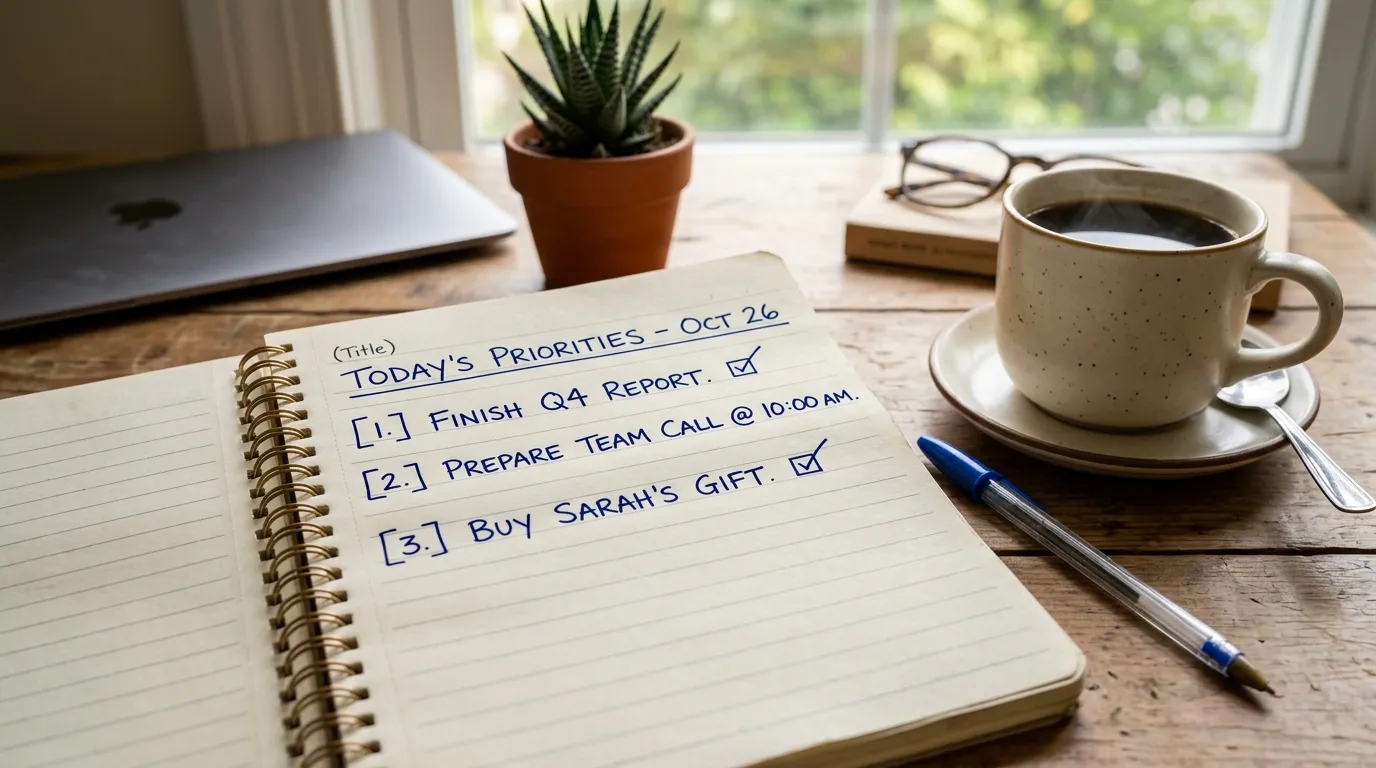
- Write tomorrow’s top three, revised for today
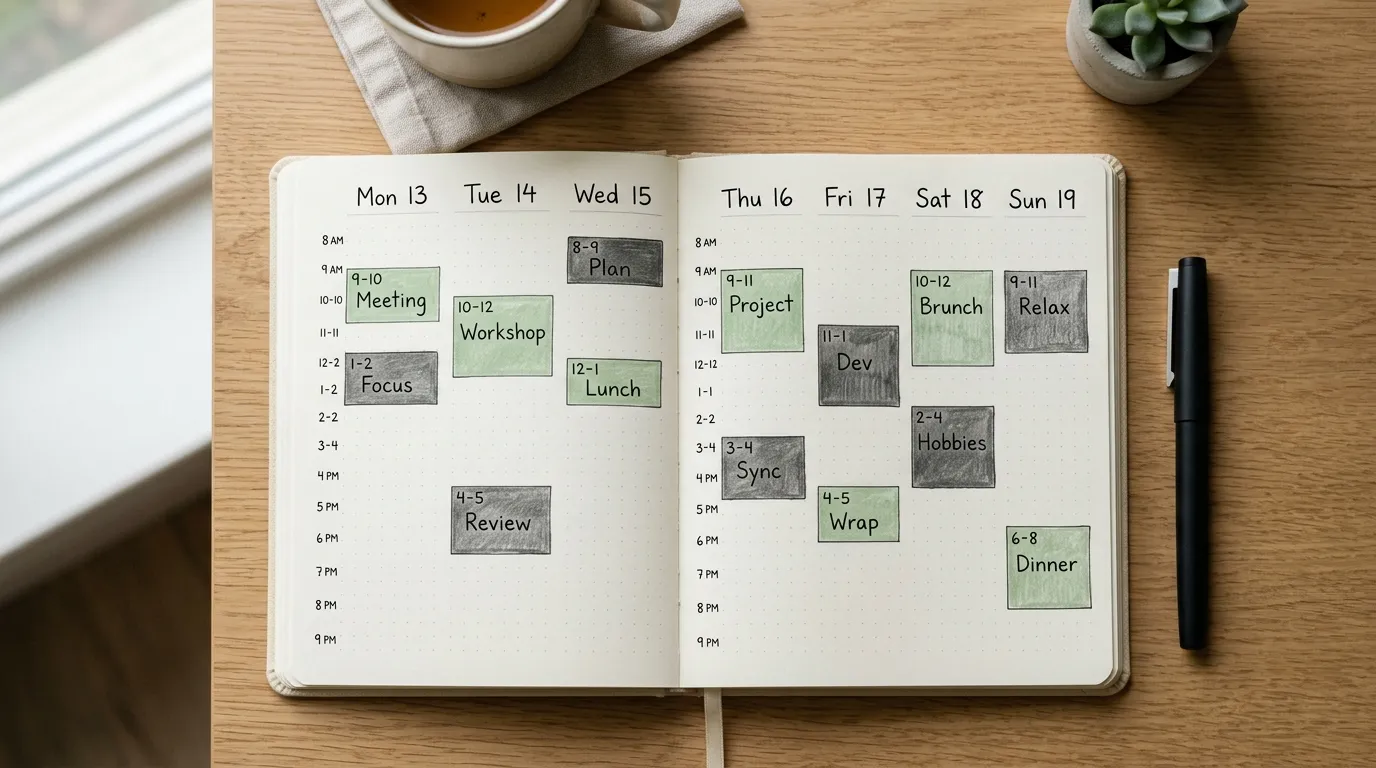
- Open the calendar and circle the deep work block
- Two minutes of breathing before unlocking the phone
- Put shoes on for a five-minute outdoor loop
- Prepare the bag or desk setup for the first work block
Choose the one that removes the most friction from your actual weak spot. If your mornings die because the phone owns you, phone delay is the attachment. If your days drift because priorities are unclear, the top-three note is the attachment.
Step 2: Keep it under twenty minutes on purpose
If your routine only works when you wake early, sleep perfectly, and nobody needs you, it is a weekend ritual, not a weekday system. Design for the messy day.
A useful test: can you still complete a minimum version when you overslept by twenty minutes? If not, shrink until the answer is yes. Minimum versions might be:
- Full version: ten-minute walk, water, three priorities, breakfast
- Minimum version: water, three priorities written in one minute
The minimum version keeps the identity of the routine alive. You did not “skip the morning.” You ran the compact edition. That psychological distinction prevents the all-or-nothing spiral.
Twenty minutes is a guideline, not a trophy. Parents of toddlers may need eight. People with long commutes may do part of the routine on the train. The constraint is honesty about capacity.
Step 3: Prepare the night before
Sticky mornings are often won at night. Decision debt compounds while you sleep. Reduce it.
A practical evening prep list:
- Set out clothes
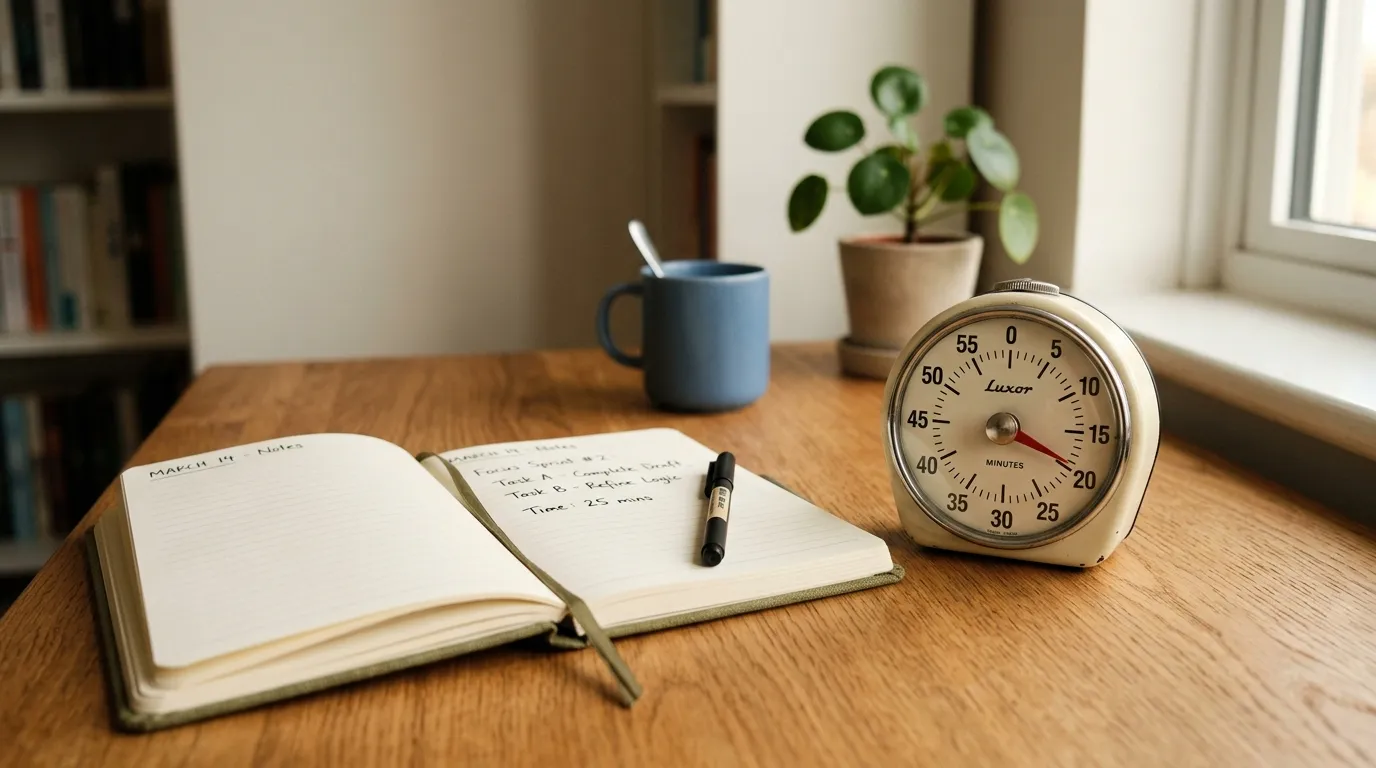
- Place the notebook and pen where the anchor happens
- Charge the phone outside the bedroom if that is a realistic household choice
- Write a draft of tomorrow’s top three
- Check the first calendar block so wake-up has a destination
- Clear the sink or prep breakfast components if mornings are kitchen chaos
This is where an evening shutdown routine pays rent. A short shutdown closes open loops and stages tomorrow. If nights are currently a blur of scrolling into sleep, repair that first. Read Evening Shutdown Routine and treat morning design as the second half of one daily system.
Sleep timing matters more than morning willpower. A 5:30 routine on five hours of sleep is a stress machine. Adjust wake time only after bedtime is stable enough to support it.
Step 4: Design the first ten minutes after waking
The first ten minutes are where routines usually get stolen. Default trap: unlock phone in bed, enter messages and headlines, stand up already behind. Replace that default with a boring sequence.
Example sequence:
- Feet on floor
- Bathroom
- Water
- Anchor habit
- Tiny attached action
- Only then phone, if needed
Write the sequence on a card for the first two weeks. When you are half awake, reading beats remembering. The card is temporary scaffolding.
If you share space with family, negotiate the sequence. A sticky routine that ignores household reality becomes a source of conflict and then disappears. Include kids, partners, or roommates in the design where their mornings intersect yours.
Step 5: Track lightly for two weeks
Heavy tracking becomes another chore. Light tracking works. Use a calendar and mark an X on days you completed the minimum version. That is enough.
Rules for tracking without obsession:
- Mark completion of the minimum, not perfection of the maximum
- Miss once, restart the next day with no essay about failure
- After fourteen days, review what broke the chain and adjust the design
- Do not add public streaks that shame you into fake checkmarks
If you missed because the routine was too long, shorten it. If you missed because the cue was weak, change the anchor. If you missed because nights collapsed, fix evenings. Tracking should diagnose, not punish.
Step 6: Add slowly, if at all
After two stable weeks, you may add one more tiny action. Only one. Stable means you completed the minimum on most weekdays, including imperfect ones.
Order of useful additions for focus:
- Priority note
- Movement snack
- Short planning glance at calendar
- Environment setup for first deep work block
Delay complex practices until the base is boring. Meditation, long workouts, and elaborate journaling can be valuable. They are also heavy. Heavy things need a strong shelf. Build the shelf first.
Seven-day starter plan for a sticky morning
Day 1: Choose wake reality and anchor
Write down your actual weekday wake time for the past week, not your aspirational one. Pick one existing anchor. Write the formula: after [anchor], I will [tiny action]. Keep the tiny action under two minutes.
Day 2: Stage the environment
Place tools where the anchor happens. Notebook by the kettle. Water glass by the bathroom sink. Shoes by the door. Remove one friction object, such as the phone charger beside the bed if you can.
Day 3: Run minimum version only
Do not attempt the dream routine. Complete anchor plus tiny action. Mark the calendar. Notice urges to add more and decline them.
Day 4: Add evening prep
Spend five to ten minutes tonight staging tomorrow. Clothes, top three draft, clear surface. Morning stickiness often jumps after this single addition.
Day 5: Protect the first phone rule
Decide when the phone enters the morning. After the tiny action is a strong default. If your job requires immediate on-call access, narrow the rule: only the one app that matters, then back out.
Day 6: Stress test
On a busier morning, run the minimum version deliberately. Confirm it still fits. If it does not, cut again. A routine that only works on calm days is not finished.
Day 7: Review and lock
Ask: What cue worked? What stole the sequence? What will stay for the next two weeks? Lock the minimum version as non-negotiable. Park all upgrades on a later list.
After day seven, repeat the same routine for another week before expanding. Boredom is a feature. It means the groove is forming.
Sample routines that fit real constraints
The ten-minute apartment routine
- Water
- Coffee as anchor
- Write top three
- Open calendar for thirty seconds
- Start getting ready
The parent compact
- Bathroom and water
- While kettle boils, write one priority for the workday
- Prepare kid bag item staged last night
- Phone only after leaving the bedroom
The commute version
- At home: water and clothes laid out
- On train or bus: three priorities and one deep work intention in a notes app
- At desk: two-minute setup before inbox
The work-from-home boundary
- Leave bedroom without opening laptop
- Anchor breakfast or tea
- Short walk around the block or stair loop
- Sit down to work with top three visible
Steal the shape that matches your life. Do not steal someone else’s wake-up time as a personality.
Common mistakes that kill morning routines
Starting with a long fantasy sequence. Ambition feels good on Sunday night and heavy on Wednesday.
Using motivation as the engine. Motivation fluctuates. Cues and environment carry you on flat days.
Ignoring sleep. No morning hack outruns chronic sleep debt. Fix bedtime consistency before collecting sunrise badges.
Phone first. If the first input is everyone else’s priorities, your routine becomes a reaction chamber.
All-or-nothing thinking. Missing journaling somehow becomes permission to skip water, priorities, and shoes. Keep the minimum version sacred.
Changing the routine every three days. Constant redesign prevents learning. Run one version for fourteen days.
Copying a creator’s morning as identity. Their schedule, staff, and season are not yours. Borrow mechanisms, not aesthetics.
Forgetting the household. A solo-optimized routine that creates conflict will not stick. Design with the people in your space.
No link to the rest of the day. A beautiful morning followed by an unplanned workday still feels chaotic. Connect the routine to one daytime system, such as a first deep work block or a simple priority list.
How mornings support focus systems
A sticky morning is not the whole productivity system. It is the on-ramp. The priority note feeds time blocking. The phone delay protects deep work. The short walk regulates energy for attention later. When mornings are stable, other focus tools have a cleaner runway.
If you already struggle to focus at work, do not wait for a perfect morning before improving work blocks. Build them in parallel, but keep each change small. One morning anchor plus one protected focus window beats a total life overhaul.
What to do after a messy streak
Travel, illness, deadlines, and grief break routines. Expect that. The restart protocol:
- Drop back to the minimum version immediately
- Restage the environment tonight
- Choose the next ordinary morning as restart, not the first perfect one
- Avoid compensatory extremes such as waking two hours earlier to “catch up”
Shame extends the outage. Design extends the habit. Be a mechanic, not a critic.
FAQ
How long should a morning routine be? Long enough to include your minimum useful actions, short enough to survive a rushed weekday. For many people that is five to twenty minutes. Longer is fine only if it remains reliable.
What if I am not a morning person? Then do not build a 5:00 identity. Build a routine at your real wake time. Night-owl schedules can still have sticky starts. The principle is cue and smallness, not sunrise purity.
Should I work out every morning? Only if a minimum version fits. A five-minute mobility sequence can count. A sixty-minute gym plan that you skip four days a week is not helping your identity as someone who moves.
Is journaling required? No. A one-line priority note is enough for many focus goals. Journaling is optional depth, not a moral requirement.
How do I stop checking my phone in bed? Charge it outside the room, use a basic alarm clock, and put a book or notebook on the nightstand as a replacement reach object. If you must keep the phone for dependents or on-call work, use Focus modes that allow only critical contacts before your anchor is done.
Can weekends use a different routine? Yes. Keep the same anchor if possible, and allow a looser maximum version. Completely different weekend behavior is fine as long as weekday minimums remain easy to resume Monday.
What if my job starts at unpredictable times? Use a portable minimum: water, one priority, and a thirty-second calendar scan whenever the day begins. Attach it to an anchor that travels, such as first coffee or first sit-down.
How soon will it feel automatic? Some people feel a groove in a week. More often it takes two to four weeks of repeated minimums. Judge by completion under imperfect conditions, not by whether it feels magical.
Related reading
Stabilize the night side with an Evening Shutdown Routine. Attach new actions cleanly with Habit Stacking Examples. Mornings stick when evenings prepare them and when habits hitchhike on cues you already trust.
Build a morning routine that is small enough for your worst ordinary weekday, anchored to something you already do, prepared the night before, and tracked without drama. Keep the minimum version alive. Add later. That is how a morning routine actually sticks, long after the initial burst of enthusiasm has left the building.