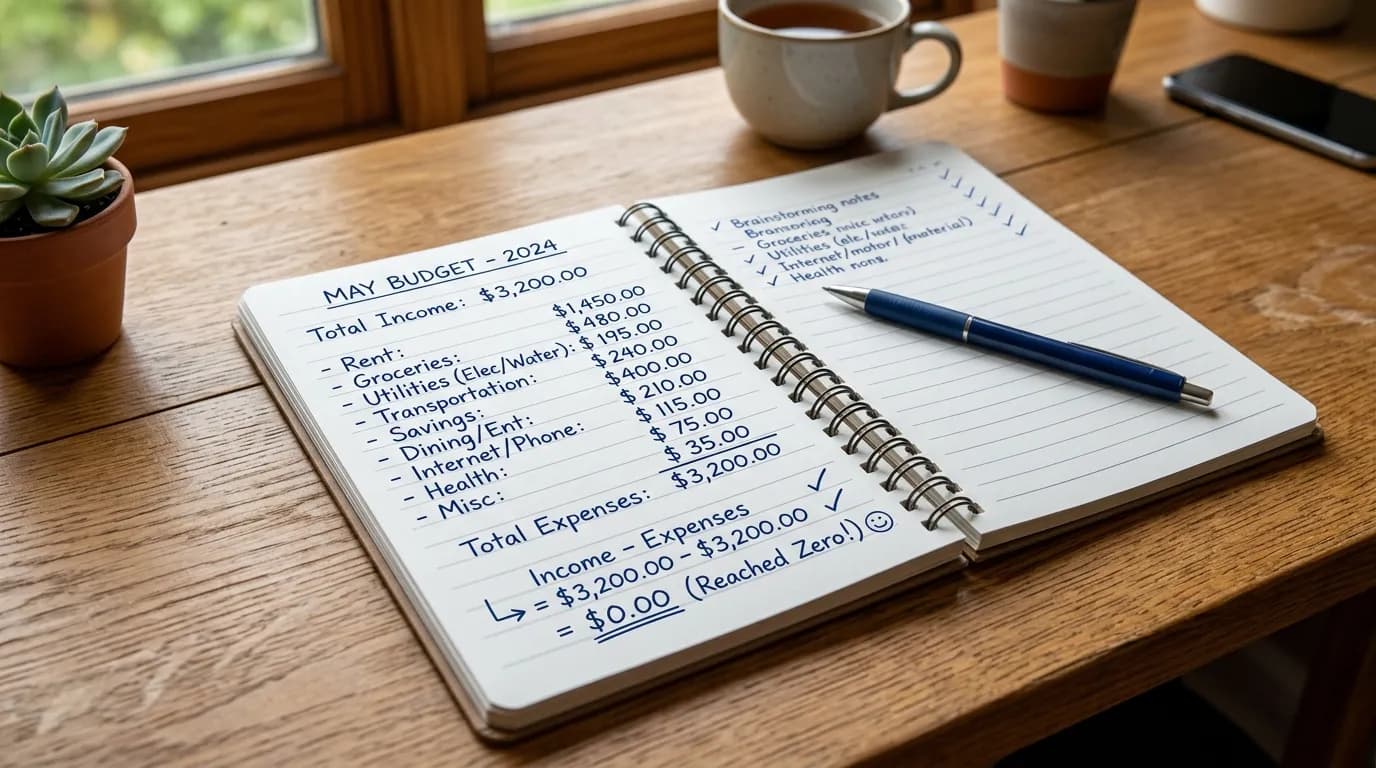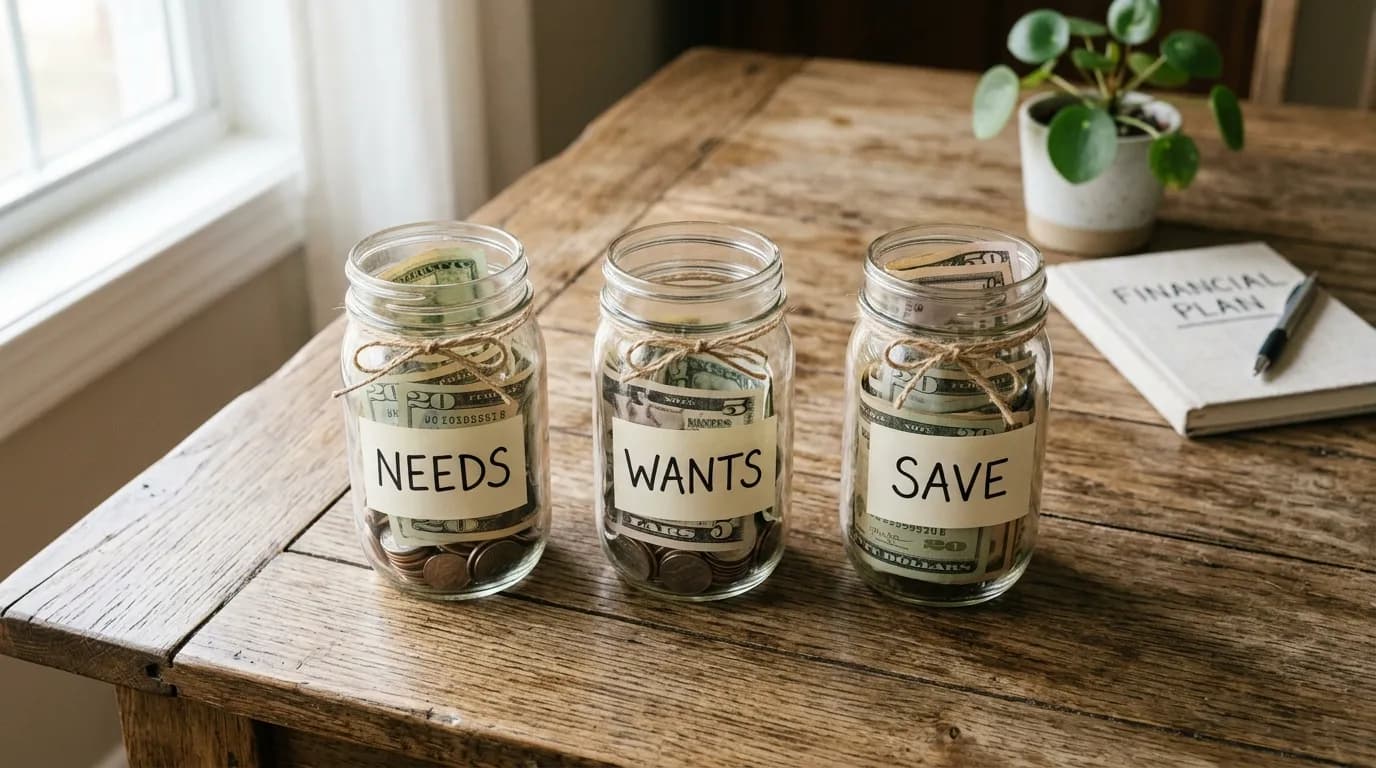

You do not need a perfect spreadsheet, a new app subscription, or a quiet weekend retreat to start budgeting. A focused thirty-minute session can produce a usable monthly draft: income listed, bills dated, flexible categories estimated, and leftovers assigned on purpose. The goal of this guide is a working sketch you can live with for the next four weeks—not a museum piece. Nothing here is personalized financial advice; it is practical money-basics education with sample numbers so the steps feel real.
Most people fail budgets because they aim for precision on day one. Precision comes later from tracking. The first job is visibility. In thirty minutes you can answer four questions: How much lands in my account? What must be paid? What do I typically spend on flexible stuff? What happens to whatever is left? If you leave the session with those answers on one page, you already beat the vague anxiety of “I should budget someday.”
This session pairs well with broader frameworks. If you like percentage buckets, skim budgeting for beginners with 50/30/20 after you finish today’s draft. If you want cleaner feedback loops next month, pair the plan with a simple habit from how to track spending. For now, set a timer and stay inside the process.
Minute 0–5: Set up the workspace and pick tools you will not abandon
Open one place to write: a notes app, a blank document, a paper notebook, or a single spreadsheet tab. Name it with the month—“August money draft”—so you do not mix experiments. Put your phone on do-not-disturb for thirty minutes. Have last month’s bank and card statements available, or at least the banking app logged in. You are gathering clues, not auditing your character.
Choose categories that match your life, not a template with forty lines. A strong starter set looks like: income, rent or housing, utilities, groceries, transport, subscriptions, dining and coffee, personal spending, debt minimums, savings transfers, and a small “buffer/misc” line. You can split later. Too many categories in minute three is how the session dies in minute twelve.
Illustration of setup speed: Riley opens a note, pastes last month’s paycheck deposits, and lists bill names from memory before checking amounts. That two-minute brain dump prevents blank-page freeze. Then Riley confirms numbers against the app. Order matters: memory for completeness, statements for accuracy.
1. Write income and fixed bills (about minutes 5–12)
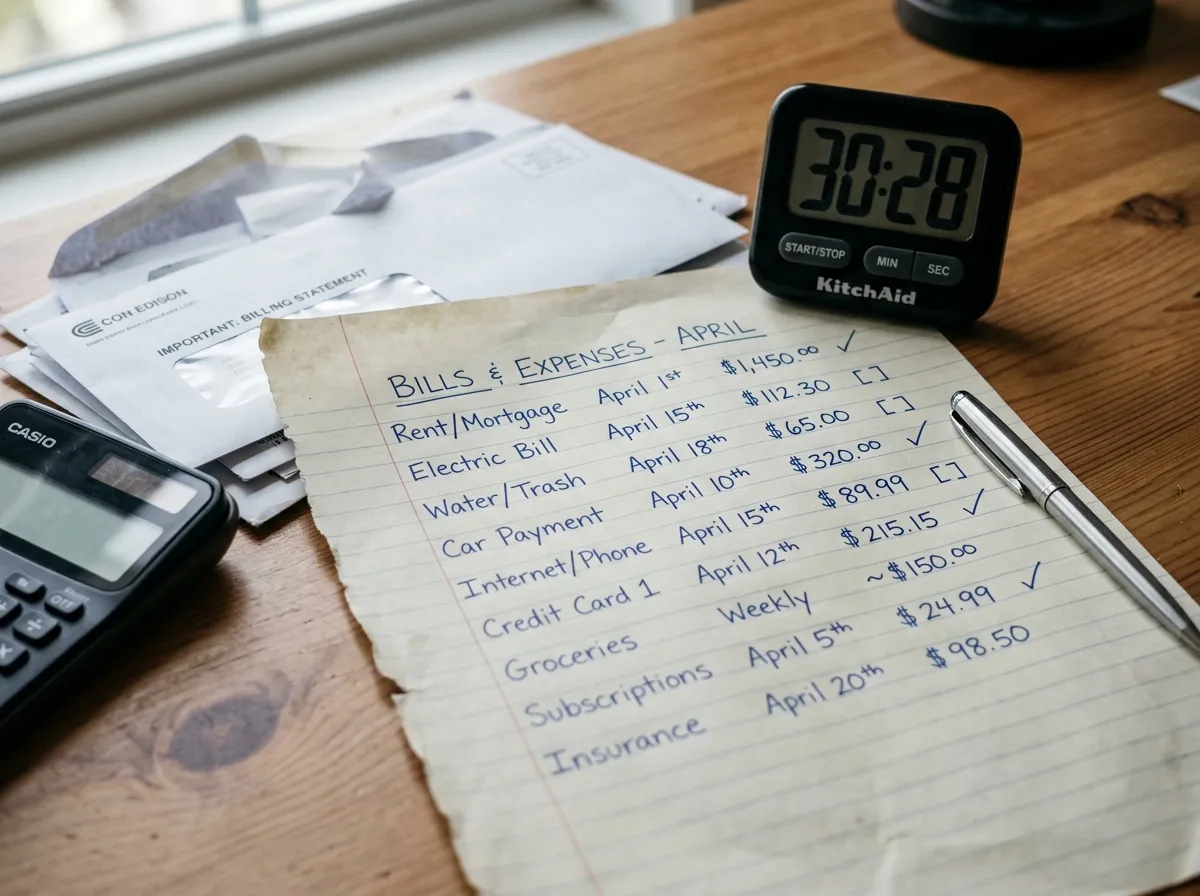
List every expected deposit for the month after taxes. Salaried folks often have one or two clear numbers. Hourly or gig workers should use a conservative estimate based on recent typical weeks, not a dream schedule. If you receive support payments, side income, or reimbursements, only include what is reliable enough that you would pay rent with it.
Next, list fixed bills with approximate due dates: rent, electric, water, internet, phone, insurance premiums, streaming you keep, gym, debt minimums, childcare, and any transfer you already automate to savings. Dates matter because cash flow timing—not only monthly totals—causes overdrafts. A paycheck on the 1st and rent on the 3rd feels different from rent on the 28th and payday on the 30th.
Illustration: Taylor’s take-home is about $2,850 this month. Fixed list: rent $1,200 due the 1st, electric ~$95 due the 12th, internet $60 due the 15th, phone $48 due the 18th, car insurance $110 due the 20th, student loan minimum $145 due the 22nd, music and video subscriptions $33 due various dates. Fixed total ≈ $1,691. That leaves about $1,159 for food, transport, flexible spending, and intentional savings before any refinements. Seeing $1,159 as the “open field” is already worth the session.
If a bill is annual or semi-annual, convert it to a monthly placeholder. A $600 yearly renter’s insurance bill is roughly $50 per month to set aside. You do not need a fancy sinking-fund system in minute eight; you only need the monthly shape so the draft is not lying to you.
2. Estimate flexible spending from last month’s reality (minutes 12–20)
Flexible spending is where optimism creates overdrafts. Look at last month—or the last thirty days—and estimate groceries, transport, dining, household goods, and miscellaneous. Round groceries and transport up slightly. If last month’s grocery total was $310, drafting $330 or $350 is often wiser than drafting $280 because you “will cook more.” You can tighten after you prove a pattern, not before.
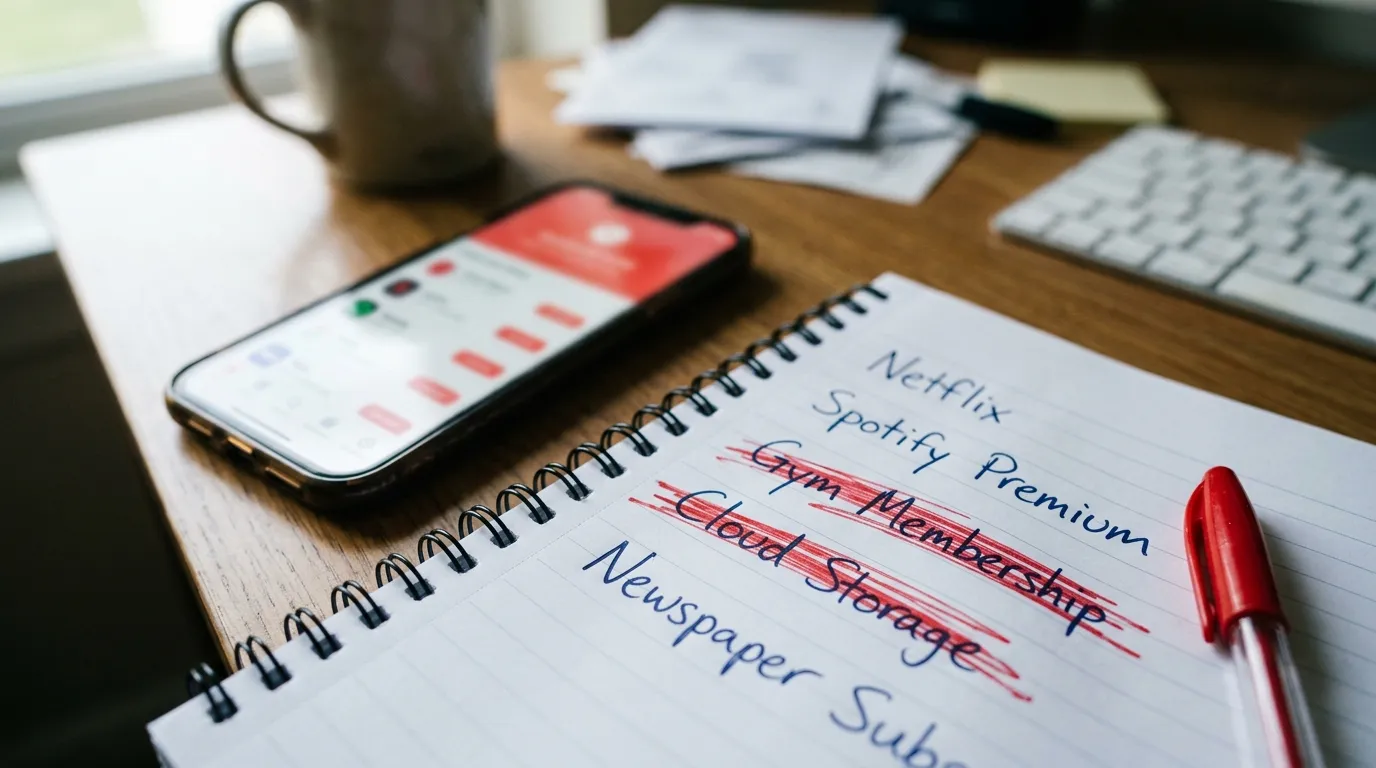
Scan transactions for leaks that pretend to be tiny: delivery fees, app store charges, pharmacy runs, and “just one” marketplace orders. Bundle them into a misc or personal line rather than inventing twelve micro-categories. The thirty-minute budget rewards honest lumps over decorative detail.
Illustration continued: Taylor’s last thirty days show groceries ~$340, transit and rides ~$120, dining ~$210, household ~$45, misc ~$90. Draft those as $350 / $130 / $200 / $50 / $100. Flexible subtotal $830. Earlier, open field after fixed bills was $1,159. After flexible estimates, about $329 remains. That remainder is not “free money.” It is the raw material for savings goals, debt extras, fun you want to protect, and a buffer.
If last month was abnormal—vacation, medical spike, moving—average two months or discount the spike and note it. A budget based on a weird month teaches the wrong lesson. Mark the anomaly in a single line: “August includes travel; September should look calmer.”
3. Assign every leftover dollar a job (minutes 20–26)
Take the remainder and give it roles until the plan roughly balances. Savings is a job. Extra debt payment is a job. Planned fun is a job. Buffer for surprises is a job. Leaving a large unassigned leftover is how the leftover disappears into nowhere by day eighteen.
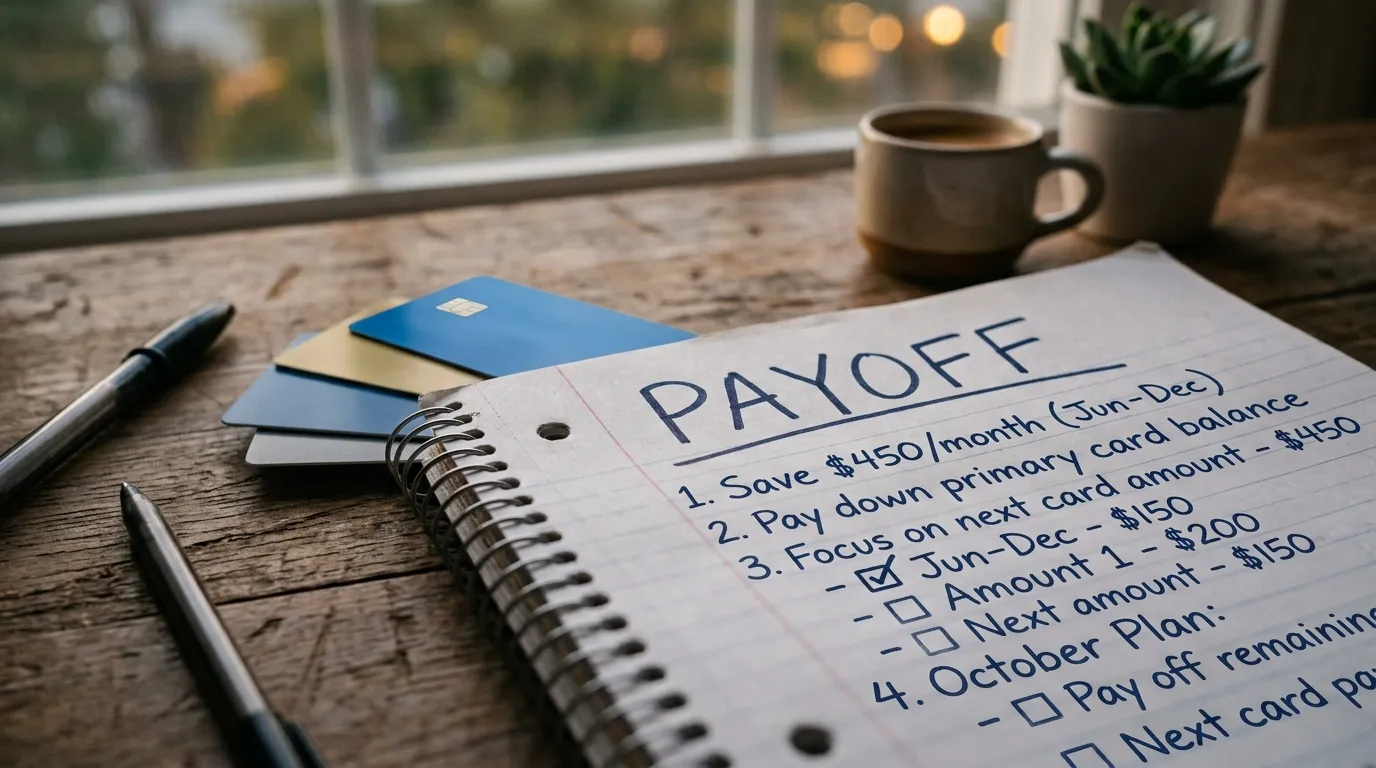
Illustration: Taylor’s $329 remainder becomes $150 automatic savings, $100 extra card payment, $50 fun money, $29 buffer. Income minus all assignments is about zero. That is the spirit of a clear monthly plan even if you are not doing full zero-based budgeting yet. You are deciding on purpose while calm, instead of negotiating with yourself at a checkout screen.
If the remainder is negative, do not quit. Cut or pause the softest flexible lines first: dining, misc, optional subscriptions. Then consider whether a savings transfer must be smaller this month while you stabilize. A thirty-minute draft that reveals a $120 gap is a successful draft. You found the gap before the bank did.
Couples can run the same clock: five minutes of shared income and joint bills, ten minutes of flexible estimates, five minutes of assigning leftovers, and a few minutes agreeing who owns which weekly check. Shared clarity beats silent assumptions.
4. Set a weekly check-in so the draft stays alive (minutes 26–30)
A budget without a pulse becomes fiction. In the last minutes, put a fifteen-minute weekly review on your calendar—same day each week if possible. During that review you only ask: What bills are left? Which flexible categories are almost spent? Do I need to move money between lines? You are steering, not rebuilding from zero.
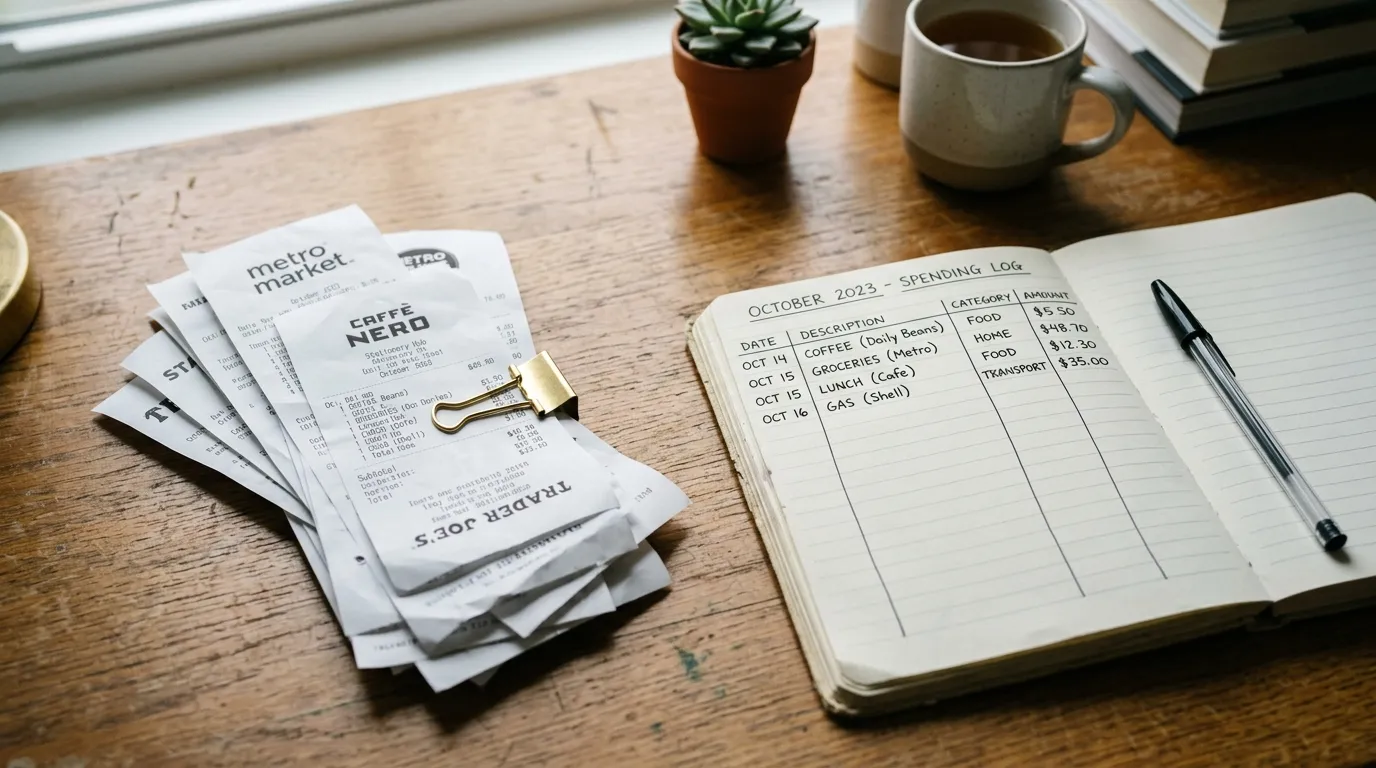
Pick a tracking method light enough to survive busy weeks: notes with running totals, a simple spreadsheet, or bank categories you already have. The companion skill is tracking; the thirty-minute session creates the plan those trackers serve. If you overcomplicate tracking on day one, you will resent both the plan and the tracker.
Illustration: Taylor chooses Sunday evenings. Week one shows dining already at $90 of $200 by Wednesday—useful information. Taylor shifts $40 from misc to dining and leaves the rest alone. That tiny move prevents the “I blew the budget” spiral and keeps the month recoverable.
A full sample thirty-minute script you can copy
Minutes 0–2: title the note, open banking app, start timer. Minutes 2–5: list income deposits. Minutes 5–12: list fixed bills with dates and amounts; sum them. Minutes 12–18: estimate flexible categories from last month; round food and transport up. Minutes 18–22: subtract fixed and flexible from income; stare at the remainder without judgment. Minutes 22–26: assign remainder to savings, debt extra, fun, buffer. Minutes 26–28: note one risk (due-date pileup, travel week, irregular income). Minutes 28–30: schedule weekly check-in and write one sentence intention such as “Protect the $150 savings transfer.”
If you finish early, do not immediately add twelve new categories. Use spare minutes to automate one transfer or cancel one unused subscription. Action beats decoration. If you run long, stop at a complete draft even if estimates are rough. A finished B-minus plan outperforms an unfinished A-plus plan.
Cash-flow timing tricks inside a short session
Monthly totals can look fine while weekly reality breaks. In your note, mark which week each large bill hits. If week two contains rent leftovers, insurance, and a debt payment, you may need to hold flexible spending down early in the month or split a savings transfer into two smaller moves. Illustration: instead of moving $200 on the 1st, move $100 on the 1st and $100 on the 15th after the second paycheck. Same monthly intention, kinder timing.
People paid weekly can budget in four weekly envelopes inside the monthly draft. Each week gets a grocery slice, a transport slice, and a small fun slice. The monthly document still exists as the map; the week is the steering wheel. This hybrid keeps the thirty-minute monthly session useful for non-monthly pay cycles.
What to do when irregular income shows up
If your income swings, build the thirty-minute budget on a floor number you trust. Then add a simple rule for surplus: “First $200 above floor to emergency savings, next $100 to debt, rest split between fun and goals.” Write the rule during the session so a good month does not become an accidental shopping month. Illustration: floor $2,200; actual month $2,700; surplus $500 → $200 savings, $100 debt, $100 fun, $100 medium-term goal. Decision made in advance.
Also create a “slow month” version with leaner flexible lines. Having both drafts reduces panic when a client pays late. You are not predicting the future perfectly; you are pre-deciding behavior under two common conditions.
Mistakes that waste the thirty minutes
Rebuilding the entire category system every month wastes time. Keep the skeleton stable for at least two months. Hunting for the perfect app during the session wastes time—use tools you already open daily. Budgeting with optimistic grocery numbers wastes the whole plan. Skipping due dates wastes cash-flow awareness. Treating savings as “whatever is left” usually means nothing is left.
Another mistake is inviting five opinions before you have one draft. Finish your version first. Then, if you share finances with someone, compare drafts. A blank shared spreadsheet with two anxious people and no timer rarely produces clarity.
After the session: the first seven days
Day one after the draft, automate the savings amount you chose if you did not already. Day two, glance at upcoming due dates. Mid-week, check flexible totals once. End of week one, do the fifteen-minute review. You are teaching your brain that the budget is a living document. That rhythm matters more than whether groceries were estimated within five dollars.
If you discover a bill you forgot—an annual domain renewal, a school fee, a medical copay—add it without drama. Update the draft, trim a flexible line, or use buffer. Budgets improve by contact with reality. The thirty-minute method expects edits; it does not demand prophecy.
How this session supports longer-term money skills
Repeating a monthly thirty-minute draft builds a personal dataset: your true grocery range, your real transport costs, your subscription creep pattern. After two or three months you can adopt percentage frameworks with less guesswork, or tighten into zero-based detail if you want every dollar named. The session is the on-ramp. Tracking is the road. Frameworks are the map style you choose once you know the terrain.
Employers, roommates, and family systems add complexity, but the clock stays similar: income, must-pays, flexible estimates, assignments, review date. Complexity changes the lines, not the sequence. Keep the sequence sacred and the lines flexible.
Quick tip
Round estimates up for food and transport, and round down for uncertain side income. That single bias prevents a pretty plan from bouncing checks. Optimism belongs in goals; conservatism belongs in the draft numbers that must survive contact with Tuesday.
A note on tone and expectations
A thirty-minute budget will not solve every money stress, refinance your debt, or replace advice for complex situations. It will replace fog with a one-page plan. That is enough for many beginners to feel calmer by tonight. If your situation includes wage garnishment, unsafe relationships around money, or overwhelming debt, use this as a clarity tool and consider additional professional or community support suited to your context.
Progress looks like shorter arguments with yourself at the store, fewer surprise overdrafts, and a savings line that actually receives money. Celebrate those. Do not wait for a perfect month to admit the system helps.
FAQ
What if I cannot finish in thirty minutes? Stop at a complete rough draft. Schedule a second fifteen-minute pass for amounts you could not find. Completeness beats polish.
Should I budget with cash envelopes or cards? Either can work. Pick the method you will update. The thirty-minute plan is method-agnostic; it cares about assignments and reviews.
How detailed should categories be on day one? About eight to twelve lines. Split only after a category stays confusing for two months.
What if my partner and I disagree during the session? Finish listing facts first—income and bills—before debating wants. Shared facts lower the temperature.
Do I need last year’s data? No. Last thirty days plus known fixed bills is enough to start. History helps later, not at minute one.
Can I reuse last month’s draft? Yes. Duplicate it, update income and due dates, refresh flexible estimates, reassign leftovers. Many months take fifteen minutes after the first build.
Is this financial advice? No. It is an educational walkthrough for building a simple monthly plan. Adjust to your life, and seek qualified help for complex decisions.
Related: 50/30/20 Explained · How to Track Spending