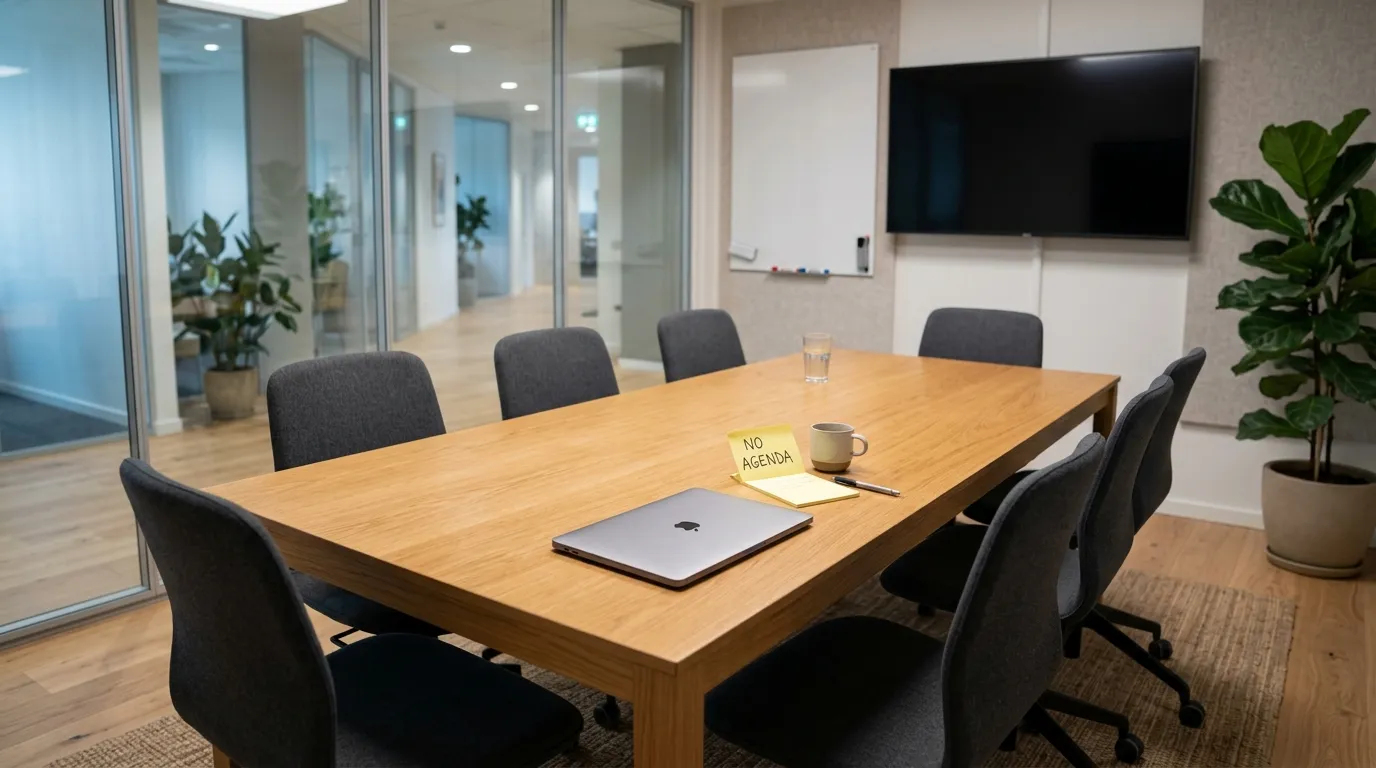
Meeting overload rarely arrives as one dramatic calendar disaster. It builds the quiet way: a recurring stand-up that never ends, a “quick sync” that steals an hour, a status call that could have been three bullet points in a document. By the time you notice, your week is a patchwork of video windows and you do your real work in the cracks.
All U Want treats meeting diet as a practical system, not a personality project. You do not need to become the person who declines everything. You need clearer defaults, polite alternatives, and protected focus time so decisions still happen without your day dissolving into chatter.
This guide walks through a meeting diet you can start this week: what to require before a meeting exists, how to shorten the ones that stay, how to move updates out of live time, and how to defend no-meeting blocks without burning bridges. Pair it with time blocking for beginners so those reclaimed hours actually land on your calendar, and with a distraction audit so the pings that replace meetings do not recreate the same overload in chat.
Why meeting overload feels inevitable (and why it is not)
Most teams default to meetings because meetings feel safe. A invite is visible. Attendance looks like collaboration. Skipping feels risky when culture rewards presence over outcomes. The result is a calendar that signals busyness while deep work starves.
The cost is not only the hour on the invite. There is the context switch before you join, the recovery after you leave, and the half-attention you give the next task while your brain replays unresolved threads. A day with six meetings can leave you with almost no continuous stretch for thinking.
A meeting diet does not ban collaboration. It asks a sharper question: What is the cheapest way to get a decision, share context, or unblock someone? Sometimes that is a live call. Often it is a document, a short recording, a comment thread, or a 15-minute huddle instead of a 60-minute ritual.
- Meetings multiply when “just in case” invites become habit.
- Status updates inflate calendars when async channels feel unused or unread.
- Focus disappears when every open hour gets claimed by someone else’s urgency.
- Polite decline skills matter as much as calendar tools.
If you lead or influence norms, you can change defaults for a whole group. If you do not, you can still change how you accept, propose, and run meetings. Both paths reduce overload. Start where you have control.
1. Require an agenda (or do not meet)
The single highest-leverage rule is simple: no agenda, no meeting. Three bullets are enough. An agenda is not bureaucracy. It is a filter. It forces the organizer to name the purpose before burning everyone’s time.
A useful agenda answers three questions in plain language:
- Decision: What must we decide or unblock by the end?
- Inputs: What should people read or prepare beforehand?
- Outcome: What does “done” look like when we hang up?
When someone invites you without those pieces, reply with a short template rather than a vague yes. Example: “Happy to help. Can you send three bullets on the decision needed and any doc to skim? If it is status only, I can leave a written update instead.” That tone stays collaborative while raising the bar.
Agendas also shrink attendance. When the purpose is clear, half the optional guests realize they do not need to be there. Ask organizers to mark people as optional when they only need the notes. Offer to read the summary afterward if your role is awareness, not decision-making.
For recurring meetings, rewrite the agenda every few weeks. Recurring invites rot. A stand-up that once solved a coordination problem can become a social habit that no longer earns its slot. Put a quarterly review on the series: keep, shorten, async, or kill.
What belongs in an agenda (and what does not)
Keep agendas decision-shaped. Skip long background essays in the invite body. Link a living doc instead. List the decisions in order of importance so the meeting can end early if time runs out. Put “parking lot” items at the bottom so side topics do not hijack the core work.
Avoid agendas that are really wish lists: “catch up,” “sync,” “align,” “touch base.” Those words are meeting fog. Replace them with verbs like decide, choose, unblock, prioritize, or approve.
2. Default to 25 or 50 minutes
Shorter defaults create endings. If your calendar tool still defaults to 60 minutes, change your personal default to 25 or 50. People fill the container they are given. A one-hour invite invites one hour of talk even when the decision needed twenty minutes.
Use 25 minutes for most working sessions: a focused decision, a design review with a clear question, a hiring debrief with a prepared scorecard. Use 50 minutes when you truly need deeper discussion, but still leave a ten-minute buffer so people can breathe before the next block.
Start on time even if someone is late. Ending on time is a gift to every other meeting that day. Assign a timekeeper if the group tends to wander. Put the hardest decision first so you do not spend forty minutes on easy updates and then rush the real choice.
- Change your default meeting length in calendar settings this week.
- Propose 25 minutes when you create invites; expand only with a reason.
- End five minutes early when the outcome is already clear.
- Refuse to “run over just a bit” as a standing habit; schedule a follow-up instead.
If you are the organizer, put the desired end state in the first two minutes: “We need a go or no-go on X and owners for Y.” That framing keeps the room honest. If conversation drifts, point back to the agenda without apology.
3. Move status to async
Updates belong in docs or chat. Meetings are for decisions, trade-offs, and moments when tone or speed matters. Status theater—everyone reading numbers the group could have scanned alone—is one of the most expensive calendar patterns in knowledge work.
Pick one async home for recurring updates: a shared doc, a project board comment, a short weekly thread, or a two-minute recorded loom. The tool matters less than the habit of writing before talking. Ask people to comment async first, then meet only on unresolved conflicts.
A practical pattern: write → comment → meet the leftovers. On Monday, owners post status. By Wednesday noon, teammates comment. Thursday’s live slot only covers open questions. Many weeks, you cancel the live slot entirely because the thread already resolved the issues.
Async fails when nobody reads. So make reading cheap. Keep updates under one screen. Use the same three headings every time: progress, blockers, asks. Bold the asks. Link artifacts instead of pasting walls of text. Then protect a short reading window on people’s calendars if needed, especially for leaders who otherwise skim nothing and demand meetings instead.
When a live meeting still earns its place
Keep live time for conflict that needs empathy, brainstorming that benefits from rapid bounce, sensitive feedback, or speed when a blocker is costing money by the hour. Do not force everything into chat out of purity. The diet is about fitness of format, not ideology.
Also keep live meetings when trust is thin. New teams, cross-org partnerships, and high-stakes launches sometimes need face time to build shared reality. Use those sessions deliberately, then graduate back to async as norms stabilize.
4. Protect no-meeting blocks
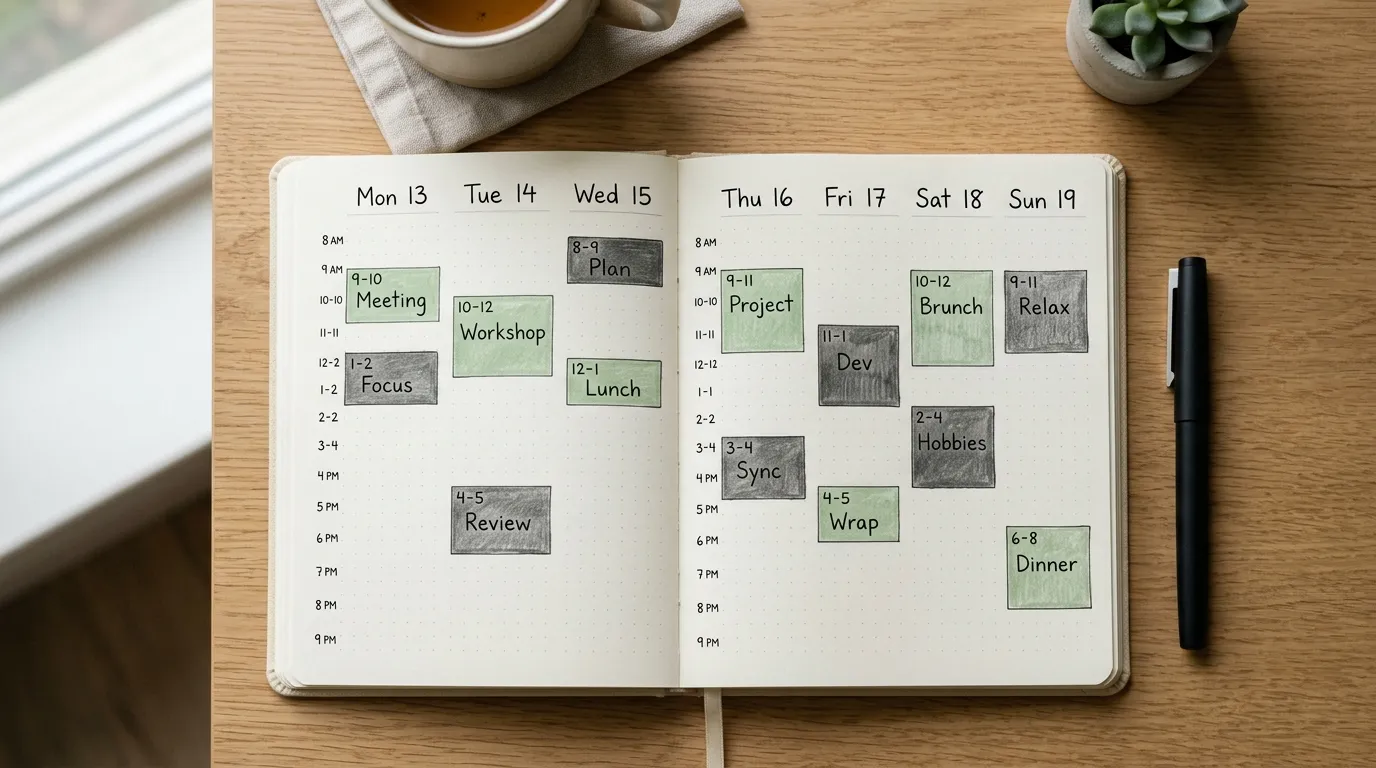
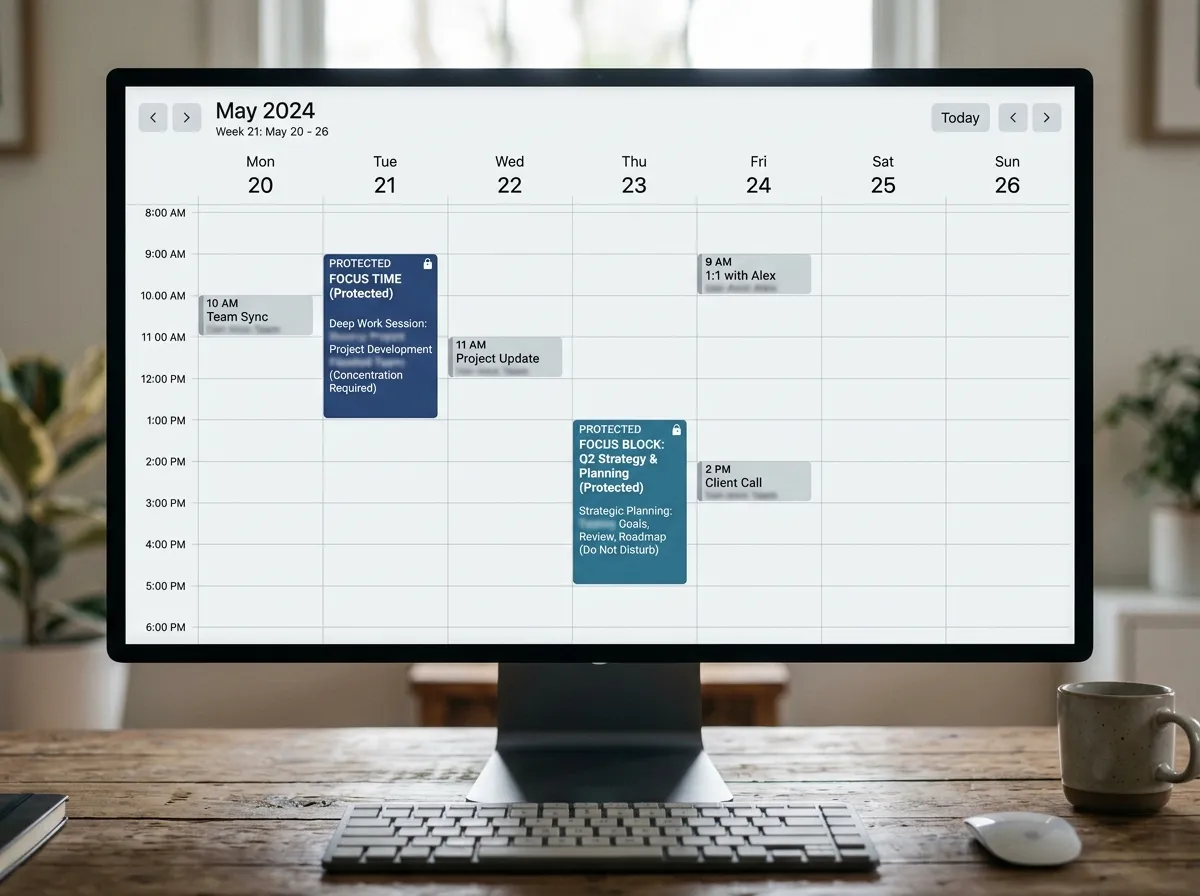
Mark recurring focus windows on your calendar and treat them like client meetings. If you wait for “open time,” meetings will colonize it. Name the blocks clearly: “Focus — deep work,” not “Busy,” so collaborators understand the purpose.
Start with two or three protected blocks per week if your culture is meeting-heavy. Morning focus often works better than late afternoon, when residual meetings and fatigue pile up. Align with teammates when possible so the whole group shares a no-meeting morning or afternoon.
Defend the block with scripts, not silence. When someone proposes over your focus time, offer two alternatives: a different slot, or an async path. Example: “I am in a focus block then. I can do 2:30, or I can reply in the doc by end of day.” You stay helpful without surrendering the only quiet hours you have.
Leaders set the tone. If managers schedule over their own focus blocks, the team learns that focus is fake. Model the diet. Cancel low-value recurring meetings publicly. Celebrate decisions made in docs. Ask in 1:1s, “Which meeting should we kill this month?”
- Place focus blocks before you accept new recurring invites.
- Batch external meetings into two days when your role allows it.
- Leave buffers between meetings so context switching does not erase the next hour.
- Review your calendar every Friday: which meetings can shrink or die next week?
Combine this with time blocking so focus time holds real work, not vague intention. Empty focus blocks get eaten. Named outcomes survive.
Build a personal meeting diet in seven days
You do not need a company-wide transformation to feel relief. A one-week experiment is enough to prove the method and gather evidence for bigger changes.
Day 1 — Audit. Export or screenshot your calendar. Count hours in meetings. Tag each invite: decision, status, social, unclear. Notice patterns by day and by organizer.
Day 2 — Rules. Write your personal meeting rules in five lines: agenda required, 25/50 defaults, async for status, two focus blocks, decline with alternative. Keep them visible near your desk or in a pinned note.
Day 3 — Templates. Create three reply snippets: request agenda, propose async, offer alternate time. Snippets remove the emotional friction of improvising polite declines under pressure.
Day 4 — Recurring review. Open every recurring meeting you own or heavily influence. Kill one. Shorten one. Move one to async. Small edits compound.
Day 5 — Focus defense. Place the focus blocks. Decline or move one meeting that conflicts. Practice the alternative-path language once in writing.
Day 6 — Run better. For meetings you still attend, arrive with the decision question written. Steer toward outcomes. Leave with owners and dates, not vibes.
Day 7 — Measure. Recount meeting hours. Note energy and deep-work completion. Share one win with a teammate so the culture hears a new story about fewer meetings.
Scripts that reduce meetings without drama
Language is half the diet. Soft, specific replies beat blunt refusals in most workplaces.
- No agenda: “Can you share the decision and prep materials? I will confirm once I see the goal.”
- Status only: “I can post an update in the doc by 3pm instead of joining live.”
- Optional invite: “I will skip and read notes unless you need a decision from me.”
- Too long: “Happy to meet for 25 minutes with a tight agenda.”
- Conflict with focus: “That overlaps my deep-work block. Two options: later slot or async reply today.”
Decline with an alternative path to a decision whenever you can. People fear silence more than a shorter process. Give them a route, and resistance drops.
Team norms that make the diet stick
Individual habits help. Team norms multiply the effect. Propose lightweight agreements rather than a heavy policy document.
- Agendas posted 24 hours ahead for meetings over 25 minutes.
- No-meeting mornings twice a week for maker roles.
- Status updates in one shared format by a fixed weekday.
- Recurring meetings expire unless renewed every quarter.
- Cameras and tools optional when the work is document-first.
Measure what you care about: meeting hours per person, number of decisions closed in docs, deep-work blocks kept intact. What gets counted gets defended. Avoid vanity metrics like “messages sent.” Focus on outcomes and hours returned to real work.
Watch for meeting substitution. If calendar time shrinks but Slack explodes into all-day interruption, you traded one overload for another. That is where a distraction audit keeps the gains honest. The goal is fewer interruptions overall, not just fewer video calls.
Common traps (and how to exit them)
The courtesy invite. You get added “just to keep you in the loop.” Ask for notes instead. Loops do not require bodies in chairs.
The meeting after the meeting. Side conversations rehash the same decision. Capture owners in writing before you leave so the hallway rematch has less fuel.
The standing meeting with no standing purpose. Kill or pause it for two weeks. If nothing breaks, it was ceremony.
The leader who only thinks out loud in meetings. Offer a weekly office hours block instead of scattering ad-hoc invites across every afternoon. Contain the live demand.
The fear of missing out. FOMO fills calendars. Decide which forums you must attend for strategy and which you can trust to summaries. Presence is not the same as influence.
The tool sprawl. Five chat apps and three docs make async hard, so people schedule meetings to compensate. Consolidate channels. Clarity beats novelty.
Quick tip
Decline with an alternative path to a decision. A clean “no” without a next step creates anxiety. A “no, and here is how we still move” creates trust. Keep three reply templates ready so you never improvise under social pressure.
FAQ
How long does this take? Most people can rewrite defaults and place focus blocks in under an hour, then refine the diet over a week of real calendar pressure. Deeper culture change takes longer, but personal relief shows up quickly.
Do I need special tools? No. Calendar defaults, a shared doc, and short reply snippets beat complicated meeting platforms you abandon. Use what your team already opens daily.
What if my boss fills my calendar? Bring data, not complaints. Show meeting hours versus delivered work. Propose one async status ritual and one protected focus morning as a two-week experiment. Leaders respond better to trials than lectures.
Won’t fewer meetings hurt collaboration? Collaboration improves when conversations have purpose. Unfocused meetings create the illusion of teamwork while starving the work that makes teamwork valuable.
How do I handle clients who expect constant calls? Offer a crisp cadence: one decision meeting plus written updates. Many clients prefer predictability over endless ad-hoc invites once they see response quality rise.
Related: Time Blocking for Beginners · Distraction Audit