
Most people do not lack willpower at work. They lack a setup that makes focus the default. You open your laptop, the calendar fills the morning, chat pings arrive before coffee cools, and the one project that would move your week sits untouched until late afternoon. By then you are tired, so you do shallow tasks that feel productive and go home with unfinished work still open in your head.
Focusing better at work is less about becoming a monk and more about building a small deep work setup you can repeat on ordinary days. This guide walks through that setup in plain language: how to choose a protected window, how to close attention leaks, how to define a clear outcome, how to handle interruptions without wrecking the block, and how to end so tomorrow starts cleaner. You will also get a seven-day starter plan, a checklist of common mistakes, and answers to questions that come up when people try this for the first time.
Think of deep work as a temporary container, not a personality trait. For ninety minutes you are only allowed to push one meaningful outcome. Everything else waits. Once you can protect that container three times a week, your output usually changes more than any new app or motivational quote ever will.
Why focusing better at work matters
Busy days and productive days are not the same thing. A busy day is full of meetings, replies, and context switches. A productive day advances the work that compounds: a proposal draft, a cleaned dataset, a design decision, a client deliverable, a piece of code that unblocks others. When you never create space for that kind of work, you stay reactive. Your calendar owns you. Your inbox owns you. Your reputation becomes “always available,” which sounds helpful until you notice you are rarely finishing the hard pieces.
There is also a cognitive cost. Every unfinished important task sits in background memory. You pay for it with low-grade stress, even when you are “done for the day.” A deep work setup reduces that load because you regularly close loops or at least park them with a clear next step. People who learn to focus better at work often report sleeping better, not because they work less, but because they stop dragging half-done projects through the evening.
Finally, focus is a team skill. When you protect a block and communicate it, colleagues learn when to expect replies. When you do not, you teach them that interruption is free. Over a few months, that culture either supports deep work or quietly kills it.
What a simple deep work setup includes

You do not need a cabin, noise-canceling headphones priced like rent, or a perfect morning routine. A practical setup has five parts:
- A recurring window on the calendar that you treat as a meeting with yourself
- A single written outcome for that window, stated as a finishable result
- A short pre-block ritual that closes obvious distractions
- A rule for interruptions so you are not inventing policy mid-block
- A soft landing that captures progress and the next step
If any one of these is missing, the block usually fails in a predictable way. No window means deep work never starts. No outcome means you wander. No ritual means chat wins. No interruption rule means you break for every ping. No soft landing means the next block starts cold and confused.
Step 1: Pick one deep-work window you can actually keep
Start with one window, not five. Look at a normal week and find a stretch of sixty to ninety minutes when you are usually sharper and when your team is less likely to demand instant replies. For many office workers that is early morning before meetings stack up. For others it is right after lunch, once the social buzz drops. Night owls sometimes do better mid-afternoon. The right time is the time you can protect most weeks, not the time that looks impressive on paper.
Put it on your calendar with a clear title such as “Deep work: project focus” and mark it busy. If your workplace uses shared calendars, this matters. People schedule into empty space. An unnamed block gets overwritten. A named busy block still gets challenged sometimes, but far less often.
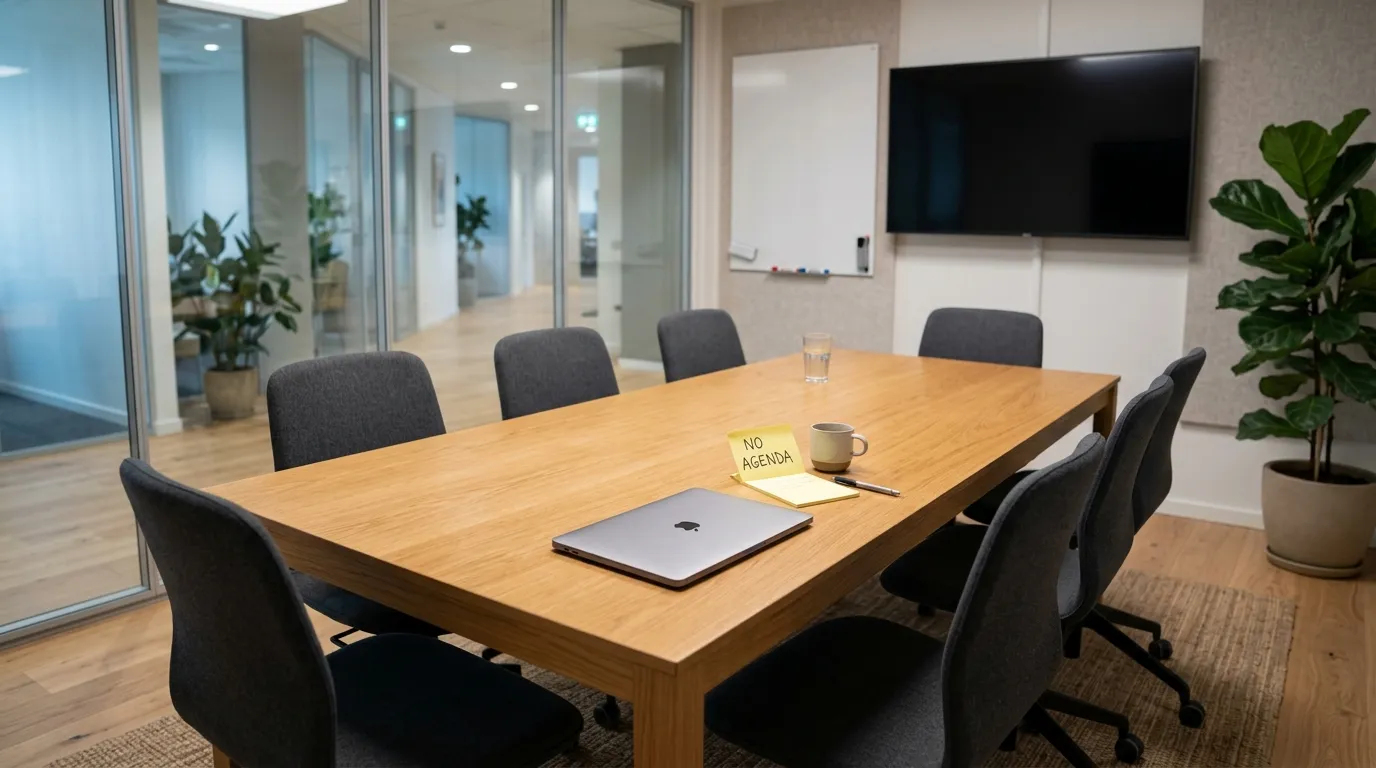
If your job is meeting-heavy, you may need to reclaim a window rather than invent one. That might mean declining a recurring meeting that no longer needs you, asking for an agenda in advance, or trading two scattered thirty-minute slots for one solid ninety-minute block. Deep work rarely appears by accident in a packed calendar. Someone has to carve it.
Beginners often succeed with three deep-work blocks per week. That is enough to feel momentum without turning your life into a fortress. Once those three are stable, you can add a fourth. Intensity without consistency collapses by week three.
Step 2: Close the attention leaks before you start
Focus is not only a mental state. It is an environment. Before the block begins, run a short shutdown of leaks:
- Silence non-urgent notifications on phone and desktop
- Close chat apps or set a clear status such as “Back at 11:00”
- Close browser tabs unrelated to the outcome
- Put the phone in another room or at least face-down out of reach
- Open only the files, docs, or tools needed for the one outcome
This should take two to four minutes. If it takes twenty, your desktop is too messy and needs a separate cleanup later. For now, do the minimum that removes the loudest interruptions.
A useful metaphor: think of attention like a workshop light. You can work in a bright, steady beam, or you can keep flicking it on and off every time a notification arrives. The work still happens eventually, but everything takes longer and feels worse. Closing leaks is how you keep the light on.
If you share a desk or open office, add one physical cue. Headphones, even without music, often signal “do not interrupt unless urgent.” A small sticky note on your monitor that says “Deep work until 10:30” helps colleagues who cannot see your calendar. Social signals matter as much as software settings.
Step 3: Write the one outcome in one sentence
Before you touch the work, write what “done” looks like for this block. Not a theme. Not a vague hope. A finishable result.
Weak: “Work on the report.”
Strong: “Finish the findings section with three charts and a one-paragraph summary.”
Weak: “Catch up on the project.”
Strong: “Decide the pricing option and send the recommendation email draft to Maya.”
This sentence is your north star when your mind wants to tidy folders, rewrite introductions, or check one more Slack thread “just in case.” If an activity does not serve the sentence, it waits until the soft landing or a later admin block.
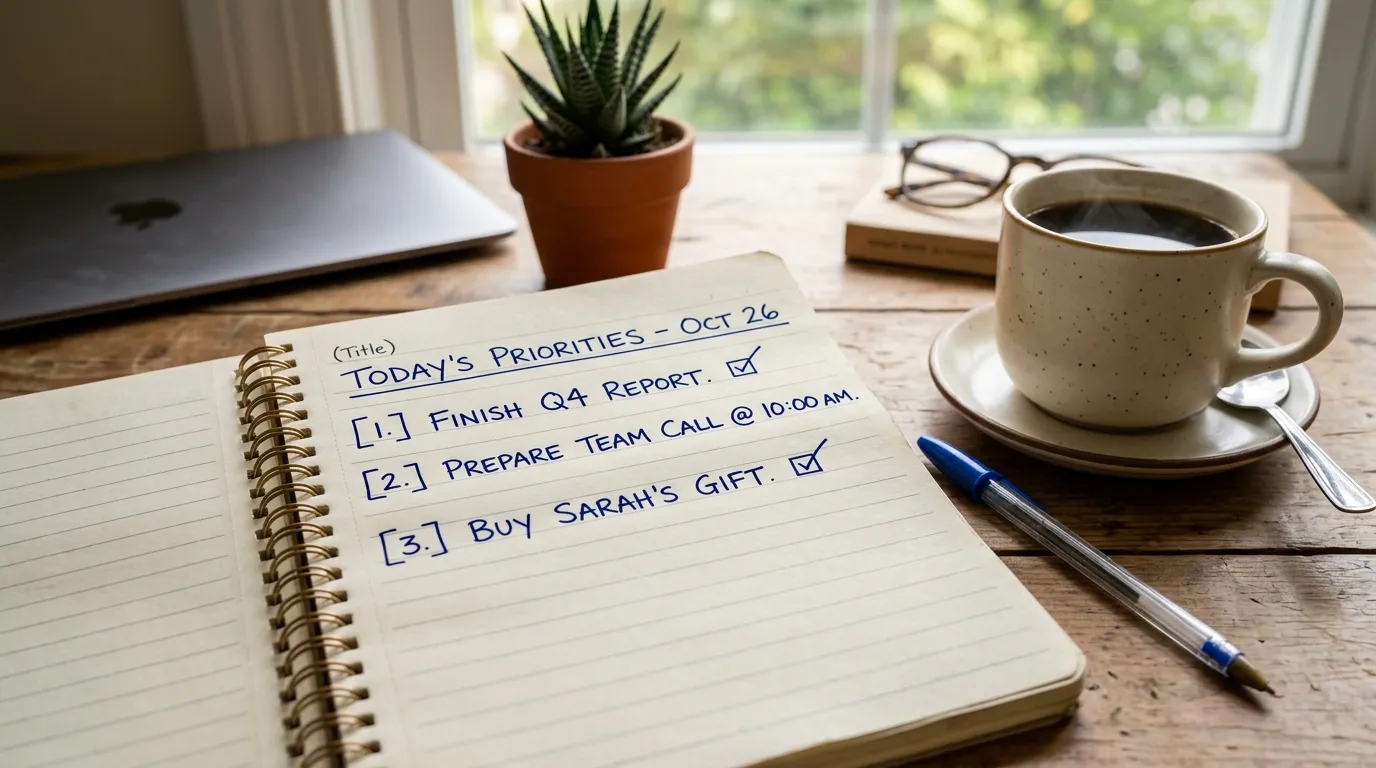
Keep a sticky note, a corner of a notebook, or a line at the top of the doc. Visibility matters. Outcomes you only hold in your head drift under pressure.
Step 4: Work in layers, not in panic
Once the block starts, use a simple sequence that prevents false starts:
- Minutes 1–5: reopen context. Read yesterday’s note, the brief, or the last paragraph you wrote.
- Minutes 5–70: do the hard middle. Draft, analyze, build, decide.
- Last 5–10 minutes: soft landing. Capture what finished, what is blocked, and the next concrete step.
Many people fail deep work because they spend the first twenty minutes “getting ready.” Getting ready is often avoidance dressed as preparation. Limit setup to five minutes. If you truly lack information, write the missing question as the outcome instead of pretending to work.
When resistance hits, shrink the first move. Open the file. Write the ugly first sentence. Label the columns. Rename the draft. Momentum usually follows a tiny honest start, not a perfect plan.
Step 5: Handle interruptions without collapsing the block
Interruptions will happen. The goal is not zero interruptions forever. The goal is a default response that protects most of the block.
Use a triage rule:
- True urgent: safety, outage, or a blocker that stops others within the next hour. Handle it, then return and extend the block if possible.
- Important but not urgent: capture it in a note and reply after the block.
- Noise: ignore until your soft landing or admin window.
If someone walks up, a calm script helps: “I am in a focus block until 11. Can it wait, or is it urgent?” Most requests wait. The few that cannot wait are worth the break.
Managers and people in support roles often need a modified version. Try a shorter block, such as forty-five minutes, or a split: one deep block in the morning and a visible “office hours” window in the afternoon when you are intentionally available. Availability is a gift when it is scheduled. When it is constant, it becomes a trap.
Step 6: End with a soft landing
The soft landing is the part most guides skip, and it is why focus feels fragile. In the last few minutes, write:
- What finished
- What is still open
- The very next action for the next block
- Any waiting item that depends on someone else
This takes two minutes and saves twenty minutes of reorientation later. It also reduces evening rumination. Your brain trusts a written next step more than a vague promise to “continue tomorrow.”
Close the tools. Reset your status. Take a short walk or stretch before diving into meetings. Switching from deep work to shallow work without a pause leaves a residue that makes both worse.
A workplace-ready deep work checklist
Use this as a preflight list until it becomes automatic:
- Calendar block is present and marked busy
- One outcome sentence is written
- Phone is away or silenced
- Chat status is set
- Only relevant tabs and files are open
- Interruption rule is clear to you
- Soft landing note space is ready
Print it once if you like physical cues. Or keep it in the same note you use for weekly planning. The checklist is training wheels. After a few weeks you will run it without looking.
Common mistakes that wreck focus at work
Protecting the calendar but not the environment. The block exists, yet Slack remains open with sound on. You have scheduled deep work and then invited interruptions into the room.
Choosing outcomes that cannot finish in one block. “Rewrite the whole strategy deck” is a multi-day project. Break it into finishable slices: outline, audience section, three slides of options, speaker notes for slide one.
Using deep work for email. Email and chat belong in batch windows. Deep work is for thinking that needs continuity. If your “focus block” is mostly inbox triage, you are practicing shallow work with better branding.
Waiting for inspiration. Inspiration is unreliable. Setup is reliable. Start the ritual even when you feel flat. Many good sessions begin as reluctant ones.
Going from zero to five daily blocks. That looks ambitious and collapses under meetings and fatigue. Three solid blocks a week beat five abandoned ones.
Never telling anyone. Silent focus blocks get overwritten. A short note to your team or manager about your recurring window reduces conflict.
Skipping the soft landing. You end mid-thought, close the laptop for a meeting, and lose the thread. Next time you reopen the file, you reread for fifteen minutes and feel behind before you begin.
Treating every ping as urgent. Urgency is often social, not operational. Ask what breaks if you reply in forty-five minutes. Usually nothing.
Seven-day starter plan for better focus at work
This plan assumes a normal job with meetings and messages. Adjust times to your schedule, but keep the sequence.
Day 1: Audit and choose the window
Review last week’s calendar. Mark where your hardest work actually happened, if it happened at all. Choose one sixty to ninety minute window for the coming week and place three recurring blocks if possible. Write a one-sentence intention for why this window exists.
Day 2: Build the pre-block ritual
List your top five attention leaks. Create a two-minute shutdown sequence. Practice it once even without deep work so muscle memory forms. Set default Do Not Disturb hours if your tools allow it.
Day 3: Run the first real block
Pick one finishable outcome. Run the ritual. Work the block. Soft land. Afterward, note what interrupted you and whether it was truly urgent. Do not judge the quality of the work too harshly. The goal today is completing the container.
Day 4: Improve the outcome sentence
Compare yesterday’s outcome with what you actually did. Rewrite future outcomes to be more concrete. If you drifted into tidy-up tasks, add a rule: no filing or inbox during deep work unless the outcome is explicitly about organizing a project artifact.
Day 5: Communicate the boundary
Tell one teammate or your manager about your focus window. Update your status message. If needed, add office hours later in the day so people still get access to you. Boundaries stick better when they include a clear alternative.
Day 6: Second block under real conditions
Run another deep work session on a messier day. Use your interruption triage. If the block gets cut short, salvage twenty minutes rather than canceling the habit entirely. Partial protection still trains the system.
Day 7: Review and lock the defaults
Spend fifteen minutes reviewing the week. How many blocks happened? What leaked most? Which outcome style worked? Keep the window, ritual, and soft landing as defaults for next week. Add one improvement only. More than one change at a time muddies the lesson.
After this week, continue with three blocks as your baseline. Expand only when the baseline feels boringly reliable.
How this pairs with time blocking and distraction audits
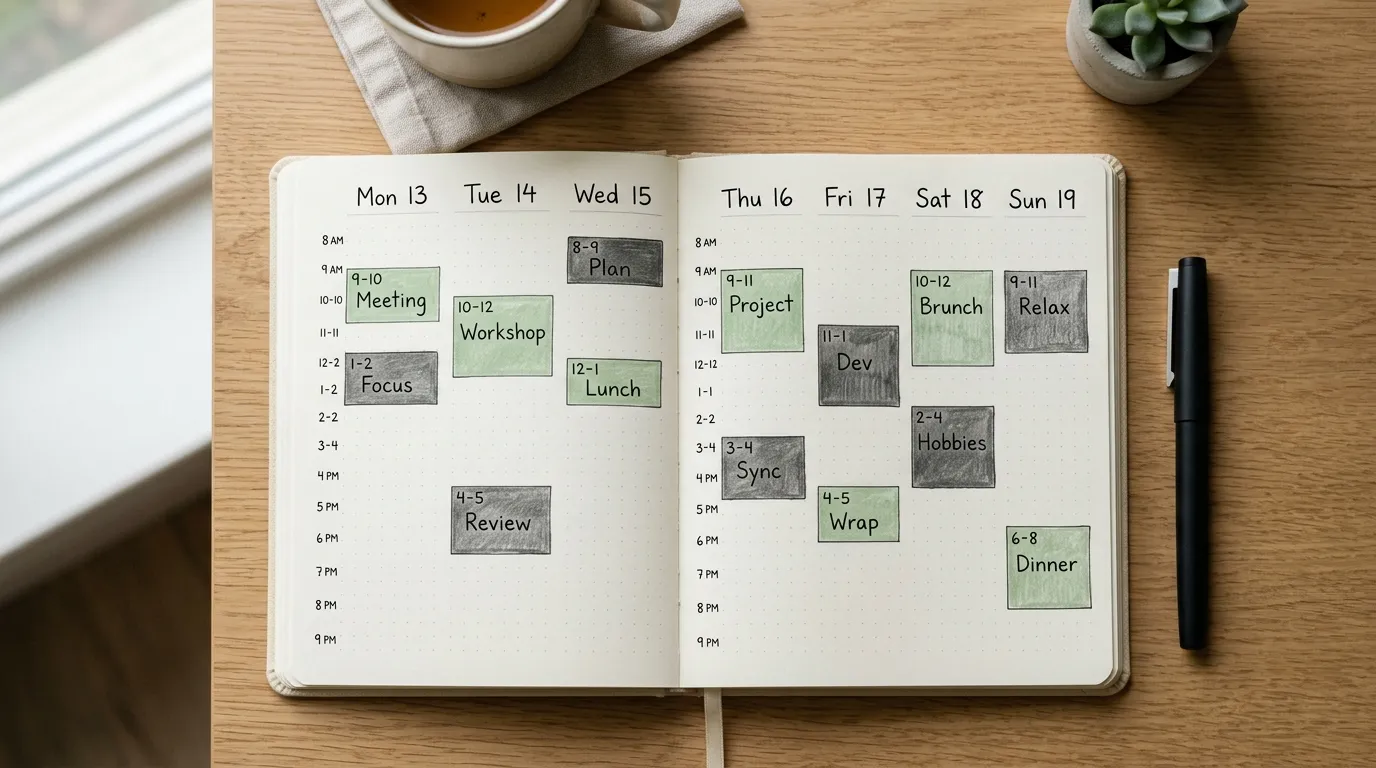
A deep work setup is one piece of a larger life system. Time blocking helps you place focus windows beside meetings and admin so the whole day has a shape. A distraction audit helps you find which apps, habits, and environmental cues steal attention before you even sit down. If you want the scheduling side, read Time Blocking for Beginners. If your problem is constant leakage across the day, start with a Distraction Audit and then return to this setup.
You do not need both on day one. Many people fix focus first with one protected window, then expand into a fuller weekly plan once they trust themselves to keep a promise on the calendar.
Examples of good deep work outcomes by role
Analyst: “Build the cohort table and write three bullets on what changed month over month.”
Designer: “Produce two layout options for the checkout screen and note tradeoffs.”
Engineer: “Implement the validation function and add tests for empty and duplicate inputs.”
Manager: “Draft the quarterly priorities one-pager with owners and dates.”
Support lead: “Document the top five ticket patterns and the first reply template for each.”
Student worker or intern: “Finish the annotated bibliography entries for sources three through six.”
Notice the pattern: verb, object, and a boundary that can be checked at the end of the block. If you cannot tell whether you finished, the outcome was too foggy.
What to do on low-energy days
Some days you will not have ninety sharp minutes. Keep the setup, shrink the ambition. Use a forty-five minute block and choose an outcome that is still real but lighter: outline instead of full draft, cleanup of a known section, decision memo instead of polished report. The habit of protecting the window matters more than heroic output on every single day.
If you are sick, in back-to-back crisis mode, or traveling with no private space, pause without guilt. Restart the next ordinary day. Focus systems fail when people treat one missed day as proof that the whole approach is fake. Miss once, resume next block.
FAQ
How long should a deep work block be? Sixty to ninety minutes works for most knowledge work. Beginners can start with forty-five. Beyond two hours, many people need a real break or the quality drops. Match length to the task and your recovery, not to an internet ideal.
What if my job is mostly meetings? Then deep work must be scheduled like a meeting, and some meetings must be cut, shortened, or attended asynchronously. Start with two blocks a week and negotiate one recurring meeting you can leave or make optional. Without that trade, focus advice stays theoretical.
Should I listen to music? Only if it helps you stay with the outcome and does not become another attention toy. Instrumental or familiar tracks are less disruptive for many people. If you catch yourself hunting for playlists, work in quiet for a week and reassess.
Is multitasking ever okay in a focus block? Not for deep work. Batching similar shallow tasks is fine in an admin block. Mixing writing a strategy memo with Slack replies is not multitasking skill. It is fragmented attention with extra steps.
How do I focus better at work from home? Use the same setup, then add household cues: a door policy, a visible calendar block for family if needed, and a phone charger outside your workspace. Home has more soft interruptions. Your ritual needs to be slightly stricter, not looser.
Do I need special tools or apps? No. Calendar, a note, and notification settings are enough. Tools can help later, but they cannot replace a protected window and a clear outcome. Complicated systems are often abandoned by week two.
What if I sit down and freeze? Shrink the first action to something almost silly: open the doc, write a bad outline, list three questions the work must answer. Set a ten-minute timer for that first action only. Freezing usually means the outcome is too big or too vague.
How soon will I notice a difference? Many people feel calmer after one honest week because open loops shrink. Visible output gains often show by week two or three if the blocks are real and the outcomes are finishable. Judge the system by completed containers, not by mood on day one.
Related reading
Build the calendar around your focus windows with Time Blocking for Beginners. Find and cut the quiet thieves of attention with a Distraction Audit. Together they turn “I should focus more” into a repeatable workday design.
Focusing better at work is a setup problem first and a character problem second. Protect one window. Close the leaks. Write one outcome. Soft land. Repeat three times a week until it feels ordinary. Ordinary, protected focus is how real work finally gets finished.