
Hard tasks rarely lose to laziness alone. They lose to fog. When the first step is unclear, when the stakes feel high, or when the work might expose a skill gap, your brain reaches for easier loops: inbox, chores, research that never ends. Stopping procrastination on hard tasks means designing an entry ramp so short that starting feels cheaper than avoiding.
This is not a speech about grit. Grit helps after you are in motion. Before motion, you need a smaller definition of “start,” a named fear, a short time box, and fewer escape hatches. The methods below are built for the tasks you keep rewriting on the list without touching: the proposal, the difficult conversation outline, the tax packet, the portfolio piece, the refactor you keep delaying.
You will get a practical sequence, reasons it works, mistakes that keep hard work stuck, a seven-day starter plan, and FAQ answers for the days when even ten minutes feel impossible. Pair the entry tactics with a clear daily ranking from the best daily priorities method, and use timed focus sessions from the Pomodoro technique when a visible countdown helps you stay in the chair.
Why hard tasks trigger avoidance
Procrastination on easy tasks and procrastination on hard tasks look similar from the outside and feel different inside. Easy-task delay is often boredom or low stakes. Hard-task delay is often threat management. Your nervous system treats ambiguity, evaluation, and possible failure as problems to postpone.
Ambiguity is the biggest lever you can pull. “Write the report” has infinite possible first moves. Your brain stalls while searching for the perfect one. “Open the doc and list five section headers” has a finish line you can reach in minutes. Clarity lowers threat.
Identity threat matters too. If the task might prove you are behind, unprepared, or not as sharp as your title suggests, delay protects self-image for another day. Naming that fear does not make you weak. It makes the avoidance strategy visible so you can replace it with a ten-minute entry fee.
Energy and context also matter. Hard cognitive work needs a clean runway. Trying to draft strategy between Slack pings trains you to believe you “cannot focus,” when the real issue is that the environment never allows focus. Fixing entry without fixing escapes is half a solution.
What progress actually looks like
Progress on hard tasks is often ugly at first. Messy outlines, bad first paragraphs, and incomplete spreadsheets still beat pristine delay. Judge the session by whether you touched the real artifact, not by whether the artifact is ready to show anyone. Showable quality comes from repeated entry, not from waiting for a heroic mood.
Steps to stop procrastinating on hard work

Use these steps in order when a task has been aging on your list. Do not skip to rewards or fancy apps before the first step is tiny enough to start today.
1. Shrink the first step until it is almost silly
Rewrite the task as a first move you could finish in five to fifteen minutes even on a low-energy day. Examples: open the brief and highlight unknowns; create the file and paste the assignment requirements at the top; write five ugly bullets; sketch the slide titles with no design; list the people you must email and the one question for each.
If the shrunk step still feels heavy, shrink again. “Think about the strategy” becomes “write the problem in two sentences.” “Clean the finances” becomes “download last month’s statements into one folder.” The point is contact with the real materials, not a dramatic breakthrough.
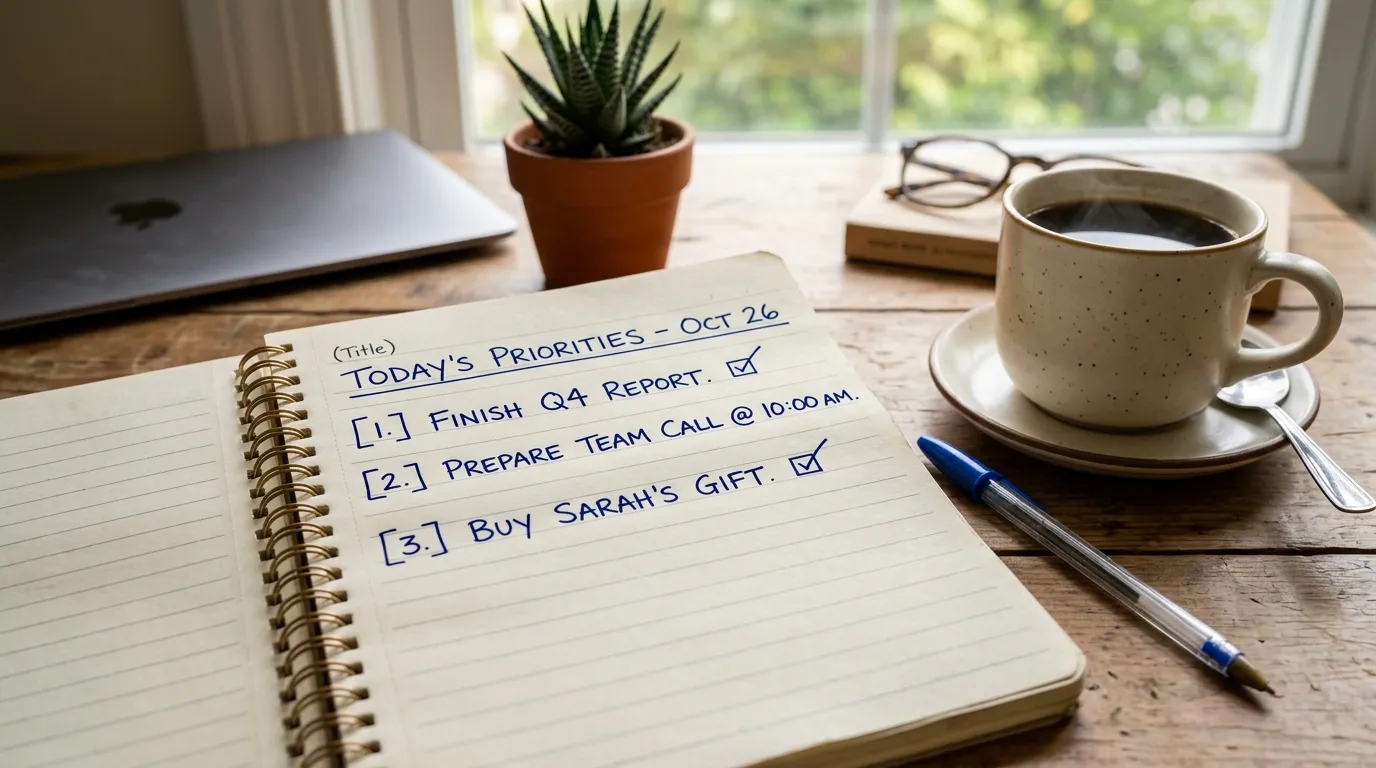
Put the shrunk step as the first Big Three item on a day when you have at least one protected block. Hard tasks buried under twenty errands never get an honest chance.
2. Name the fear in one plain sentence
Write what you are avoiding. Judgment. Boredom. Complexity. Conflict. Looking incompetent. Making an irreversible choice. Being trapped in a long project. You do not need therapy language. You need a sticky note that tells the truth.
Once named, ask what evidence would reduce the fear by ten percent. Often the answer is a tiny research spike, a draft shared with a safe reviewer, or a scope cut. Fear that stays vague stays loud. Fear that becomes a next question becomes workable.
3. Pay a ten-minute entry fee
Commit to ten minutes only. Set a timer. Work on the shrunk step until the timer ends. You are allowed to stop after ten. Most sessions continue because starting was the expensive part. Some sessions stop at ten, and that is still a win because the artifact now exists and tomorrow’s entry is easier.
Do not bargain for a “perfect hour” before you begin. Perfect hours are rare. Ten-minute fees fit inside real days. If ten minutes reliably turns into deep work for you, keep the fee language anyway. It lowers the psychological gate.
4. Remove easy escapes before the timer starts
Close social tabs. Put the phone in another room or in a drawer. Mute non-emergency channels. Open only the files you need. Escapes are not moral failures; they are designed to be sticky. Design the desk to be stickier for the task than for the feed.
If you need a reference site, open it first, then go offline or use a blocker for everything else. Searching “just for context” is a classic hard-task detour that feels like work.
5. Define a done-for-now finish line
Before you start, write what “session complete” means. Examples: five bullets exist; outline has H2s; first paragraph drafted; spreadsheet columns named; email draft saved without sending. Clear finish lines prevent the session from mutating into an endless quest for quality you cannot hit today.
When the finish line is met, stop or consciously start a second fee. Stopping on purpose teaches your brain that entry leads to relief, not to infinite obligation.
6. Reward after the session, not during it
Coffee, a walk, a snack, a short show, a chat with a friend: pick a reward that happens after the timer. Rewarding mid-avoidance with scrolling trains the wrong loop. The sequence to reinforce is start, contact the work, then relief.
Extra tactics when the task is still stuck
Some hard tasks need more than a shrink-and-timer combo. Use these without collecting them all as new obligations.
Body double or public start
Work near someone else, on a call where cameras are optional, or in a library. Social presence reduces private negotiation with yourself. Tell one person, “I am starting the outline at 2:00 for ten minutes.” Keep the promise small so you can keep it.
Talk the draft out loud
If writing is the freeze point, speak a voice memo explaining the topic to a smart friend. Transcribe or summarize into bullets. Spoken drafts bypass the inner editor that blocks blank pages.
Separate learning from producing
If you are stuck researching, set a research box with a hard stop, then switch to producing with what you have. Infinite learning is often avoidance wearing a scholarship costume. Capture open questions in a list and return later.
Cut scope on purpose
Ask, “What would a useful half-version look like?” Ship the half-version to yourself first. Many hard tasks are oversized relative to the decision they need to support. A one-page brief can unblock a team faster than a delayed masterpiece.
Mistakes that keep procrastination alive
- Waiting to feel ready. Readiness usually arrives after contact, not before.
- Setting a first step that is still a whole project. “Draft the whole report” is not an entry fee.
- Using productivity content as the task. Reading another method article can be delay. Apply one method today.
- Keeping the hard task off the calendar. If it is never scheduled, easier work will fill the day.
- Chaining shame to the delay. Shame burns energy you need for the entry fee. Switch to mechanics: shrink, time, start.
- Multitasking during the ten minutes. Split attention prevents the relief that comes from real contact.
- Only working when a deadline is on fire. Crisis mode works until it damages quality and health. Practice entry on medium-stakes tasks so the skill exists before emergencies.
- Making the reward scrolling the same apps that usually steal the session. Pick rewards that do not reopen the escape hatch for an hour.
Another frequent mistake is treating every delayed task as a character flaw. Some delays are rational responses to unclear goals from a boss, missing inputs, or a project that should be canceled. During your naming step, check whether the task should exist. Killing a fake hard task is also progress.
Starter plan: seven days of entry practice
This plan installs the habit of starting. Pick one hard task for the week so you are not scattering entry fees across ten fires.
Day 1: Choose and shrink
Pick the hard task that, if moved, would reduce the most dread. Write a five-to-fifteen-minute first step. Put it at the top of tomorrow’s priorities. Do not start yet unless momentum is already high.
Day 2: First paid entry
Remove escapes, set ten minutes, meet the done-for-now line. Log what you finished in one sentence. Note what escape tried to appear.
Day 3: Second entry, same artifact
Return to the same file. Shrink a new first step from where you left off. Consistency on one artifact beats fresh starts on new tasks.
Day 4: Add a longer box if useful
If ten minutes has been easy, try a twenty-five-minute focus interval. If ten minutes is still hard, stay at ten. Length is earned, not forced. This is where a simple Pomodoro-style box can help without becoming a religion.
Day 5: Fear check and scope cut
Reread your fear sentence. Adjust scope if the task is still oversized. Share a rough draft with a safe reviewer if judgment fear is the blocker.
Day 6: Calendar the next two entries
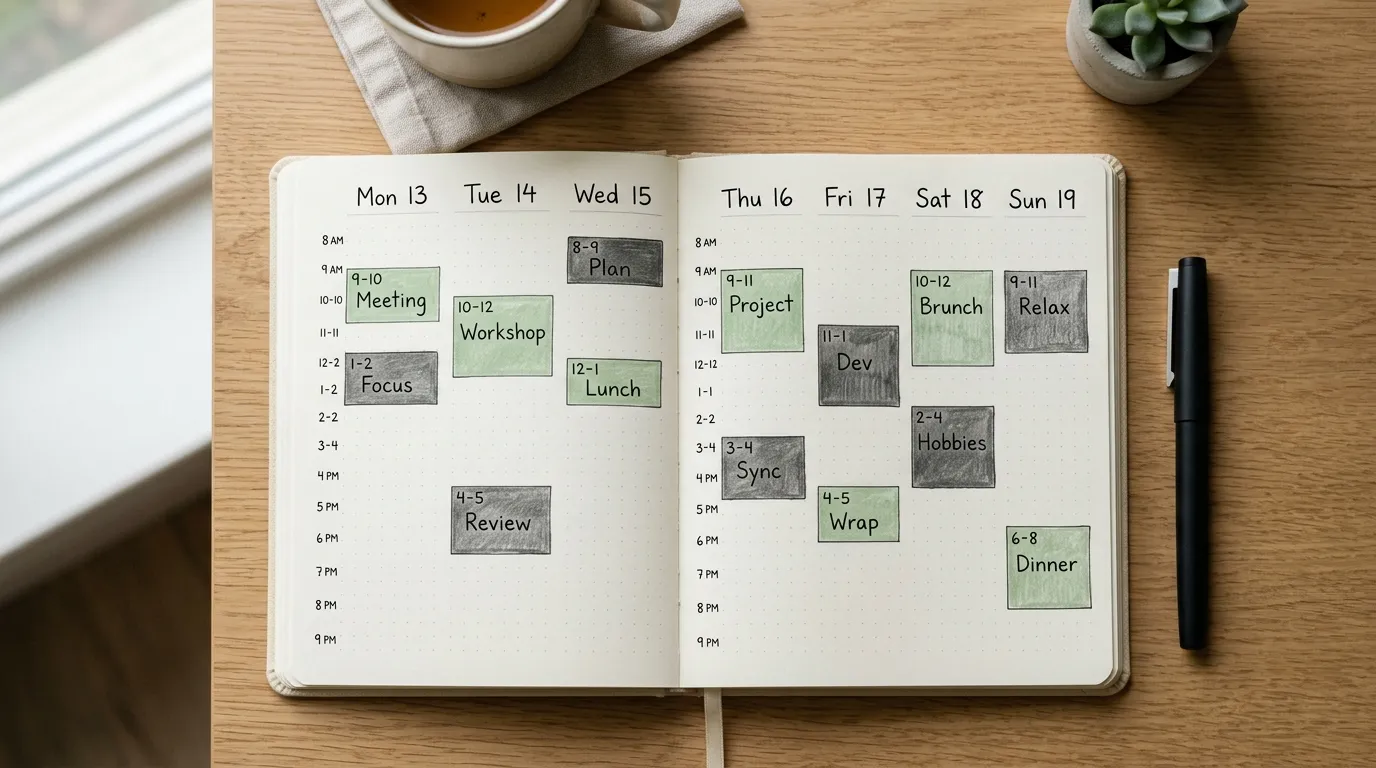
Place two short hard-task blocks next week. Treat them like meetings with someone you respect.
Day 7: Review what changed
Write three lines: what made entry easier, what still stalls you, what first-step formula you will reuse. Then rest. Recovery is part of repeating hard work.
After week one, keep using entry fees whenever a task ages more than three days untouched. The goal is a personal reflex: shrink, time, start.
How daily priorities and timers fit
Procrastination tactics fail when the day has twenty “priorities.” Make the hard task one of your Big Three on the days you intend to move it. If it never ranks in the top three, admit it is not a priority this week and stop carrying fake guilt, or rank it properly and protect time.
Timers help when your mind bargains endlessly. A visible countdown externalizes the commitment. Use short intervals for entry and longer ones only after contact is established. If timers make you anxious, use a silent hourglass or a playlist of fixed length instead.
FAQ
What if I cannot even start the ten minutes? Shrink again. Make the step “open the file and write the title.” Sit with the file open for two minutes. If you still cannot start, check for missing sleep, burnout, or a task you need to renegotiate. Mechanics first, then honesty about capacity.
Is procrastination always bad? Strategic delay can wait for better information. Chronic delay on tasks you still intend to own is the problem this article targets. If you do not intend to own it, remove it.
Do I need a special app to stop procrastinating? No. A timer, a calendar, and a list are enough. Apps help only if they reduce friction to starting.
How do I handle hard tasks that depend on other people? Your next action becomes a chase action: send the ask, book the meeting, set a reminder to escalate. Waiting without a chase plan is still an open loop.
What if I start but quit the moment it gets uncomfortable? Expect discomfort in minute three to six. Decide in advance that discomfort is part of the fee, not a signal to stop. Stop only when the timer ends or the done-for-now line is hit.
Can I use this for housework or health tasks? Yes. “Put on shoes and walk to the corner” is a valid entry fee for exercise. “Clear one counter zone for five minutes” works for home resets. Same psychology, smaller stigma.
How long until this feels natural? Many people feel a shift within a week of daily entry practice. The reflex strengthens when you apply it to medium-hard tasks, not only to crises.
Should I tell my manager I am stuck? If the hard task is blocked by unclear success criteria, yes. Ask for the definition of done. Clarity from the requester is often the missing first step.
Related reading
When you need a structured focus interval around the entry fee, read Pomodoro technique when it helps. When you need the hard task to actually rank above busywork, use the best daily priorities method so the work you fear still gets a real slot in the day.